

A production-focused checklist for permeate carrier thickness, width, roll condition, cutting behavior, weld trials and lot release.
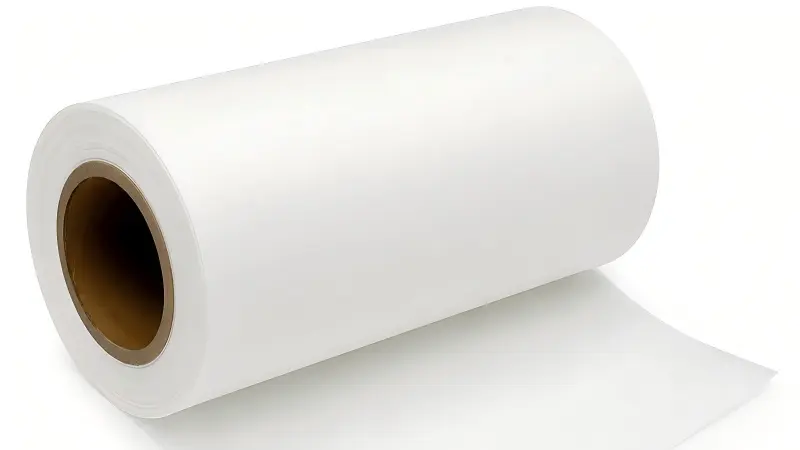
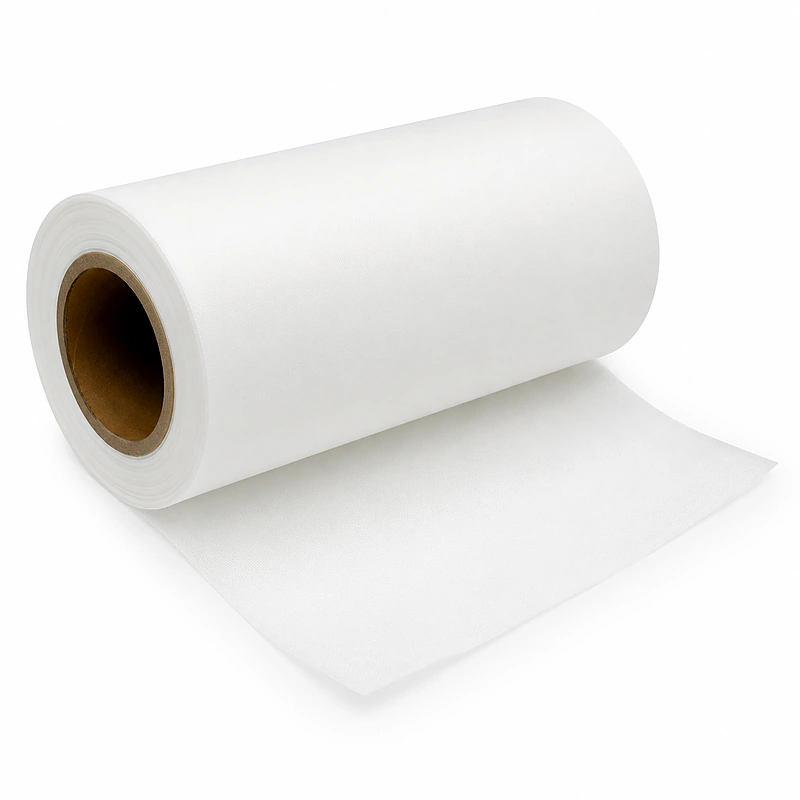
RO membrane permeate carrier fabric should be approved as both a functional flow layer and a converting material. Before cutting or welding, confirm material identity, thickness under an agreed measurement load, width, structure, cleanliness, roll condition and traceability. Then validate feeding, dimensional accuracy, edge quality and, when welding is part of the confirmed process, the weld pattern and handling strength using the actual production lot.
Why Carrier Fabric Quality Matters Inside the Membrane Leaf
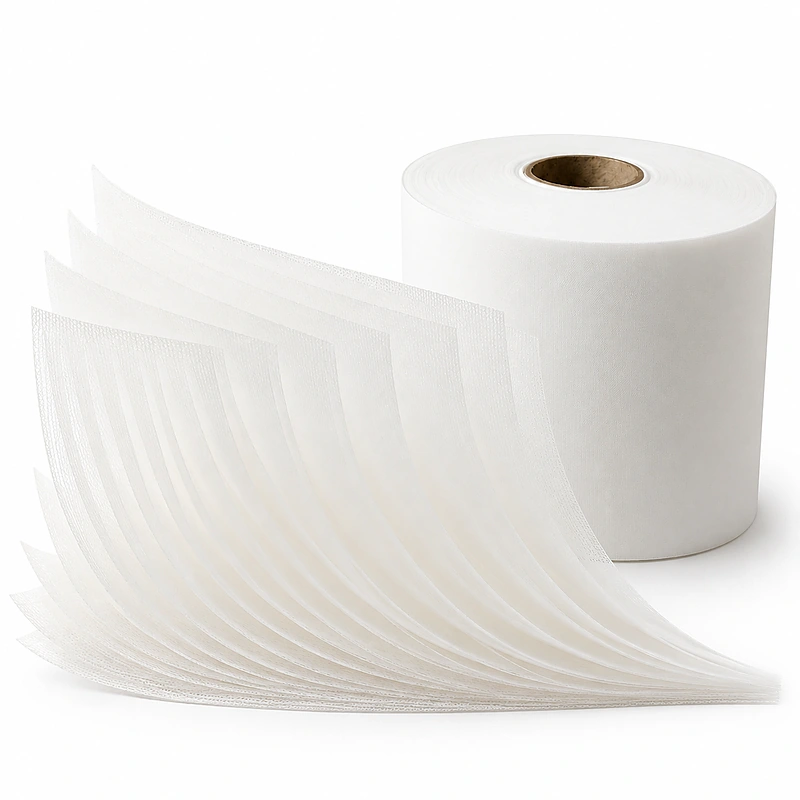
Permeate carrier, often described as tricot, is placed inside the sealed membrane envelope. It supports the permeate-side flow path and conducts product water toward the central tube.
It is not the same as feed spacer. Feed spacer forms the feed-water channel outside the membrane envelope; permeate carrier works on the product-water side. The feed spacer versus permeate carrier reference covers that terminology in detail, while this article focuses on manufacturing acceptance.
Published research on permeate-side spacers shows that effective lateral permeability and thickness under compression are relevant to spiral-wound element design. A fabric that looks acceptable when relaxed may behave differently after tight rolling and operating pressure are applied.

Inspect the Roll Before Setting the Cutting Recipe
Incoming inspection should compare the delivered lot with the approved drawing, data sheet and reference sample. Do not release a roll using only its color and label.
- Supplier, material grade and lot identity
- Nominal thickness and agreed tolerance
- Width at multiple positions across the roll
- Fabric structure, orientation and visual uniformity
- Roll outer diameter, core and winding direction
- Telescoping, crushed edges, wrinkles and slack zones
- Dust, oil, fibers, stains and foreign material
- Packaging condition and storage history
Define how thickness is measured
Tricot is compressible. Thickness can change with the presser-foot area, applied force, dwell time, sample conditioning and location. A purchase tolerance is useful only when supplier and buyer use a comparable method.
Use the permeate carrier data sheet to organize specifications and the incoming raw-material inspection reference to align sampling and traceability.
Cutting Quality Is More Than Length Accuracy
The cutting trial must show that the material can be fed repeatedly without changing the released leaf geometry.
Set the recipe from the approved element drawing and account for the real carrier behavior under tension. Excessive tension can elongate or narrow a knitted material during feeding; insufficient tension can produce slack, skew and inconsistent cut position. The accepted setting belongs to that material grade and should be reviewed after supplier or lot changes.
Length and width
Measure using the agreed reference points and sampling plan. Record the actual result, not only a pass mark.
Squareness and skew
A piece can meet nominal length while its leading and trailing edges are not aligned to the material direction.
Edge condition
Look for fraying, melted areas, loose fibers, tearing and particles that could enter the membrane leaf.
Flatness
Wrinkles, curl and static can interfere with stacking, alignment and downstream leaf preparation.
Repeatability
Review multiple consecutive pieces and samples after a roll splice or roll change.
Usable output
Separate good released pieces from theoretical machine cycles, setup pieces and rework.
| Observed problem | Possible material or process cause | What to verify first |
|---|---|---|
| Cut length drifts | Slip, changing roll tension, fabric stretch or feed calibration. | Encoder/feed system, tension setting and measurements on relaxed samples. |
| Piece is skewed | Misaligned roll, uneven tension, telescoping or lateral movement. | Roll loading, edge guidance and fabric direction. |
| Edge frays or pulls | Blade condition, unsuitable cutting method or unstable fabric structure. | Cutter condition, speed and material-specific trial. |
| Sheets cling together | Static, surface condition or discharge geometry. | Grounding, humidity, discharge setup and handling method. |
Validate Ultrasonic Welding Only When It Is Part of the Approved Process
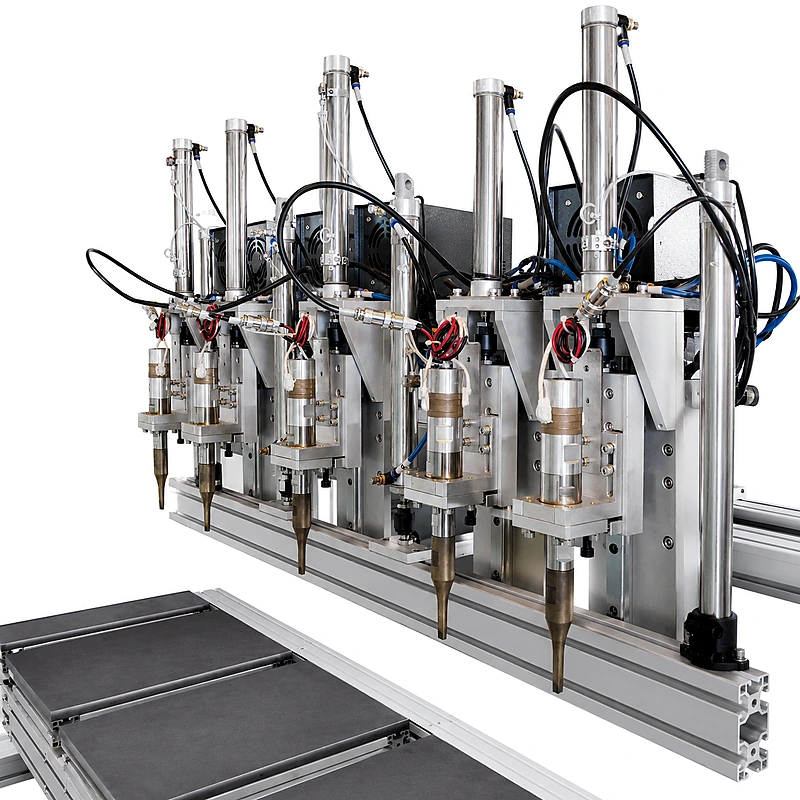
A welding claim requires a defined material stack, machine module, weld pattern and acceptance method. The words “cutting and welding” in a page name are not enough.
Ultrasonic welding applies localized vibration and pressure to thermoplastic material. Results are sensitive to polymer composition, fabric construction, thickness, number of layers, horn and anvil geometry, amplitude, energy or time, pressure and line speed. Parameters that hold one carrier grade may damage another.
The weld should keep the required layers positioned through handling and rolling without excessive melting, brittle spots, loose fibers or blocked permeate paths. Acceptance does not need to mean maximum seam strength; it means sufficient and repeatable handling performance for the released element process.
Define the stack
Record polymer, grade, layer count, orientation and overlap or weld location.
Establish a window
Run controlled trials across safe process settings rather than approving one accidental result.
Inspect the weld
Check pattern continuity, distortion, melt-through, loose fibers and handling strength.
Build an element
Confirm stacking, rolling and the required finished-element tests before release.
Connect Material Evidence to a Finished-Element Trial
A supplier sample is not fully approved until the same material can pass incoming inspection, conversion and the required element-level checks.
Build one approval record that follows the material from the original roll to the finished trial elements. This is especially important when a dimensional result remains within tolerance but the fabric behaves differently during feeding or rolling. Without that connection, purchasing, quality and production teams may each approve a different part of the same change.
| Approval stage | Minimum evidence | Release question |
|---|---|---|
| Document review | Material identity, construction, thickness method, width, roll format, packaging and change-notification commitment. | Does the quotation describe the same material that will be supplied? |
| Incoming sample | Measurements across width and length, visual inspection, cleanliness, roll condition and retained reference piece. | Does the received lot match the approved specification and sample? |
| Conversion trial | Recipe, tension, cut dimensions, edge quality, stacking behavior, weld record when applicable and usable yield. | Can the material be processed repeatedly without special correction? |
| Element build | Leaf alignment, rolling behavior, finished geometry, integrity checks and the applicable hydraulic performance test. | Does the complete element remain inside its released acceptance window? |
| Production release | Approved specification revision, lot status, retained sample, deviation decision and traceability record. | Can the decision be repeated and audited on the next shipment? |
A new supplier, fabric construction, resin, thickness method, roll width or welding requirement should trigger a documented change review. Even when the material name remains unchanged, alterations in stiffness, surface friction or compression response can require a new conversion recipe. Define in advance which changes need notification, sample approval or a full element requalification.
Protect the Approved Fabric Through Storage and Production
A good incoming lot can still create defects if it is contaminated, crushed or mixed with another grade after release.
Before mass production, calculate the planned piece length with the permeate carrier length calculator, then confirm it against the released leaf drawing and a physical build. For automated conversion, review the permeate carrier cutting machine with the actual roll sample and target tolerance.
Permeate Carrier Fabric FAQ
Is permeate carrier the same as feed spacer?
No. Permeate carrier is inside the membrane envelope and supports product-water flow toward the central tube. Feed spacer creates the feed-water channel between membrane surfaces.
Which permeate carrier measurement is most important?
No single number is sufficient. Thickness under a defined load, structure, width, cleanliness, roll condition and lateral flow behavior all matter, together with cutting and rolling compatibility.
Why can thickness measurements differ between supplier and buyer?
Tricot is compressible, so gauge-foot area, applied pressure, dwell time, sample conditioning and measurement location can change the result. Agree on the method before setting a tolerance.
Can one ultrasonic welding recipe be used for every carrier?
No. Polymer grade, fabric construction, thickness, layer count and tooling affect the weld. Validate a safe process window using the actual material and required pattern.
What should be retained with the approved lot?
Keep the specification, supplier documents, incoming measurements, reference sample, cutting results, weld-trial record when applicable, element-build evidence and lot traceability.
References and Scope
- Karabelas, A.J. et al. Characteristics of permeate-side spacers of spiral wound membrane modules, Desalination 322 (2013), 131-136.
- DuPont Water Solutions. FilmTec RO element construction technical manual excerpt.
- Cincik, E. and Inan Ustun, A. Assessing the seam strength of ultrasonically welded polyester and polypropylene spunbond nonwovens, Journal of Industrial Textiles (2022).
The welding study concerns spunbond nonwovens rather than RO permeate carrier tricot. It is included only to support the general principle that ultrasonic weld response changes with material construction and process parameters; final carrier settings require direct validation.
Need to Qualify Permeate Carrier for Your Element Process?
WECOME supplies RO membrane permeate carrier fabric and supports manufacturers with material specifications, samples and conversion review.
Review Carrier Requirements
Bessie has 10+ years of experience in RO membrane materials and water treatment supply chains. At WECOME, she helps manufacturers and system integrators worldwide source the right membrane components — from feed spacers and permeate carriers to NSF-certified adhesives — backed by hands-on technical support.