
Two rolls of permeate carrier can look similar and still behave differently inside a spiral-wound RO element. Before approving a lower-priced replacement, ask a more useful question: will the candidate maintain the required drainage path and membrane support in your actual leaf construction?
For RO permeate carrier selection, compare more than nominal thickness. Confirm fabric construction, measurement conditions, flow direction, behavior under defined loading, and compatibility with the membrane leaf. Then compare finished elements under the same test conditions. A fabric description or an unloaded sample alone cannot establish an element’s output.
Scope: material qualification for membrane element manufacturers. This is a purchasing and trial-planning guide, not a universal fabric specification or an instruction to alter an operating RO system.
What does the permeate carrier actually do inside an RO membrane leaf?
The permeate carrier is the drainage fabric inside the membrane envelope. After water crosses the membrane, it travels through the permeate-side channel toward the collection tube. The feed spacer serves a different channel outside that envelope. These materials are not interchangeable. DuPont identifies the permeate carrier as the product-channel material through which permeate flows after passing through the flat-sheet membrane. [1]
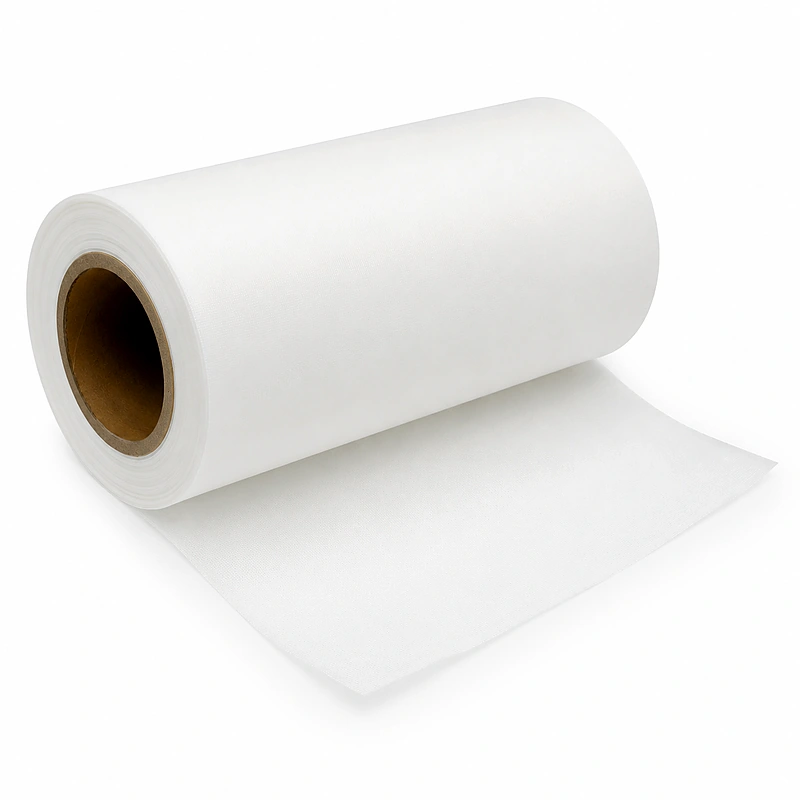
For a procurement discussion, separate three questions: does the fabric provide the required drainage route, does it support the membrane in the approved construction, and can your process reproduce that construction? A sample can satisfy one question while leaving the other two unanswered. For example, easy handling during assembly does not demonstrate acceptable hydraulic performance after the element is completed.
Use the WECOME RO membrane permeate carrier product page to discuss available supply options. This article explains the evidence to request before selecting a grade; the exact material, dimensions and tolerances belong in the agreed product specification.
How can permeate-side resistance affect membrane performance?
The pressure available to drive water across a membrane depends on the difference between its two sides, not simply the pressure shown on the feed gauge. Resistance between a location inside the leaf and the permeate outlet can raise local permeate-side pressure relative to that outlet. All else equal, that reduces the local hydraulic driving difference. This is why an outlet pressure measurement does not describe every position within the leaf.
However, lower output is not proof of a carrier problem. Membrane properties, water temperature, salinity, test pressure, recovery, conditioning, effective area and construction faults also affect the result. A material comparison must control or record these factors before attributing a change to the carrier.
Is permeate pressure drop the same as feed-to-concentrate pressure drop?
No. They describe different flow paths. Feed-to-concentrate differential pressure concerns the feed channel; permeate-side resistance concerns the route from the membrane envelope to the permeate collection system. A normal feed-channel reading does not, by itself, approve the drainage fabric. Equally, a high feed-channel reading should not automatically trigger a carrier substitution.
Is a thicker or heavier tricot permeate carrier always better?
No. Thickness and mass per unit area are useful purchasing descriptors, but neither is a stand-alone ranking of drainage performance. Fabric architecture, support geometry and the conditions under which the fabric is measured also matter. A patent describing permeate carrier fabrics illustrates how yarn and knitted-channel construction can be design variables; it is not evidence that any particular WECOME grade incorporates that patented design. [2]
What should a thickness number include?
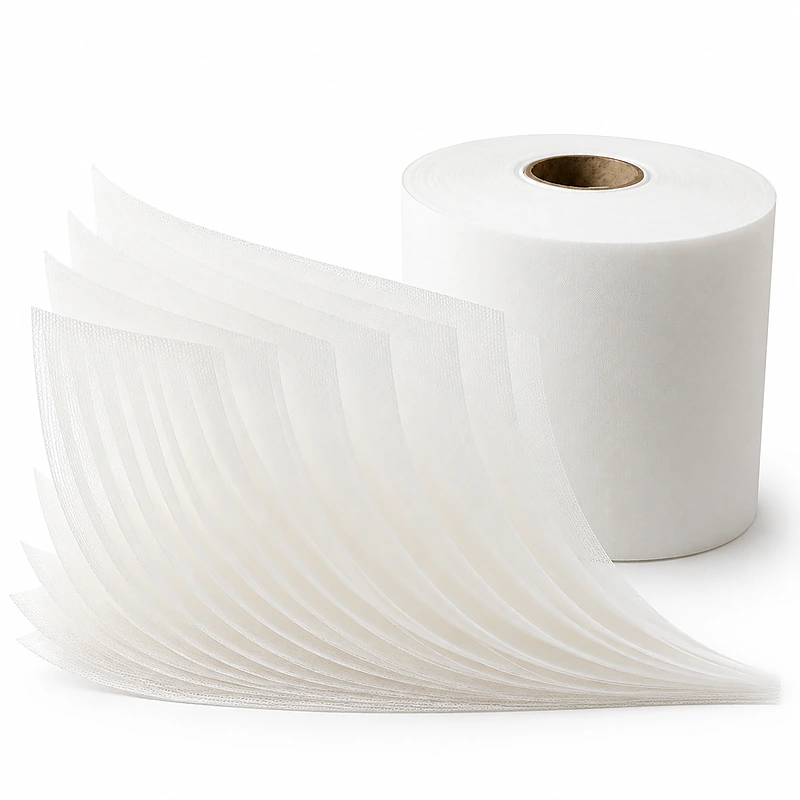
Ask for the unit, test method, contact pressure or applied load, conditioning state, sampling locations and tolerance. If one supplier measures a loose dry specimen and another uses a loaded fixture, their numbers are not automatically comparable. Request the method with the result, not only the nominal value on a quotation.
For trial planning, keep thickness measurements distinct from hydraulic testing. A thickness reading under a defined contact load describes geometry under that measurement condition. It does not independently establish flow resistance in a wetted membrane leaf, and that contact load must not be presented as an equivalent RO operating pressure without a validated method.
Can a thinner carrier create more useful membrane area?
A change in the material stack may change what fits within an element envelope, but it does not automatically create an acceptable design. Review the complete build: leaf count, membrane and spacer thicknesses, glue lines, tube geometry and finished diameter. If the candidate requires a different leaf count, you are comparing two element designs, not isolating one fabric variable. Record that distinction when reviewing the trial.
Do not approve a substitution just because the roll diameter fits. The finished element must still meet its agreed flow, rejection, integrity and dimensional acceptance criteria.
Why should buyers ask about loading, conditioning and fabric direction?
Comparative RO research at ultra-high pressure has investigated membrane compaction and deformation into permeate-carrier structures. More recent work investigated a specialized carrier intended to reduce embossing under those conditions. These studies justify asking how a membrane-carrier combination is supported and tested; they do not establish the performance loss of a conventional residential or brackish-water element, nor certify a commercial fabric for high-pressure duty. [3] [4]
Translate that concern into a supplier question: “What evidence is available for this grade under conditions relevant to our intended element?” Ask whether results concern a dry fabric coupon, a wetted coupon, a membrane-and-carrier assembly or a complete element. Those are different levels of evidence.
Should the roll direction be recorded during a trial?
Yes. Mark the roll direction and the orientation used in the leaf, and follow the approved drawing. Ask the supplier whether its hydraulic or dimensional measurements depend on specimen direction. Do not assume that turning a knitted fabric through 90 degrees preserves the same result, and do not prescribe a universal orientation without the actual grade and construction.
Keep sample identification practical: supplier grade, lot, roll, specimen location, orientation and conditioning history. Otherwise, a promising result may be difficult to reproduce when a bulk shipment arrives.
Which data should a supplier provide before you choose a grade?
Use the table below as a request checklist, not as a claim that every supplier provides every test as standard. Agree which information is available, which needs a separate trial and which remains an unresolved purchasing risk. Refer to the permeate carrier data sheet for the product-specific discussion.
| Question to ask | Evidence to request | What it prevents |
|---|---|---|
| Which material are we buying? | Grade code, declared polymer and construction, finish or treatment where applicable, revision and lot identification. | Approving one sample and receiving an undocumented substitute. |
| How is thickness measured? | Nominal value, tolerance, unit, method, contact load and conditioning state. | Comparing unlike measurements as though they were identical. |
| What does the hydraulic result mean? | Specimen dimensions, direction, fluid temperature, loading condition, flow basis, pressure-tap locations and fixture contribution. | Treating a single pressure-drop number as a universal grade rating. |
| Will the material suit our duty? | Relevant temperature and chemical compatibility information, intended use and stated test limitations. | Extrapolating a room-temperature sample result to untested service. |
| Will the rolls fit our process? | Usable width, length basis, core, winding direction, splice policy, packaging and identification. | Ordering a nominally equivalent fabric that cannot be converted as planned. |
| How will bulk consistency be checked? | Agreed inspection plan, lot documents, retained reference sample and change-notification process. | Relying indefinitely on an untraceable first sample. |
What if two suppliers use different test methods?
Do not convert the results into a ranked score unless the methods can legitimately be reconciled. Ask for a shared test condition or compare both candidates through the same qualified laboratory or controlled element trial. Keep the original reports so that dimensions, units and any exclusions remain visible.
If hydraulic data is unavailable, record “not supplied,” not zero resistance or an assumed pass. You may still choose to conduct a sample trial, but purchasing should recognize the difference between documented evidence and a requirement that remains to be demonstrated.
How do you compare a new carrier without changing everything at once?
Start with your approved material as the control. Write the trial objective before making samples: are you qualifying an alternative source, checking a different thickness, investigating inconsistent output, or redesigning the leaf? A supplier substitution and a redesign need different conclusions.
1. What must stay the same?
For a like-for-like screening trial, hold the membrane grade and preferably its lot, feed spacer, tube, leaf geometry, adhesive system, cure procedure and assembly method constant where practicable. Identify anything that cannot be held constant. Record actual construction settings rather than assuming the same machine program always produces the same build.
If the trial is intended to examine a redesigned stack, document the changes as a package. A successful redesign may be useful, but it cannot establish that the carrier alone caused the improvement.
2. Which conditions belong on the test record?
Record feed composition or agreed test solution, temperature, feed and concentrate pressures, permeate outlet pressure, recovery or flow conditions, conditioning period and measurement time. Use the approved element test method and calibrated instruments. Comparing raw flow readings from different water temperatures or feed conditions can produce a misleading conclusion.
Where a validated normalization method applies, report both the original readings and the normalized result with its basis. Do not invent a correction factor simply to make two tests appear comparable.
3. What counts as a pass?
Agree the acceptance limits before the trial: output under defined conditions, rejection, integrity, dimensions and any required stability check. Use repeated specimens and, where feasible, more than one material lot; choose the sample plan according to purchasing risk and available variability data. This guide does not prescribe a universal sample count.
Keep successful and failed results together. One good element is evidence that the process can produce a good element, not proof of bulk consistency. If results vary, investigate specimen identity, assembly and test conditions before selecting only the most favorable reading.
4. What should be frozen before the first order?
Freeze the approved grade and revision, inspection method, roll specification, reference sample and permitted substitution rules. State how a supplier must notify you about changes. For the separate conversion checks, use our permeate carrier cutting and welding guide; those checks complement, rather than replace, performance qualification.
If output falls, how do you avoid blaming the carrier too early?
Work from the test system toward the material. First confirm that the result is comparable with the reference. Next check the permeate outlet and collection arrangement, construction records and material traceability. Only then decide whether a controlled carrier comparison is justified.
| Observation | Check first | Do not conclude yet |
|---|---|---|
| All candidates show lower flow | Test solution, temperature, pressure, instruments, conditioning and reference element. | That all fabric lots have become defective. |
| A change follows a new carrier lot | Lot identity, dimensions, orientation and whether assembly or test conditions changed at the same time. | That timing alone proves the cause. |
| Low flow with a changed outlet arrangement | Collection tubing, restrictions and measured permeate outlet pressure within the approved test procedure. | That the membrane leaf is necessarily responsible. |
| Flow is acceptable but rejection fails | Test validity, integrity and the established rejection-failure investigation. | That adequate output approves the element. |
| Coupon results improve but elements do not | Differences in loading, membrane support, leaf geometry, glue boundaries and finished assembly. | That the coupon ranking must transfer unchanged to the element. |
For a rejection problem, follow the existing RO membrane salt rejection test-failure guide. A carrier investigation should not replace the integrity and measurement checks already required for a failed element.
What should you send when requesting a permeate carrier sample?
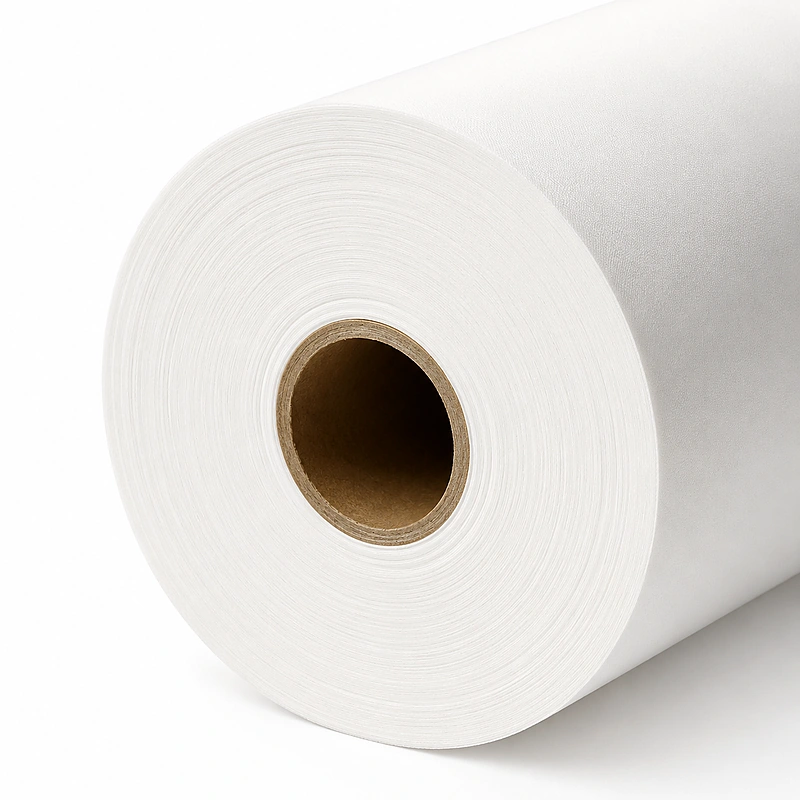
A useful request describes the build and the decision you need to make. Send the element format, current grade or sample reference, leaf drawing or relevant dimensions, roll requirements, intended duty and your available test method. Include the current problem if there is one, along with the conditions under which it occurs.
- Current reference: grade code, thickness method, lot and any approved specification.
- Application: residential, commercial or industrial element; intended operating and cleaning conditions.
- Conversion: usable roll width, core and winding requirements, with orientation identified.
- Trial objective: alternative supply, dimensional change, drainage comparison or a documented problem.
- Acceptance: agreed performance criteria, sample plan and required documents.
Do not specify only “tricot for 8040.” The nominal element format does not define its complete internal construction. If some information is unavailable, identify it openly so the sample review can distinguish known requirements from assumptions.
What else do buyers ask about permeate carrier selection?
Is tricot the same thing as permeate carrier?
Tricot describes a knitted fabric construction, not a guarantee of suitability for RO. Permeate carrier describes the role in the membrane leaf. Confirm the specific fabric grade and its intended application rather than purchasing generic tricot on appearance alone.
Can I use the same grade for 4040 and 8040 elements?
Possibly, but each approved construction needs evidence. Size alone does not establish the required drainage path, loading or membrane support. A successful 4040 trial does not automatically approve a different 8040 leaf design.
Does lower measured carrier resistance guarantee higher element output?
No. Check the measurement method, then evaluate the complete element. Membrane properties, effective area, construction and test conditions can affect the outcome. A coupon result is one input to qualification, not an output guarantee.
Can GSM replace a thickness or flow specification?
No. GSM reports mass per unit area. Keep it as a separate property with its own tolerance where required. It does not identify all aspects of channel geometry or replace an agreed hydraulic comparison.
Can I approve a replacement without supplier hydraulic data?
You can plan an appropriate qualification trial, but record the missing evidence. The purchasing decision should rely on the actual trial scope and results, not an assumed equivalence between samples.
Which carrier should you trial in your membrane leaf?
Send WECOME your element format, current material reference, roll dimensions and acceptance requirements. We can review available permeate carrier options and clarify the sample and quotation scope for your production trial.
Request a Carrier Material ReviewTechnical references and limits
The comparison checklist is an editorial purchasing framework, not a published test standard. Diagrams are original conceptual illustrations, not product micrographs, dimensional drawings or measured performance results. No universal thickness, pressure rating or output improvement is claimed.
- DuPont FilmTec RO/NF technical manual: element terminology and operating context. Manufacturer-specific limits are not WECOME product specifications.
- WO2015065498A1: Permeate carrier fabric for membrane filters: an example of fabric design variables, not a claim of product equivalence or endorsement.
- Reverse osmosis membrane compaction and embossing at ultra-high pressure operation: research context; results must not be generalized to untested operating conditions.
- Wu et al., Embossing-Free Permeate Carrier for Ultrahigh Pressure Reverse Osmosis (2025): specialized research, not certification or a recommendation of a WECOME grade.

Bessie has 10+ years of experience in RO membrane materials and water treatment supply chains. At WECOME, she helps manufacturers and system integrators worldwide source the right membrane components — from feed spacers and permeate carriers to NSF-certified adhesives — backed by hands-on technical support.