

RO Membrane Raw Material Selection Guide
Choose RO membrane raw materials by looking at the full element stack — membrane sheet, feed spacer, permeate carrier, central tube, glue, tape, seal and end caps — and the production process behind them.
Every spiral-wound element is built from one connected material stack. Review them together, not one at a time.
Key Takeaways
- Select the whole material stack together — not the membrane sheet alone.
- Match material widths, thicknesses and tube specs to your element size.
- Material choice directly affects rolling, gluing and test results.
- Use each component’s data sheet to compare suppliers on like-for-like specs.
Why Raw Material Selection Decides Element Quality
A stable RO membrane element is never decided by one material alone. It comes from how every raw material behaves together during rolling, gluing, trimming, testing and long-term operation.
That is why material selection should start from the element you plan to produce and run through the full stack — then connect to the right production equipment and a clear quality-control plan. This guide walks each material and links to its full data sheet.
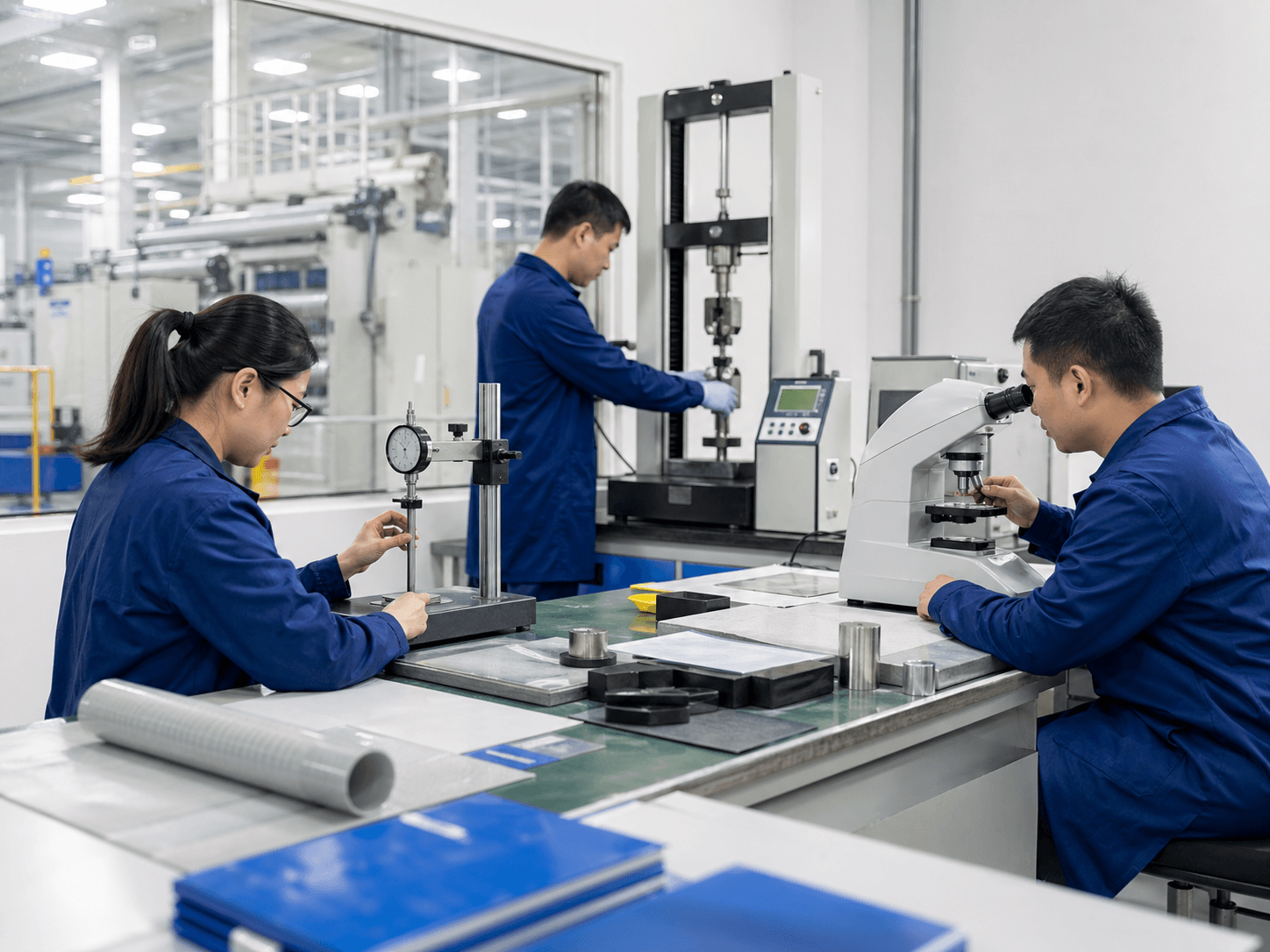
Understand Each Material Before Comparing Suppliers
Review each of the eight core materials and open its data sheet for full specifications. Comparing suppliers on the same specs is the only way to judge price fairly.
RO Flat Sheet Membrane
The functional separation layer and the starting point for element performance. Review size, surface condition, storage and compatibility.
View data sheet →Feed Spacer
Supports the feed channel and affects flow distribution, pressure drop and rolling preparation. Thickness drives performance.
View data sheet →Permeate Carrier
Carries permeate to the central tube and helps maintain internal structure after rolling and sealing.
View data sheet →Central Tube
Must match element size, hole pattern, strength and the final assembly process. Collects product water.
View data sheet →Brine Seal
Prevents feed bypass around the element. Dimensions must match the housing and element size for a reliable seal.
View data sheet →Glue & Adhesive
Glue selection affects sealing reliability, curing behaviour, process timing and leak-test results.
View data sheet →Tape & Outer Wrap
Bonding, outer-wrap and central-tube tapes protect the element and keep the final structure consistent.
View data sheet →End Cap & Connector
ATD end caps and connectors set anti-telescoping protection and inter-element connection by size.
View data sheet →Need the full material set?
We supply every component above, matched to your element size.
Get a QuoteChoose Materials Around the Element You Plan to Produce
Residential, 4040 and 8040 elements often use different material widths, lengths, tube dimensions and process requirements. Match the stack to your element size, machine capability and quality-control plan.
For residential / household elements (1812, 2521)
Focus on compact formats, flexible preparation and stable handling for smaller elements and shorter production runs.
For 4040 and 8040 elements
Focus on structural consistency, material matching, stronger production support and tighter quality control.
For expanding production
Choose materials that can support future sizes, automation upgrades and a more standardised workflow as volume grows.
How the Materials Work Together
The two flow components are the most confused: the feed spacer and permeate carrier sit in different channels and must be specified separately. Membrane area, spacer thickness and tube size also set how much of each material an element needs.
Quantify the full set for any size with the RO Membrane Element BOM Calculator before you request quotes — it turns the stack into a clear, comparable shopping list.
Specify these together
- Membrane width vs leaf length
- Feed spacer vs permeate carrier thickness
- Central tube size vs element diameter
- Glue working time vs line speed
- Brine seal & end cap vs housing
What to Check When Sourcing Raw Materials
Consistent incoming material is the foundation of consistent elements. Define acceptance criteria for every component and inspect each delivery against them with a clear incoming inspection process.
Buying the full stack from one supplier keeps these specs matched and traceable — and removes the compatibility gaps that appear when materials come from many sources.
Whether you source the full material stack or qualify components separately, use our RO membrane raw material supplier comparison to check supplier scope, samples, traceability and material compatibility before placing repeat orders.
Check on every delivery
- Dimensions vs the agreed data sheet
- Surface and visual condition
- Batch consistency & documentation
- Storage and shelf-life (glue especially)
- Sample test before full production
Material Choice Should Reduce Production Problems
Good material selection is practical: it helps operators prepare materials more consistently, reduces assembly variation and makes test results easier to control. Poor selection shows up as these four problems.
Unstable Rolling
Wrong material widths, thickness or handling make rolling alignment harder to control.
Glue & Sealing Issues
Glue behaviour and process timing must match element design and the production environment.
Inconsistent Diameter
Material stack, sheet length and rolling tension all affect the finished element size.
QC Uncertainty
Material changes should be connected with leak testing, visual inspection and records.
Need help matching RO membrane materials?
Share your target element size, production capacity and equipment stage — we’ll help you compare raw materials and quality-control references for your production plan.
RO Membrane Raw Material FAQ
What raw materials are used to make an RO membrane element?
Common RO membrane element materials include the flat sheet membrane, feed spacer, permeate carrier, central tube, glue, tape, brine seal and end caps or connectors. The exact stack depends on element size, application and production process.
Should material selection start from the membrane sheet only?
No. The membrane sheet is important, but the finished element also depends on the spacer, carrier, tube, glue and tape, and how these materials behave together during rolling and sealing. Material selection should be reviewed as a full stack.
How do raw materials affect rolling machine selection?
Material width, length, thickness, tube size and glue process can affect rolling tension, finished diameter, line speed and operator workflow. That is why material selection and equipment selection should be discussed together.
How do I match raw materials to element size?
1812, 4040 and 8040 elements use different membrane widths, leaf lengths and central tube dimensions. Confirm each material against the element size on its data sheet, and use the BOM Calculator to quantify the full set.