

Common RO Membrane Rolling Defects and Causes
Most element failures start on the rolling machine. This guide lists the common rolling defects, what causes each one, and how to fix them — so you can trace a failed test back to its source.
- #1 defectTelescoping
- Top causeUneven tension
- Caught atLeak / flow test
- FixProcess control
The most common RO membrane rolling defects are telescoping, wrinkles or creases, glue-line leaks, out-of-spec finished diameter, loose outer wrap and trapped air pockets. Almost all of them trace back to three things: inconsistent winding tension, gluing problems, or uneven material handling — and they usually show up at vacuum leak and performance testing rather than during winding itself.
A Failed Test Usually Started on the Roller
Rolling is where the element takes shape, so it is also where most defects are created — even though they are only discovered later, at leak testing or performance testing. Reading a defect back to its rolling cause is the fastest way to stop it recurring.
Use the defect table below as a troubleshooting reference, confirm finished size with the roll diameter calculator, and keep the machine itself in shape with the maintenance checklist.
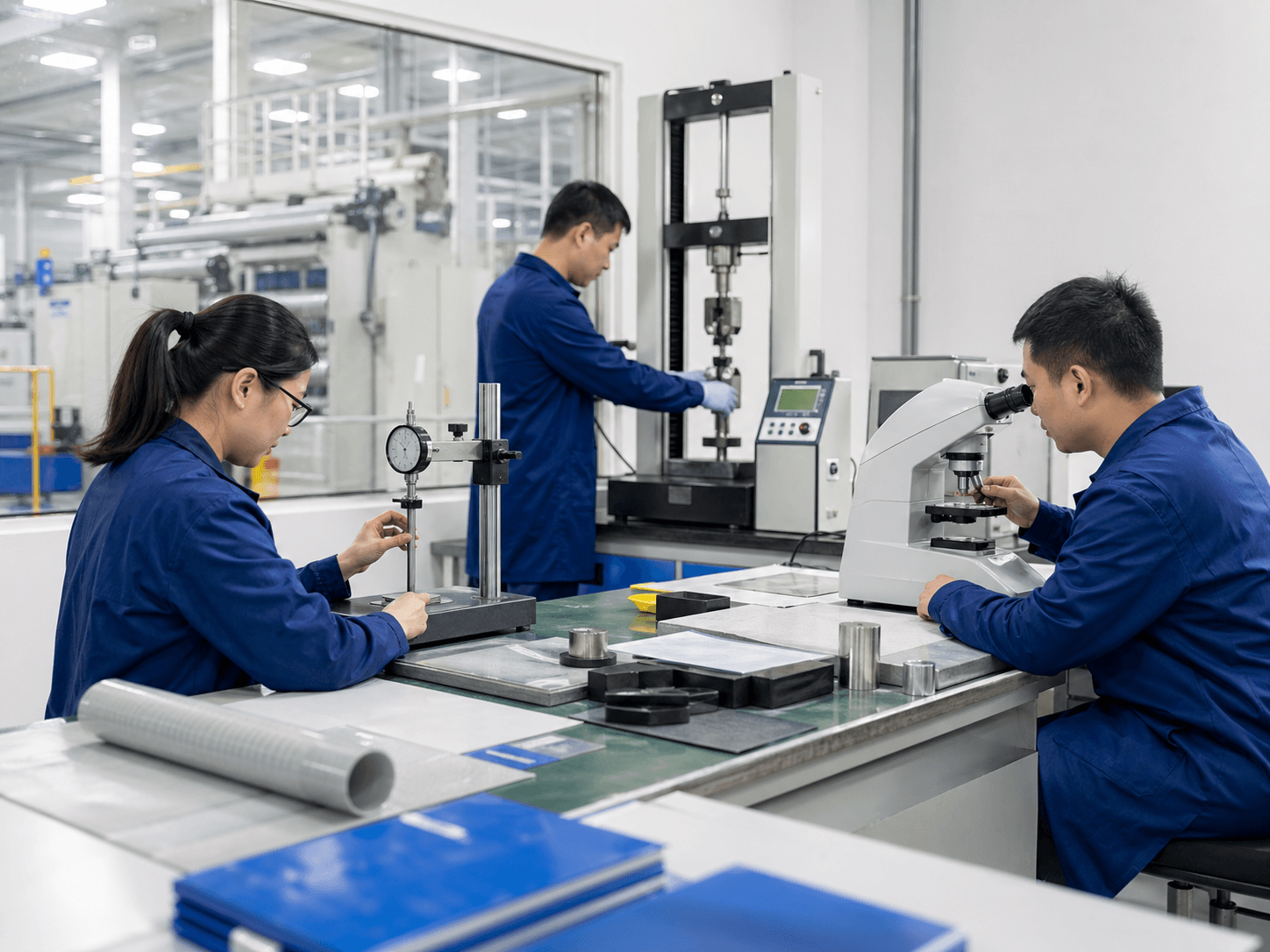
Six Common Rolling Defects
Telescoping
Layers slip forward into a cone shape under pressure — the classic rolling failure.
Wrinkles / Creases
Folds in the membrane or spacer that create weak spots and leak paths.
Glue-Line Leaks
Gaps or starved glue lines that fail the vacuum leak test.
Out-of-Spec Diameter
Finished roll too large or small to fit the housing or end caps.
Loose Outer Wrap
Tape or wrap that lifts, so the element loses shape in storage.
Air Pockets
Air trapped during winding that distorts the roll and disturbs flow.
Defect → Cause → Fix
A quick troubleshooting table to trace each defect back to its root cause and the corrective action.
| Defect | Likely cause | Fix |
|---|---|---|
| Telescoping | Low or uneven winding tension; missing end support | Set consistent tension; ensure correct ATD / end-cap support |
| Wrinkles / creases | Material fed unevenly; membrane or spacer misaligned | Check feed alignment and flatness; keep tension even |
| Glue-line leaks | Starved glue, gaps, or glue used past pot life | Correct glue volume; fresh glue; even bead via static mixer |
| Out-of-spec diameter | Wrong leaf count/length; inconsistent tension | Calculate target with the roll diameter calculator; control tension |
| Loose outer wrap | Low tape adhesion or wrap tension | Correct tape grade; set consistent wrap tension |
| Air pockets | Air trapped during winding | Smooth, steady winding; remove air as layers build |
Stop Defects at the Source
Nearly every defect above is a process-control problem, not a one-off. Consistent winding tension, fresh glue used within pot life, aligned material feed and a calibrated machine remove most of them before they start.
Keep the machine in shape with the maintenance checklist, and gate every element with the QC checklist so defects never reach the customer.
Prevention checklist
- Consistent, calibrated winding tension
- Fresh glue, within pot life
- Aligned, flat material feed
- Target diameter confirmed
- Regular machine maintenance
Rolling Defects Are Where Your Scrap Comes From
Caught late, a rolling defect wastes all the material and labour in the element — or worse, ships to the customer.
Scrapped Elements
A defect found at final test wastes the whole element — membrane included.
Field Failures
A missed leak or telescope reaches the customer and comes back as a claim.
Recurring Loss
Without tracing the cause, the same defect keeps appearing batch after batch.
Fighting rolling defects on your line?
Tell us what you are seeing — our engineers can help you trace the cause and tune your rolling process, free of charge.
People Also Ask
What is the most common RO membrane rolling defect?
Telescoping — where the wound layers slip forward into a cone under pressure — is the classic and most common rolling defect. It usually comes from low or uneven winding tension and inadequate end support.
What causes glue-line leaks in a rolled element?
Starved glue lines, gaps in the bead, or glue used past its pot life. The result is an element that fails the vacuum leak test. Using fresh glue, the correct volume and a static mixer prevents most of these.
How do I stop telescoping?
Maintain consistent, correct winding tension and make sure the anti-telescoping end caps are fitted and supporting the layers. Calibrate the machine regularly so tension does not drift.
Where are rolling defects usually found?
Most are found at final testing — vacuum leak testing and performance (salt rejection and flow) testing — rather than during winding. Recording results lets you trace each defect back to its rolling cause.