

Incoming Inspection for RO Membrane Raw Materials
Consistent elements start with consistent materials. This incoming inspection checklist gives you acceptance criteria for every raw material before it reaches your production line.
- Membrane sheet
- Feed spacer & permeate carrier
- Tube, seal & end caps
- Glue & tape
Key Takeaways
- Inspect every material lot against the agreed data sheet.
- It is the cheapest place to stop a defect — before production.
- Check dimensions, condition, batch and shelf life.
- Record the lot so quality is traceable end to end.
Quality Starts at Goods-In
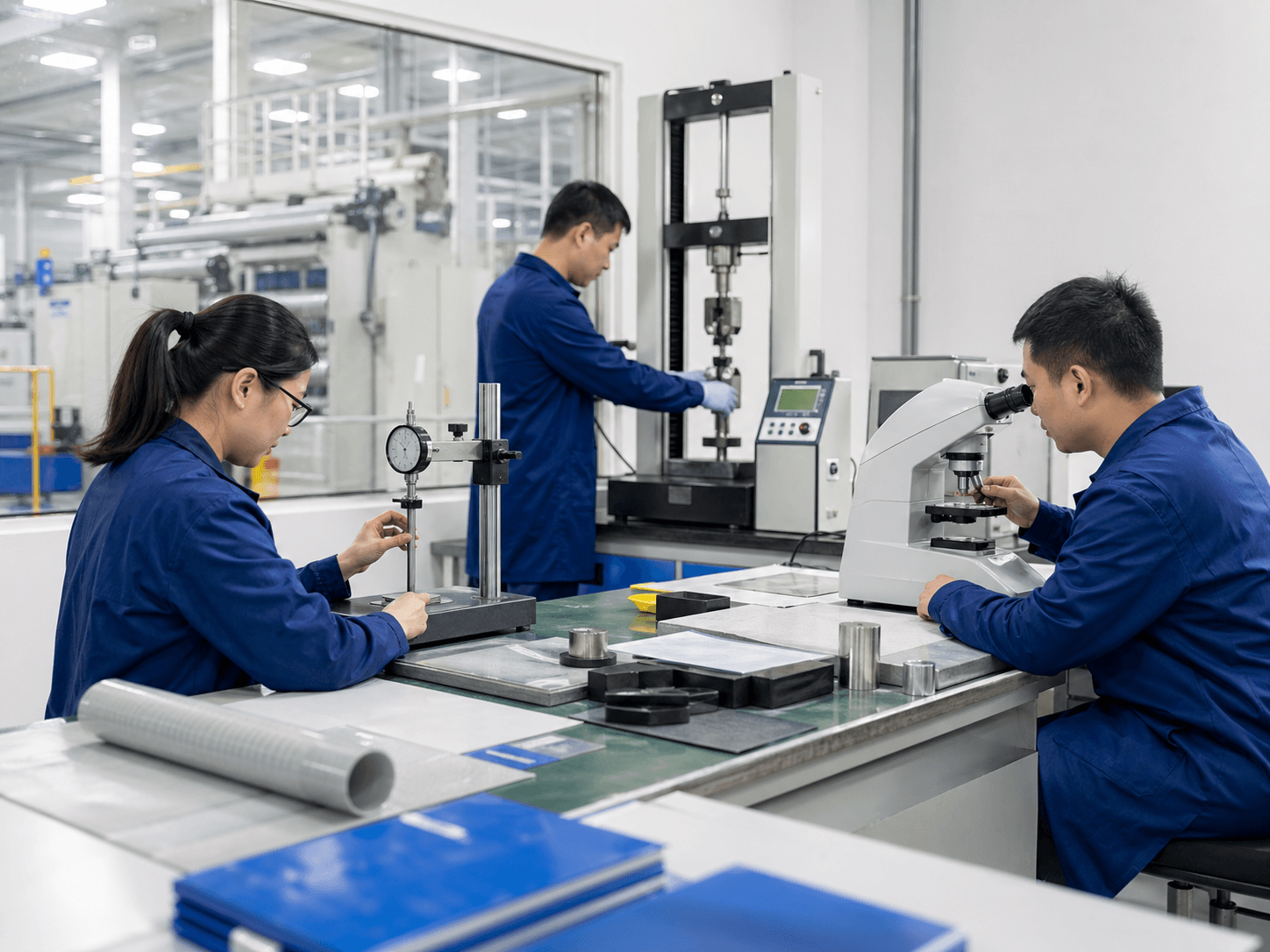
The cheapest defect to fix is the one you never let into production. Incoming inspection checks each raw material lot against its agreed specification, so out-of-spec membrane, the wrong spacer thickness or expired glue is caught at the door — not three steps into a wasted element.
Check each material against its data sheet, and use the raw material selection guide to know what “right” looks like for your element sizes.
Incoming Inspection Checklist
Tick each item per material lot. Download the PDF below to print it for goods-in.
A one-page PDF for your goods-in / quality team.
Build It Into Goods-In
Agree acceptance criteria with each supplier up front — ideally tied to the data sheet — then inspect and record every lot on arrival. Sample-test where it matters (a trial element from a new membrane batch), and quarantine anything that fails until it is resolved.
Feed accepted lots into your QC system, and if you are unsure which material is which, start with feed spacer vs permeate carrier.
Make it stick
- Agree criteria vs the data sheet
- Inspect & record every lot
- Sample-test new batches
- Quarantine fails until resolved
- Keep lot traceability
A Bad Lot Multiplies Into Bad Elements
Let one out-of-spec material through and it does not fail once — it fails across every element it touches.
Cheapest Catch Point
Rejecting a lot at goods-in costs far less than scrapping finished elements.
Protects the Batch
One bad spacer or glue lot can ruin a whole production run if it slips through.
Enables Traceability
Recording lots means any later problem can be traced back to its material source.
Want consistent, spec-matched materials?
Buying the full stack from one source keeps specs matched and traceable. Tell us your element sizes and our engineers will help — free of charge.
Incoming Inspection FAQ
What should incoming inspection of RO membrane materials cover?
Check each material lot against its data sheet: membrane grade, width and condition; spacer and carrier thickness; central tube, brine seal and end-cap dimensions; and glue and tape grade, shelf life and storage. Record the batch for traceability.
Why inspect materials before production?
Because a defect caught at goods-in costs a fraction of one caught in a finished element. One out-of-spec lot can otherwise ruin a whole production run before anyone notices.
What checks matter most for membrane?
Confirm the correct grade and width, that the surface is clean and undamaged, that it has been kept wet and not frozen, and that it is within shelf life. Membrane is the highest-value material, so handling matters most here.
How does incoming inspection help traceability?
Recording the lot or batch of every accepted material means that if an element problem appears later, you can trace it back to the specific material source and act on it.