
Build a comparable budget around the element recipe, verified capacity, automation boundary, utilities, quality control and ramp-up requirements.
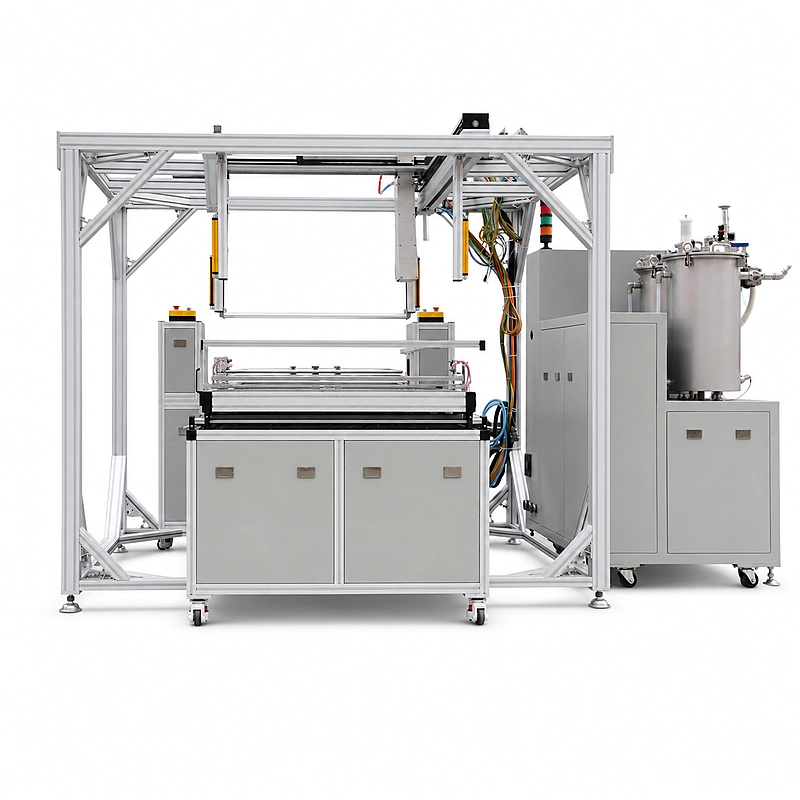
There is no responsible single price for an RO membrane production line without a defined product and process scope. A useful budget must identify the element formats, membrane-leaf recipe, required good output, automation level, included process stations, utilities, tooling, inspection equipment, installation, training and acceptance criteria. Compare suppliers on the same boundary and calculate cost per accepted element, not machine price alone.
Start With the Element, Not the Machine List
Two quotations can both say “complete RO membrane production line” while covering very different work. The product recipe determines the process, and the process determines the equipment scope.
A household 1812 or 3013 element program may prioritize fast model changeover, compact floor space and flexible operators. Industrial 4040 and 8040 production adds larger material handling, controlled adhesive application, trimming, vacuum testing and, for fiberglass-wrapped elements, an FRP winding stage. Even within one format, leaf count, sheet width, spacer geometry, center-tube design and outer-wrap construction can change cycle time and tooling.
Element families
List every format, nominal diameter, length, leaf count and construction that the line must produce.
Station boundary
State whether the proposal begins with master rolls, pre-cut materials or prepared leaves, and where finished-product handling ends.
Acceptance evidence
Define dimensional checks, leak testing, process records and FAT samples required before acceptance.
Before requesting prices, prepare an element recipe or drawing. If the design is still being developed, label provisional inputs clearly and request a staged proposal. WECOME’s 4040/8040 membrane element BOM calculator can help organize material assumptions, while the production line layout guide helps define the physical process boundary.
What Is Normally Included in Line Cost?
A complete investment normally combines core production machines with tooling, controls, handling, inspection and commissioning. Ask every supplier to mark each item as included, optional, customer-supplied or excluded.
| Cost block | Typical scope | Cost driver | Question to ask |
|---|---|---|---|
| Material preparation | Slitting, rewinding, cross-cutting, folding, permeate-carrier cutting and ultrasonic welding | Web width, roll weight, cut tolerance, station count and automatic feeding | Does the line receive master rolls or prepared sheets? |
| Leaf preparation | Sheet and spacer alignment, folding, carrier insertion and central-tube preparation | Element recipe, leaf count, welding method and model changeover | Which actions remain manual? |
| Rolling and gluing | Tension control, adhesive mixing or dispensing, rolling, tape wrapping and unloading | Element size, adhesive system, recipe storage, robot scope and cycle time | Is quoted output based on the approved recipe? |
| Finishing | Curing support, trimming, end-component assembly, brine-seal installation and labeling | Cutting accuracy, handling method, consumables and automation level | Are fixtures included for every model? |
| Quality control | Vacuum leak testing, dimensional checks, traceability and optional performance testing | Test channels, data logging, reject handling and acceptance limits | What does each test prove and record? |
| Utilities and safety | Electrical cabinet, compressed-air preparation, extraction, guards, interlocks and working platforms | Local voltage, plant standard, safety scope and destination requirements | What must the buyer provide before installation? |
| Delivery and start-up | Export packing, freight, installation, commissioning, training, documentation and initial spares | Destination, service duration, language, travel and Incoterm | Which costs are inside the quoted commercial term? |
Calculate Good Output, Not Nominal Machine Speed
Published cycle time is only one input. A production budget should use accepted elements per shift after changeovers, planned stops, material replenishment, curing constraints, inspection and realistic yield.
A practical capacity model
Good output per shift = available production minutes ÷ validated cycle time × utilization × first-pass yieldUse separate assumptions for each element family. Do not apply a household-element cycle time to 4040 or 8040 production, and do not treat a single-machine demonstration as balanced line output.
- Net operating minutes after breaks and planned cleaning
- Validated cycle time using the approved material stack
- Changeover frequency and average changeover duration
- Operator availability and material replenishment time
- Upstream and downstream bottleneck capacity
- First-pass yield rather than gross pieces produced
- Curing racks and work-in-process holding capacity
- Inspection, rework and reject-handling capacity
Use the RO membrane production capacity calculator to test shift and utilization assumptions. For a supplier quotation, request a cycle-time statement that identifies the format, leaf recipe, operators, included actions and start/stop points.
Before comparing equipment quotations, use our RO membrane production line supplier audit to check station boundaries, FAT/SAT, commissioning, training and exclusions on the same basis.
Seven Hidden Costs That Change the Real Budget
Equipment price is visible. Ramp-up losses and factory-side preparation are easier to miss, yet they can delay output or raise cost per accepted element.
- Factory utilitiesPower distribution, voltage conversion, compressed-air capacity, ventilation, extraction, drainage and network connections.
- Freight and import costsExport cases, inland transport, ocean or air freight, insurance, duties, taxes, customs handling and unloading equipment.
- Floor and material flow preparationFoundations, access routes, storage racks, curing areas, WIP space, safe operator clearance and maintenance access.
- Tooling and model change partsFixtures, shafts, molds, cutting tools, adapters and recipes needed for every planned element specification.
- Trial materials and scrapMembrane sheet, spacer, carrier, adhesive, tapes and components consumed during commissioning, parameter development and operator training.
- Quality-system setupGauges, calibration, leak-test references, traceability labels, inspection records and performance verification outside the supplied line.
- Production ramp-upReduced utilization, learning losses, process tuning, technical travel and spare-part lead time before stable output is reached.
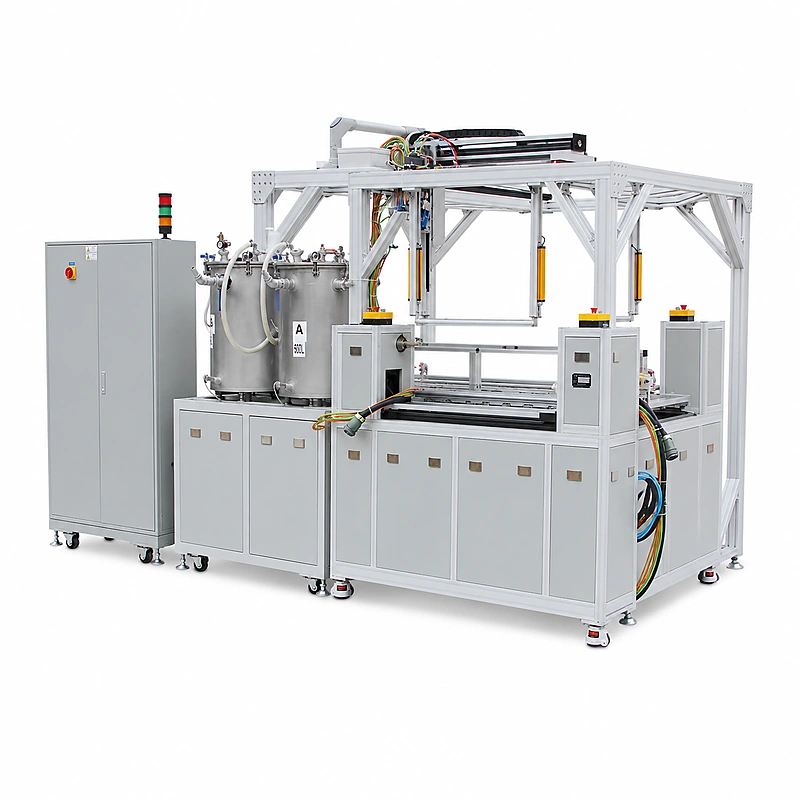
Semi-Automatic or Fully Automatic: Which Costs Less?
The cheaper machine is not always the lower-cost production system. The right automation level depends on output stability, labor conditions, product mix and the cost of defects or changeovers.
| Decision factor | Semi-automatic line | Fully automatic line | Budget implication |
|---|---|---|---|
| Product variety | Often flexible for mixed models and developing recipes | Best when recipes and material supply are standardized | Frequent changeovers can reduce the benefit of maximum automation. |
| Labor | More manual loading, alignment, transfer or inspection | Lower direct handling at integrated stations | Calculate labor per good element, including supervision and rework. |
| Consistency | Depends more heavily on operator method and training | Can improve repeatability when materials and settings are controlled | Value automation through yield and traceability, not headcount alone. |
| Investment | Lower initial capital and easier staged expansion | Higher initial capital and integration requirement | Include interfaces, commissioning and line-balancing costs. |
| Maintenance | Simpler stations and easier isolated service | More sensors, controls and coordinated downtime risk | Review spare parts, remote support and local technical capability. |
Suitable when the product mix changes often, demand is still being validated or investment will be phased.
Suitable when specifications are stable, volume is predictable and consistent process records have high value.
Automate quality-critical or labor-intensive steps while keeping selected transfers and inspections flexible.
For a structured comparison, review the semi-automatic versus fully automatic line guide. The purpose is not to declare one architecture universally better, but to connect automation to the factory’s actual constraints.
Compare Cost per Accepted Element
A useful financial comparison combines capital cost with recurring labor, utilities, maintenance, consumables, rejects and downtime over a defined planning period.
Simple TCO framework
Cost per good element = (annualized equipment + labor + utilities + maintenance + tooling + scrap + downtime cost) ÷ accepted annual outputApply the same working days, shifts, utilization, yield, currency and depreciation period to every proposal. Keep raw-material consumption separate when suppliers are not quoting the same element recipe.
Run a base case, a lower-demand case and a growth case. A highly automated line may be attractive at stable high utilization but uneconomic when demand is uncertain. A lower-cost line may become expensive if it requires continuous rework or cannot document quality. Sensitivity analysis makes the trade-off visible before purchase.
Information to Send Before Requesting a Price
A supplier can prepare a more accurate proposal when the request describes what must be produced and accepted. The following information also reduces later change orders.
Production-line cost brief
Review WECOME’s RO membrane production equipment range to identify relevant stations. For a coordinated project covering layout, equipment and start-up, see the turnkey RO membrane production line service.
RO Membrane Production Line Cost FAQ
How much does an RO membrane production line cost?
The cost depends on element formats, material starting state, output, automation, process stations, inspection equipment, tooling, installation and commercial terms. A supplier needs these inputs before offering a meaningful figure. Compare complete scope and cost per accepted element rather than headline price.
Does a fully automatic line always have the lowest production cost?
No. Full automation can reduce handling and improve repeatability when volume, recipes and material supply are stable. Mixed products, frequent changeovers, uncertain demand or limited maintenance capability may favor semi-automatic or hybrid configurations.
What is usually excluded from an equipment quotation?
Depending on the supplier and Incoterm, exclusions may include freight, duties, unloading, power and air connections, factory modification, trial materials, performance-test equipment, third-party certification, travel, accommodation and production losses during ramp-up. Require a written inclusion and exclusion schedule.
How should two line quotations be compared?
Use one matrix covering product recipe, station boundary, good output, operator scope, utilities, tooling, QC, data functions, safety, FAT, delivery, commissioning, training, spares and warranty. Normalize currency, Incoterm, utilization and yield before calculating total ownership cost.
Which cost input is most often underestimated?
Ramp-up is frequently underestimated. Trial materials, operator learning, parameter development, reduced utilization, rework and delayed factory readiness can all affect the first months of production. Include a documented commissioning and acceptance plan.
Request a Production Line Proposal Built Around Your Element Recipe
Send WECOME your element formats, drawings, target good output, preferred automation level, available floor space and utility conditions. We can map the required stations, clarify buyer-supplied items and prepare a comparable equipment proposal.
Request a Configured Line ProposalBefore comparing equipment quotations, review the factory, utility and staffing decisions in our RO membrane factory planning guide.

Bessie has 10+ years of experience in RO membrane materials and water treatment supply chains. At WECOME, she helps manufacturers and system integrators worldwide source the right membrane components — from feed spacers and permeate carriers to NSF-certified adhesives — backed by hands-on technical support.