
5 RO Membrane Production Equipment Suppliers to Compare
For buyers who need to build spiral-wound elements, not simply buy finished membranes.
Direct answer: shortlist suppliers by the part of the process they can document, not by a machine photo or a generic “turnkey” label. WECOME (China), ELSNER Engineering (United States), GFM Spezialmaschinenbau (Germany), BlueOcean Memtech (Singapore) and Tech Inc. (India/Canada presence) publicly describe relevant equipment. Their offerings span production stations, customized winding systems and research-scale module making; they are not interchangeable quotations. Give each the same element drawing and demand a station-by-station scope and sample-based acceptance plan.
A buyer searching for “RO membrane production equipment manufacturers” often receives results for finished RO membrane brands, complete water-treatment plants, flat-sheet coating machinery and spiral-wound element assembly equipment. Those are four different procurements. This guide focuses on the last one: converting qualified membrane sheet, feed spacer, permeate carrier, tubes and adhesives into tested spiral-wound RO elements. We disclose WECOME as the publisher and one of the candidates. The other companies’ descriptions come from their own public information; we have not audited their factories, tested their machines or compared their prices.
What Are You Actually Buying?
The expensive mistake is requesting “an RO production line” before writing the process boundary. One supplier may interpret that as a winding machine. Another may include sheet cutting and leaf preparation. A third may quote upstream flat-sheet casting or coating, which does not by itself produce a finished element. An element project may also need adhesive dispensing, curing, trimming, brine-seal/end-part installation, vacuum or hydraulic testing, packaging, utilities and operator training. Put each station on paper before contacting vendors.
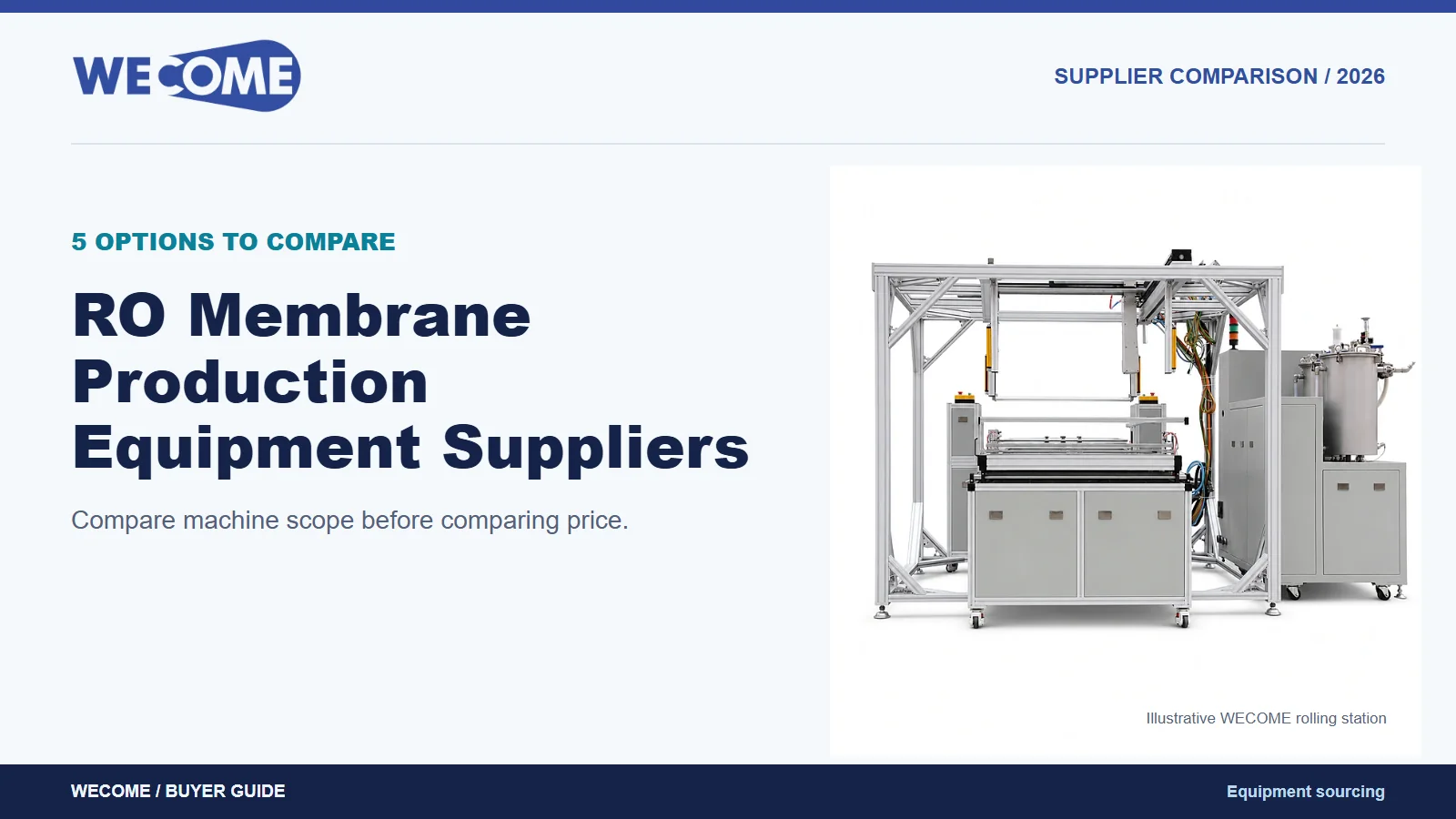
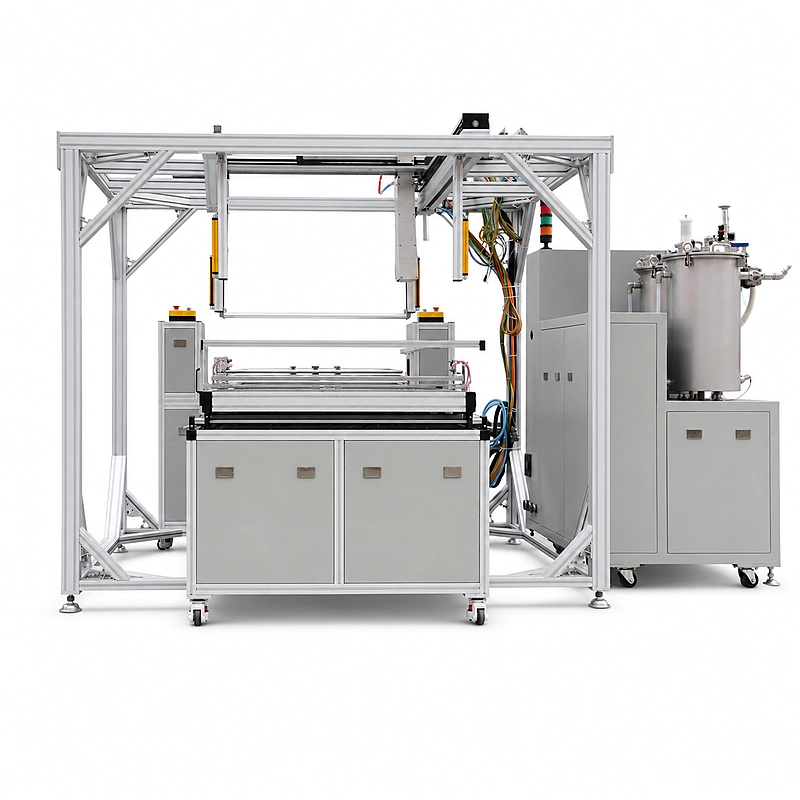
This original process diagram shows scope, not a claim that every supplier sells every station. For an example of one station, see WECOME’s industrial semi-automatic rolling machine. For a broader project, review the 4040/8040 manufacturing solution. The product drawing, adhesive recipe and intended output determine which adjacent machines are necessary.

Five Suppliers, Five Publicly Described Offers
These companies were selected because an official page describes spiral-wound filter/element equipment or a related production system. Geography helps a buyer think about site service, shipping and time-zone support, not quality. The list is a sourcing starting point, not a ranking or exhaustive market census. No supplier should be credited with a particular 1812, 4040 or 8040 configuration unless its quotation and drawing show it.
| Supplier and base | What its public source shows | Best initial fit | Unresolved until RFQ |
|---|---|---|---|
| WECOME, China | Residential and industrial machines including rolling, preparation, trimming and testing categories | Buyers coordinating several element stations and materials | Exact scope, recipe, FAT/SAT and approved formats |
| ELSNER Engineering, USA | Published folding, pack-building, rolling/taping/gluing and trimming equipment for spiral-wound filter elements | Automation of selected converting steps | Current availability and RO-specific compatibility |
| GFM Spezialmaschinenbau, Germany | Customized spiral-winding systems for RO and other membrane filtration methods | Custom winding or modular automation | Tooling, throughput and adjacent stations |
| BlueOcean Memtech, Singapore | Element system, auto/manual rolling, trimming and feed-spacer cutting/welding; separate flat-sheet-making equipment | Buyers separating sheet making from element making | Which machines form the quoted RO line |
| Tech Inc., India/Canada presence | Spiral-winding machine described for research, custom modules and pilot testing | R&D and pilot module validation | Production-scale output, if proposed |
WECOME: discuss the material recipe and machinery together
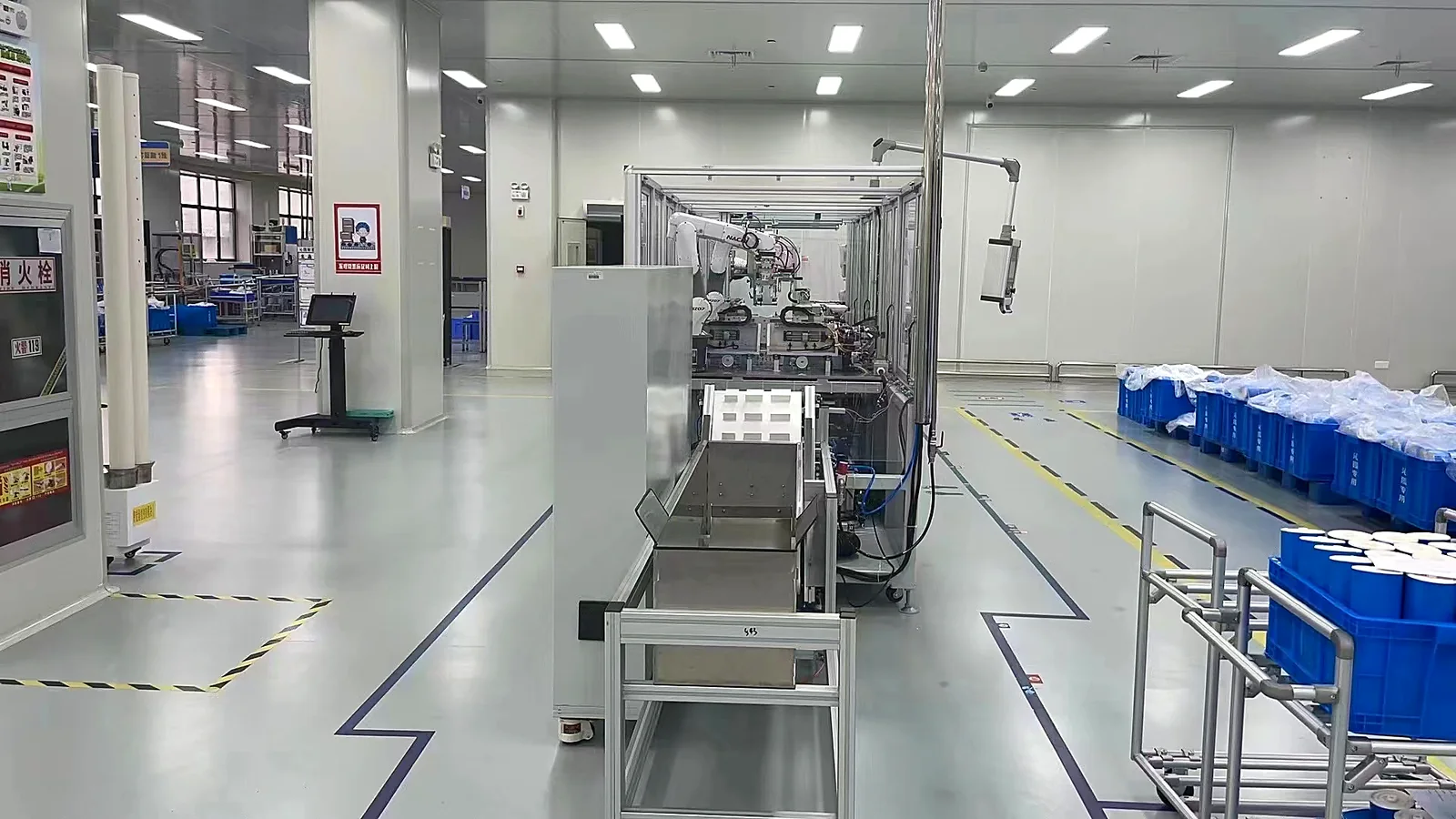
WECOME’s industrial category includes sheet/spacer cutting, carrier preparation, rolling, trimming and vacuum testing, while its residential category addresses smaller formats. That makes it a candidate when the buyer wants to coordinate the material stack with several stations. It does not mean every quoted machine accepts every element size or that every auxiliary station is included. Ask for a drawing-based included/excluded list. A buyer with an existing line should ask whether only a bottleneck station can be supplied and integrated.
Question that matters: with your actual sheet width, leaf count, tube drawing and adhesive, what sample elements will be produced during FAT, and which checks will be repeated after installation? See WECOME’s industrial equipment category.
ELSNER Engineering: separate named stations from a complete line
ELSNER’s own 2022 article names the EMF-42 membrane folder, APB-42 pack builder, SFR-42 rolling/taping/gluing machine and an element trim saw. That is useful evidence of process coverage, but the article concerns spiral-wound filter elements generally. It is not proof that today’s standard quotation includes all four machines, that every model is still available, or that each accepts your RO leaf geometry. If a vendor shows high automation, calculate the labor and quality benefit for your real mix of formats and changeovers, not one demonstration run.
Question that matters: which current models and tooling will handle your RO element, and can ELSNER run an acceptance trial with your materials? Read ELSNER’s equipment description.
GFM Spezialmaschinenbau: specify the special machine before comparing price
GFM explicitly describes custom spiral-winding systems for membrane filters, including reverse osmosis, and says modular functions can be combined into wider solutions. This is relevant when a catalogue machine does not fit the product geometry or intended automation. A customized offer can be valuable, but “turnkey” still needs a boundary: who owns material handling, leaf formation, glue, curing, downstream inspection and integration? A low machine price is meaningless if critical interfaces fall between vendors.
Question that matters: what will GFM design, deliver, integrate and verify against signed element drawings, and what remains buyer-supplied? Read GFM’s filtration page.
BlueOcean Memtech: distinguish making sheet from making elements
BlueOcean’s page lists flat-sheet casting and TFC coating separately from spiral-wound element manufacturing, automatic/manual rolling, trimming and feed-spacer cutting/welding. That distinction prevents a costly category error. If your factory purchases membrane sheet and only assembles elements, upstream membrane chemistry and coating equipment may be outside the project. If you intend to make flat sheet too, ask for two separate process and capital plans before accepting a combined headline.
Question that matters: is the quotation for sheet manufacture, element assembly or both, and which facilities and acceptance tests belong to each? Read BlueOcean’s equipment page.
Tech Inc.: useful for trials, not automatically a factory line
Tech Inc.’s winding page discusses researchers, pilot testing and process development for RO, NF and UF modules. It describes controlled winding tension and module geometry, but the public description is not an industrial output guarantee. A pilot machine may be right for a developer proving a new sheet or small-volume format; it may be wrong for a high-volume contract factory. Clarify whether the requested machine is a laboratory capability, pilot cell or production asset.
Question that matters: what shift output and repeatability can be demonstrated with the buyer’s design, and what additional stations deliver sellable elements? Read Tech Inc.’s winding-machine page.
Why Similar-Looking Quotations Fail on the Factory Floor
A format label hides the real drawing
“4040” and “8040” identify broad element formats, not the approved leaf count, membrane dimensions, tube geometry, finished body diameter, glue path or trim allowance. Even two nominal 4040 recipes can need different fixtures or changeover steps. Send each supplier the same drawing revision and identify any confidentiality limits. If a vendor will not state dimensional operating windows and tooling assumptions in writing, the price comparison is not apples to apples.
A cycle-time claim is not accepted output
A fast empty-machine cycle omits roll changes, leaf loading, adhesive replenishment, format changeover, curing, test rejects and operator breaks. Ask for a timed trial: specify starting material condition, operator count, consecutive elements, scrap classification and final tested good units. The useful metric is accepted elements per staffed shift under an agreed method. Do not convert a promotional cycle time into revenue projections without evidence.
The weld and glue do different jobs
For the WECOME industrial process, ultrasonic spot welding positions the permeate-carrier layer at several points before rolling. The three-side adhesive path seals membrane leaf edges; positioning welds do not replace the adhesive seal. Other suppliers may use different sequences, so request an explicit process diagram and validation method. This matters especially when comparing a prepared-leaf machine with a rolling-only machine.
The cheapest delivered machine may leave the largest integration bill
Who supplies air, power distribution, extraction, glue metering, curing space, test water and fixtures? Who connects the machine to an existing PLC or traceability workflow? Who returns when a customer material behaves differently from the FAT material? A purchase order saying “machine” but omitting interfaces, commissioning and operator training moves cost and delay to the buyer. Assign one owner to each interface before comparing landed price.
RFQ Questions That Force Comparable Answers
Send one attachment to every candidate. Mark confidential dimensions under NDA if necessary, but do not send one vendor a full build and another a vague size label. Request numbered replies and a proposal revision so omitted items remain visible.
| RFQ field | What to write or request | Decision it enables |
|---|---|---|
| Product family | 1812/3013 or 4040/8040; feed type; drawing/BOM revision; target finished specification | Standard machine, new tooling or different line? |
| Starting material | Roll widths/diameters, sheet grade, spacer/carrier, tube drawing, adhesive and storage condition | Does the demonstration reflect real conversion? |
| Station boundary | Itemized schedule with included/excluded auxiliaries and hand-off points | Does “line” include preparation, rolling, finishing and testing? |
| Performance basis | Good elements per staffed shift, operators, trial duration, changeover, scrap and test method | Will advertised output survive production conditions? |
| Acceptance | FAT sample count, dimensions, integrity/performance criteria, SAT conditions and failure remedy | What triggers handover and payment? |
| Support | Utilities, layout, manuals, spares, training, site response, software access and exclusions | Who is responsible when production stops? |
For a more detailed machine brief, use the existing RO membrane rolling-machine RFQ checklist. It requests the inputs needed to propose equipment instead of repeating this comparison.
Which Supplier Type Fits Your Situation?
New household-element factory: ask for evidence on the exact 1812/3013 recipe, operator workflow and training. An industrial 8040 reference is not an automatic pass. Coordinate smaller-format machines with the approved sheet, carrier, tube and adhesive.
Industrial 4040/8040 expansion: compare industrial rolling, leaf preparation, trimming and testing separately. If you own three of them, a compatible bottleneck replacement may be better than a new “complete line.”
New chemistry or low-volume R&D: a pilot-oriented winding supplier may be a better first step than a high-output line. Define how a successful pilot recipe transfers to production.
Unusual geometry: discuss custom systems, but require interface responsibility, staged design reviews and a clear acceptance drawing. Custom engineering should solve a documented constraint, not just make the quote harder to compare.
No public supplier page proves which offer is best for your factory. The best next step is a small technical shortlist and one common RFQ. After written proposals, visit or request a video trial of the closest station, inspect sample-element records and speak with operators about material handling and maintenance. Price becomes meaningful only after the boundaries align.
Questions Buyers Also Ask
Is a membrane manufacturer the same as a production-equipment supplier?
No. A finished-element manufacturer sells membranes or modules; an equipment supplier sells machines that convert materials into those products. Some firms do both. Ask whether the offer concerns finished elements, flat-sheet making or spiral-wound element assembly.
Can one rolling machine make both 1812 and 8040 elements?
Do not assume so. Tooling, handling forces, leaf dimensions, material rolls, winding diameter and operator access differ. Request model-specific drawing review and a trial for every required format family.
What is the difference between FAT and SAT?
Factory acceptance testing checks functions and agreed sample output before shipment. Site acceptance testing repeats defined checks after installation with site utilities, operators and agreed materials. Set sample count and pass/fail criteria before ordering, including retest responsibility.
Should equipment and raw materials come from one supplier?
One coordinated source can simplify trials and responsibility, but is not mandatory. Specialist materials may suit an approved recipe. Either way, keep grade, lot, drawing and incoming inspection records for every material.
Get a Scope Review Before Requesting Prices
Send WECOME your target element formats, drawing or sample, starting materials, target accepted output and stations you already own. We can propose an equipment boundary and identify the questions that still need trial evidence. A public supplier list cannot replace that review.
Discuss Your Production ProjectSources and editorial disclosure
Descriptions were checked against first-party pages in September 2026. Public pages show stated scope, not verified availability, comparable performance or an independent ranking. ELSNER’s cited overview is dated 2022; confirm current models directly. WECOME is the publisher and one candidate.

Bessie has 10+ years of experience in RO membrane materials and water treatment supply chains. At WECOME, she helps manufacturers and system integrators worldwide source the right membrane components — from feed spacers and permeate carriers to NSF-certified adhesives — backed by hands-on technical support.