
 Sheet Cutting & FoldingMembrane-leaf preparation
Residential RO Membrane Production Equipment
WECOME Machines for 1812, 2012, 3012 and 3013 household RO membrane manufacturing.
All Products
Menu
Start Your RO Membrane Project With Confidence
From equipment selection to membrane materials, we support efficient sourcing for industrial and residential applications.
- Professional Team
- Reliable Supply
- Quick Quotation
Get tailored recommendations for your RO membrane project.
Household RO Membrane Manufacturing
Residential RO Membrane Production Equipment
WECOME supplies household RO membrane making machines for spiral-wound element production, from membrane-sheet preparation and rolling to trimming, vacuum testing, center-tube taping and brine-seal assembly. Equipment is configured around the approved 1812, 2012, 3012 or 3013 element design, output target and factory workflow.
1812-3013 Programs · Drawing-based configuration
Manual to Automatic · Match the required output
Factory Support · Layout, installation and training

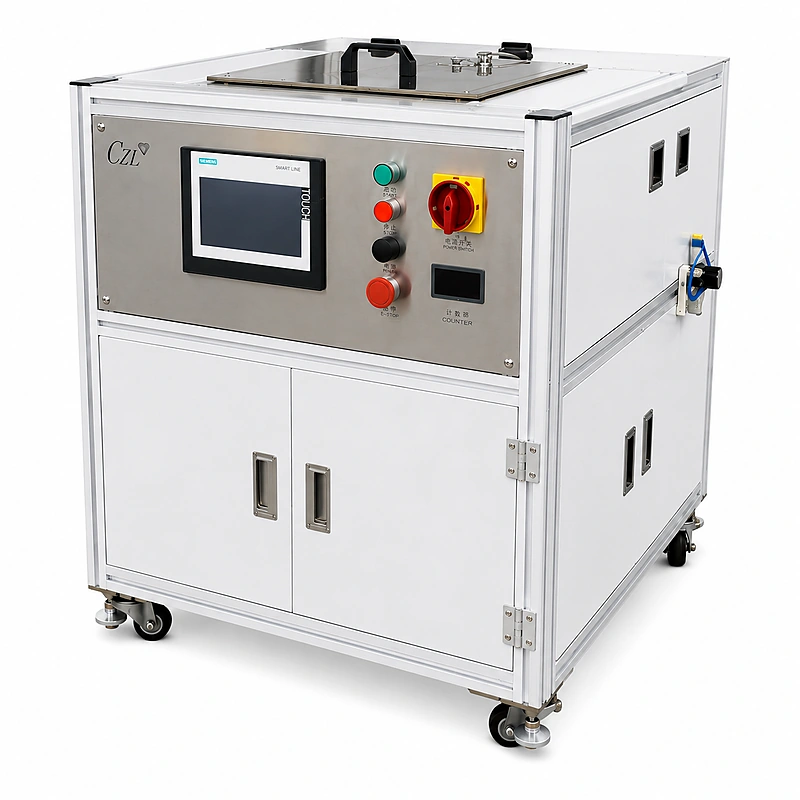
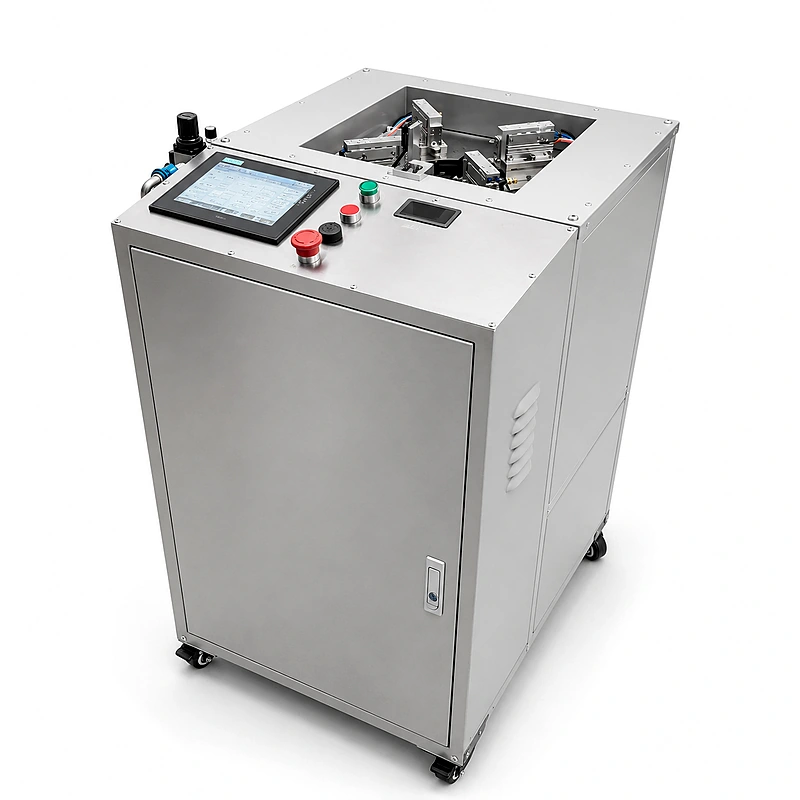
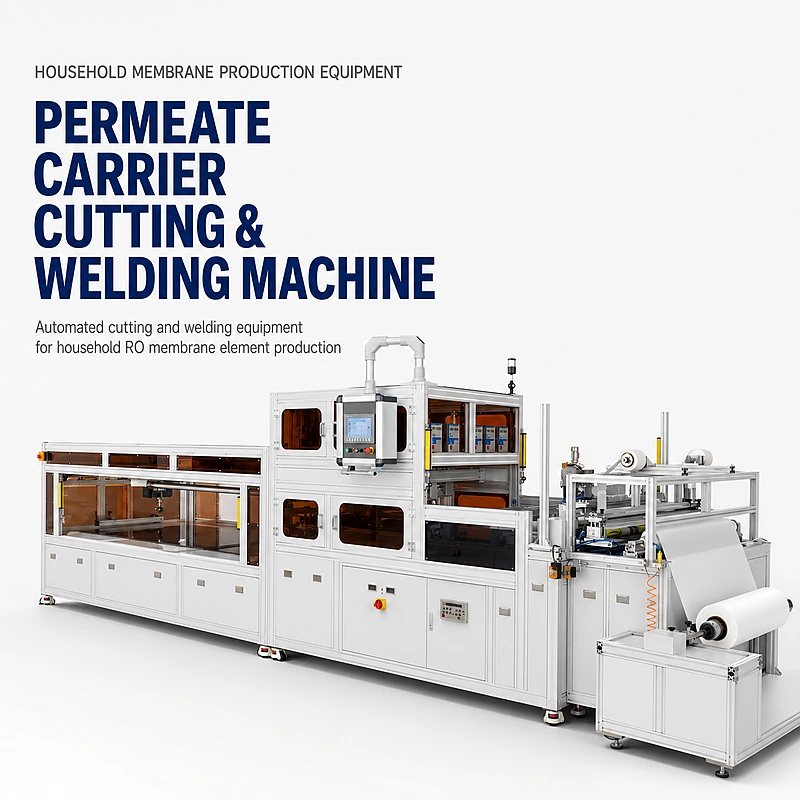
A precision RO membrane cutting machine for household element production — it cuts the permeate carrier to length and ultrasonically......
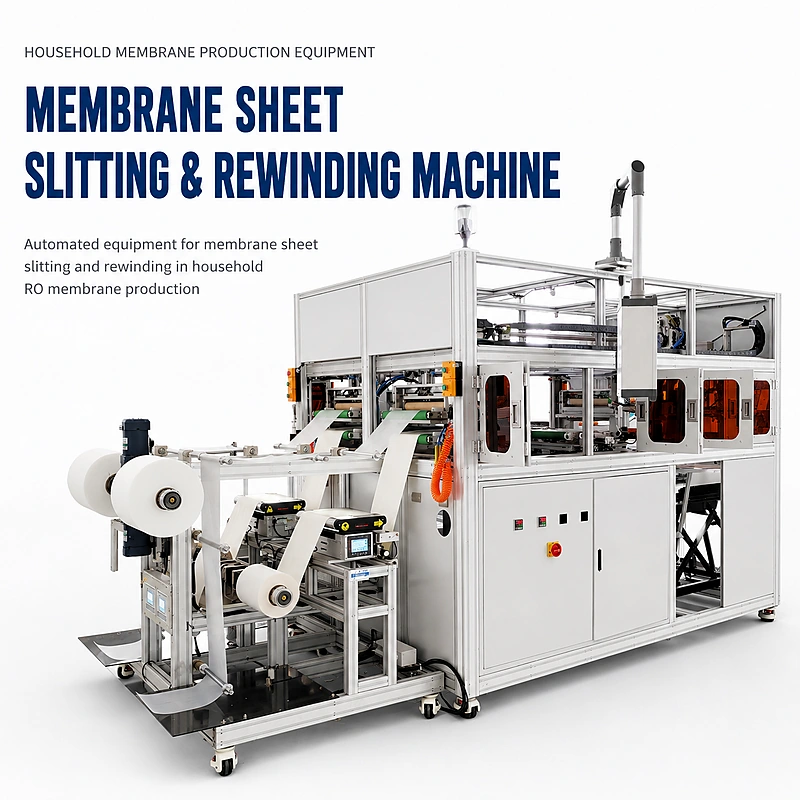
A precision RO membrane sheet slitting machine for household element production — it slits wide RO membrane rolls to leaf......

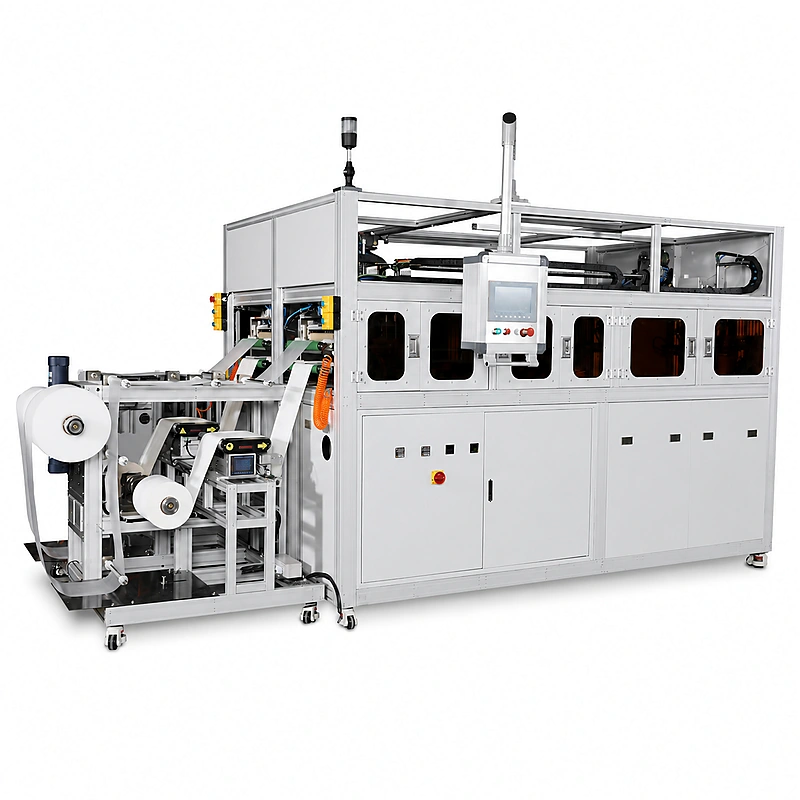
An automatic RO membrane sheet cutting machine for household element production — it cuts, folds and ultrasonically welds membrane leaves......
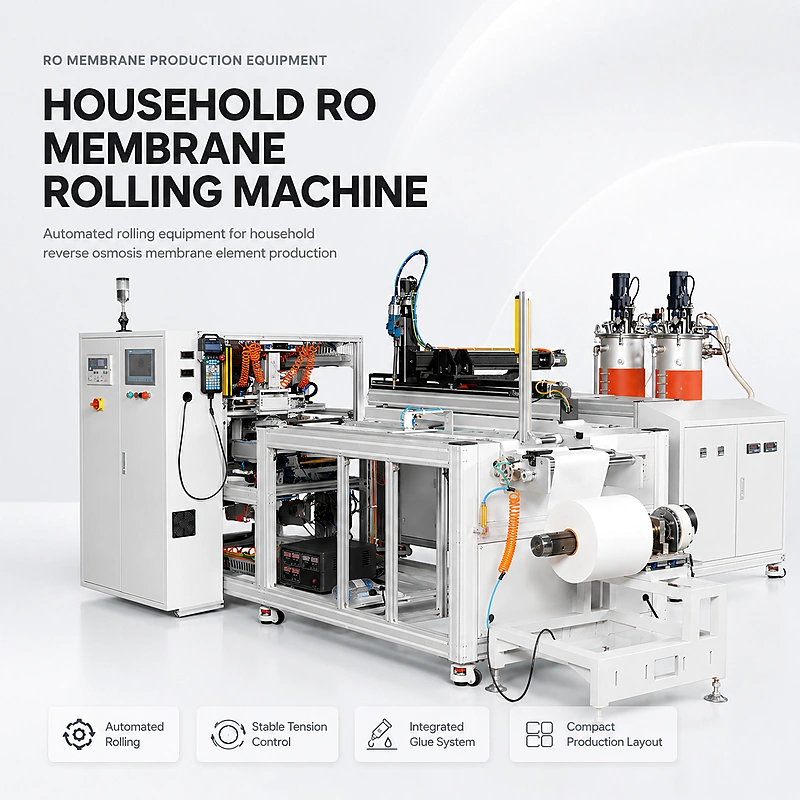
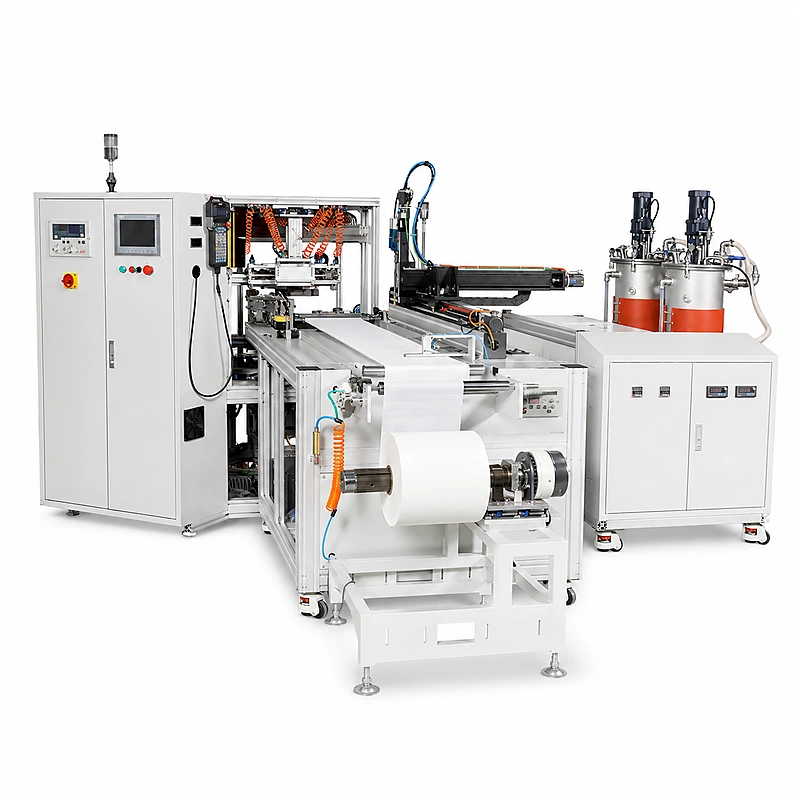
An automatic RO membrane rolling machine for household elements — closed-loop feeding, gluing, rolling, tension control and tape winding for......
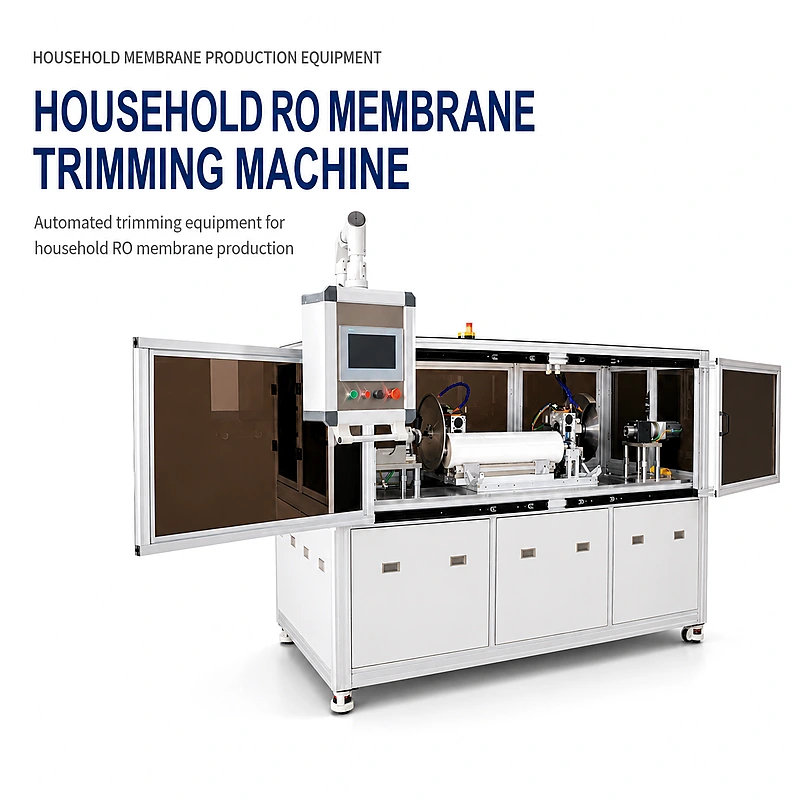
An automatic RO membrane trimming machine for household elements — trims both element ends square after glue curing at 2–3......
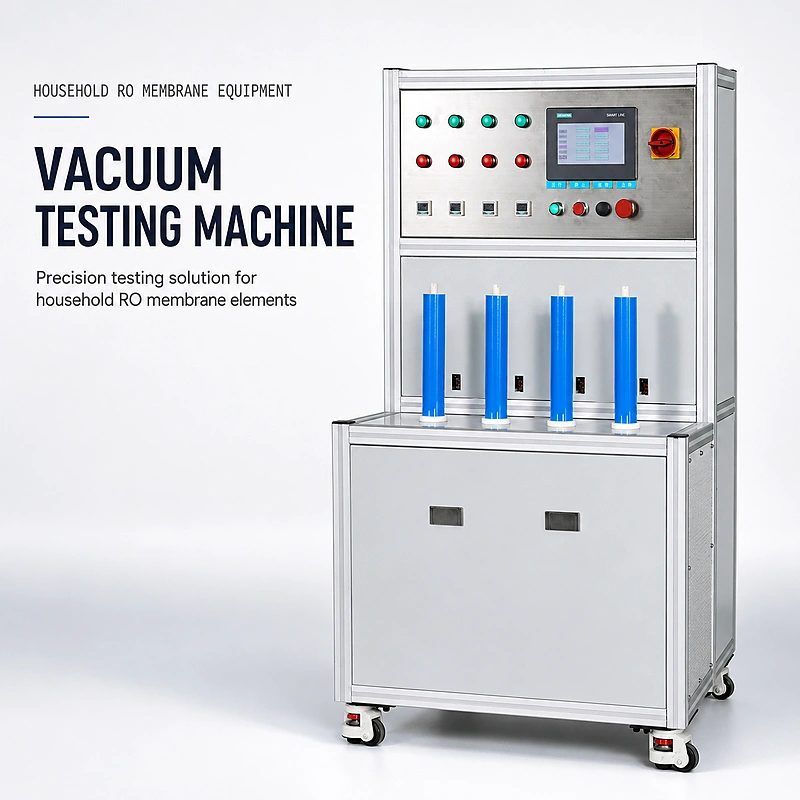
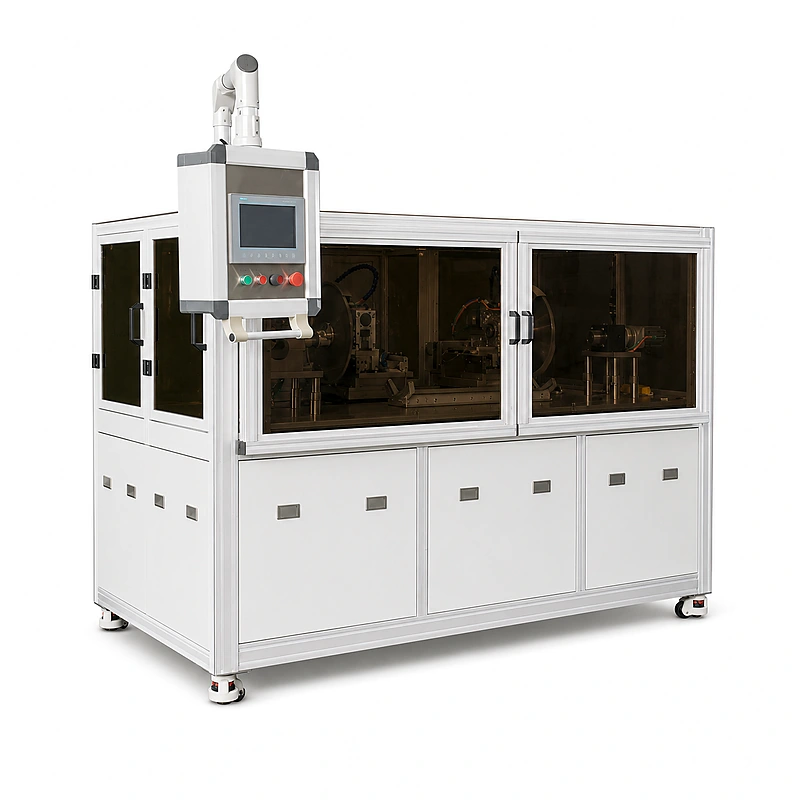
A quality-control RO membrane testing machine for household elements — four-head vacuum leak testing detects glue-line and seam defects at......
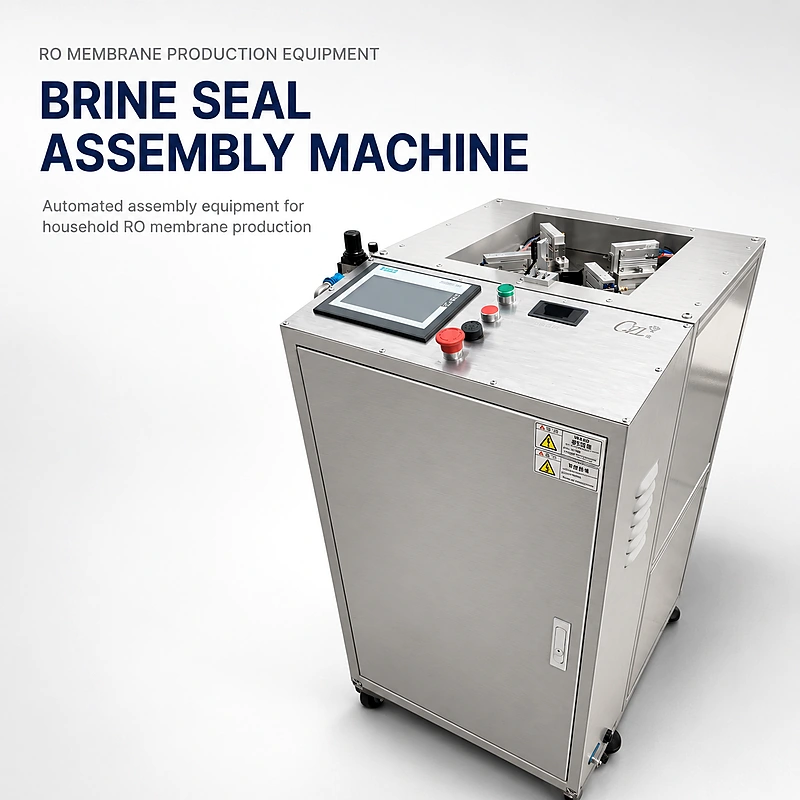
An automatic RO membrane brine seal setting machine for household elements — secures the brine seal with tension-controlled tape winding......
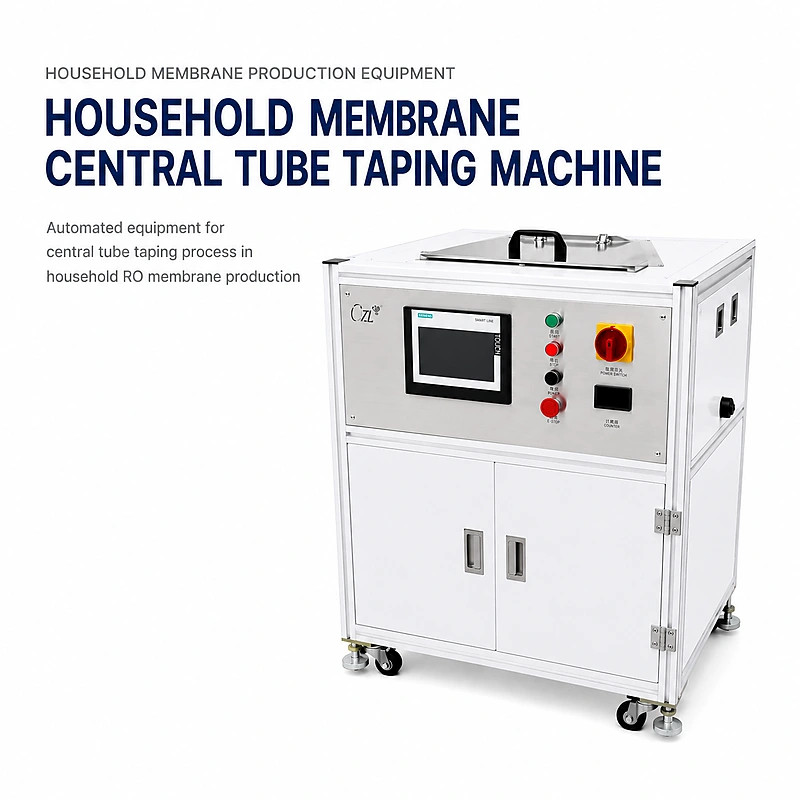
An automatic RO membrane central tube taping machine for household elements — winds tube tape on both ends to separate......
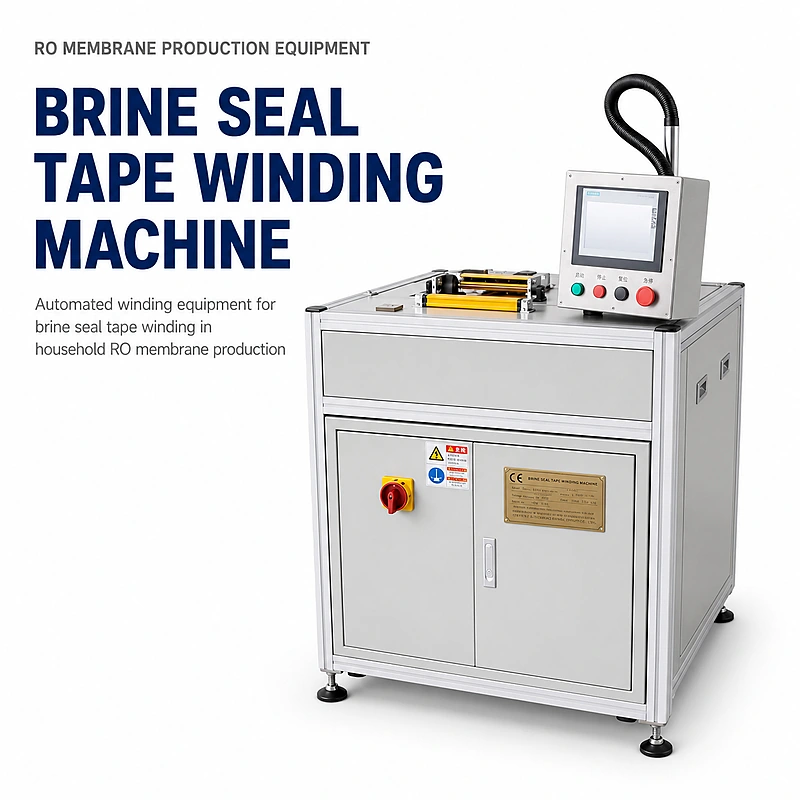
An automatic RO membrane tape winding machine for household elements — wraps sealing tape to secure the brine seal at......
Process Coverage
Equipment for Household RO Membrane Production
A residential membrane production line should be planned around the approved element construction, required output and division of work between operators and machines.
| Production stage | Equipment function | Key confirmation points | Relevant equipment |
|---|---|---|---|
| Material preparation | Slit membrane rolls, cut sheets and prepare folded membrane leaves before rolling. | Roll width, leaf size, cutting accuracy, fold position, material handling and target element format. | Slitting & rewinding Cutting & folding |
| Element rolling | Coordinate tube loading, membrane-leaf placement, spacer arrangement, adhesive application and winding. | 1812/2012/3012/3013 format, layer count, finished diameter, adhesive path, cycle target and operator tasks. | Household RO membrane rolling machine Fully automatic production line |
| Finishing and assembly | Trim element ends, prepare the center tube and install or tape the brine seal. | Element length, end-face quality, tape position, seal orientation, tooling and product changeover. | Trimming machine Brine seal assembly |
| Integrity control | Support vacuum-based leak screening before hydraulic performance testing and release. | Fixture interface, vacuum level, hold time, acceptance criteria, records and downstream test method. | Household vacuum testing machine |
Equipment supports process repeatability but does not by itself guarantee flow, salt rejection or finished-element compliance. Results depend on the complete element design, materials, adhesive cure, controls and validated hydraulic testing.
Project Definition
How to Specify Residential RO Membrane Equipment
Start with the element drawing and daily production target. For household RO membrane rolling machines, the terms automatic and semi-automatic are not enough to define the correct configuration.
WECOME reviews the product mix, operator workflow, materials, utilities and acceptance criteria before confirming the required stations.
01 · ELEMENT
Formats and drawings
Provide the exact 1812, 2012, 3012 or 3013 tube, leaf, layer and finished-diameter data.
02 · OUTPUT
Capacity target
State pieces per shift, working hours, product mix, operators and expected changeover frequency.
03 · MATERIALS
Process inputs
Identify membrane, feed spacer, permeate carrier, central tube, adhesive, tape and seal specifications.
04 · AUTOMATION
Operator workflow
Confirm loading, alignment, adhesive dispensing, rolling, unloading and handling tasks to automate.
05 · CONTROL
FAT criteria
Define trial materials, sample element, cycle reference, dimensional checks and acceptance records.
06 · DELIVERY
Installation support
Confirm layout, utilities, training, documentation, spare parts and post-delivery responsibilities.
Quick Answers
Household RO Membrane Equipment FAQs
Direct answers for factories comparing residential membrane making machines and production-line configurations.
What machines are used to manufacture household RO membrane elements?
A typical workflow may include membrane-sheet slitting, sheet cutting and folding, center-tube taping, membrane rolling, element trimming, brine-seal assembly or tape winding, vacuum integrity screening and hydraulic performance testing. The required stations depend on the approved product design and existing factory operations.
Which element sizes can a household RO membrane rolling machine produce?
Residential programs commonly include 1812, 2012, 3012 and 3013 formats. Compatibility cannot be confirmed from the model name alone; tube geometry, leaf dimensions, layer count, finished diameter, adhesive path and tooling must match the approved drawing.
What is the difference between automatic and semi-automatic membrane rolling equipment?
The difference is the division of work between operators and the machine. Compare material loading, alignment, adhesive dispensing, rolling, unloading, changeover, inspection and data-recording steps, as well as output and labor requirements.
Can the equipment be configured as a complete residential RO membrane production line?
Yes. Individual machines can be planned as a coordinated line, and a fully automatic household RO membrane production line is also available. The final scope must clearly identify included preparation, rolling, curing, finishing, testing, handling and packaging operations.
Does a membrane making machine guarantee finished-element performance?
No. Equipment improves control and repeatability, while finished flow, salt rejection and integrity also depend on membrane chemistry, material compatibility, element construction, adhesive cure, process settings and validated testing.
What information is needed for an accurate equipment quotation?
Send element drawings, target formats, output per shift, material and adhesive specifications, current production steps, automation expectations, utilities, available floor space and FAT acceptance criteria.
Plan the Line Around Your Household Element
Share your 1812, 2012, 3012 or 3013 element drawing, production target, materials and factory conditions. WECOME will review the required equipment and information needed for a technical proposal.