


How membrane leaves, spacers, adhesives, the central tube and process controls become a repeatable spiral-wound RO element.
The RO membrane manufacturing process converts qualified flat-sheet membrane and supporting components into a sealed spiral-wound assembly. The core sequence is incoming inspection, membrane-leaf preparation, central-tube attachment, adhesive application and rolling, curing, trimming and component assembly, followed by dimensional checks, integrity screening and hydraulic performance verification under defined test conditions.
RO Membrane Manufacturing Process at a Glance
The exact machines and acceptance limits change by element design, but the control logic remains consistent: verify the materials, create repeatable leaves, preserve alignment while rolling, allow the adhesive system to cure, and prove that the released element meets its documented specification.
Incoming inspection
Confirm material identity, lot, dimensions, storage condition and visible quality before conversion.
Leaf preparation
Cut and fold membrane sheet around the permeate carrier to the approved leaf dimensions.
Tube and stack
Connect the permeate path to the perforated tube and arrange membrane leaves with feed spacers.
Glue and roll
Apply controlled adhesive lines, then roll the stack under managed tension and alignment.
Cure and trim
Hold the element for the specified cure window, trim both ends and confirm final geometry.
Final assembly
Add the outer wrap, end components, seals and identifiers required by the element design.
QC and release
Complete visual, dimensional, integrity and performance controls with traceable records.
For a station-by-station planning reference, use the RO membrane production workflow template.
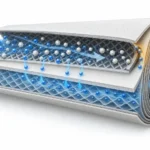
The repeating material structure inside a membrane leaf
This architecture is consistent with the spiral-wound construction described in the DuPont FilmTec element construction manual and Hydranautics element configuration guidance. Leaf count, glue-line geometry and component dimensions remain product-specific.
Incoming Materials Must Be Approved Before They Reach the Line
A finished element cannot be more consistent than its incoming material lots. The manufacturing traveler should identify the approved bill of materials and revision for the exact element model. Receiving inspection then connects each roll, adhesive batch and molded component to that traveler.
Membrane and spacer checks
- Flat-sheet roll identity, supplier batch, width, surface condition and approved storage history.
- Feed spacer thickness, mesh geometry, roll width, cleanliness and edge condition.
- Permeate carrier width, thickness, weave stability, cleanliness and welding or bonding response.
Assembly-material checks
- Central-tube straightness, diameter, hole pattern and connection geometry.
- Adhesive identity, component ratio, shelf life, conditioning requirement and batch documentation.
- End caps, brine seals, O-rings, tapes, outer-wrap materials and labels matched to the approved drawing.
The RO membrane raw material selection guide shows how to match material specifications before comparing suppliers.
Cutting and Folding Turn Flat Sheet into Membrane Leaves
Membrane sheet and permeate carrier are cut to controlled dimensions, then arranged so the carrier sits between two membrane surfaces. The folded edge and open permeate edge must match the element drawing. Operators or automated stations also check for creases, contamination, edge damage and misalignment before the leaf enters the rolling area.
The permeate carrier is then connected to the perforated section of the central tube using the validated welding, taping or bonding method for that design. Feed spacer is placed between neighboring leaves. The stack sequence matters because uneven placement changes the local build-up, final diameter and hydraulic channels inside the finished element.
Adhesive Control and Rolling Determine the Internal Geometry
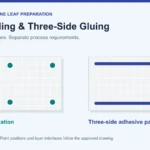
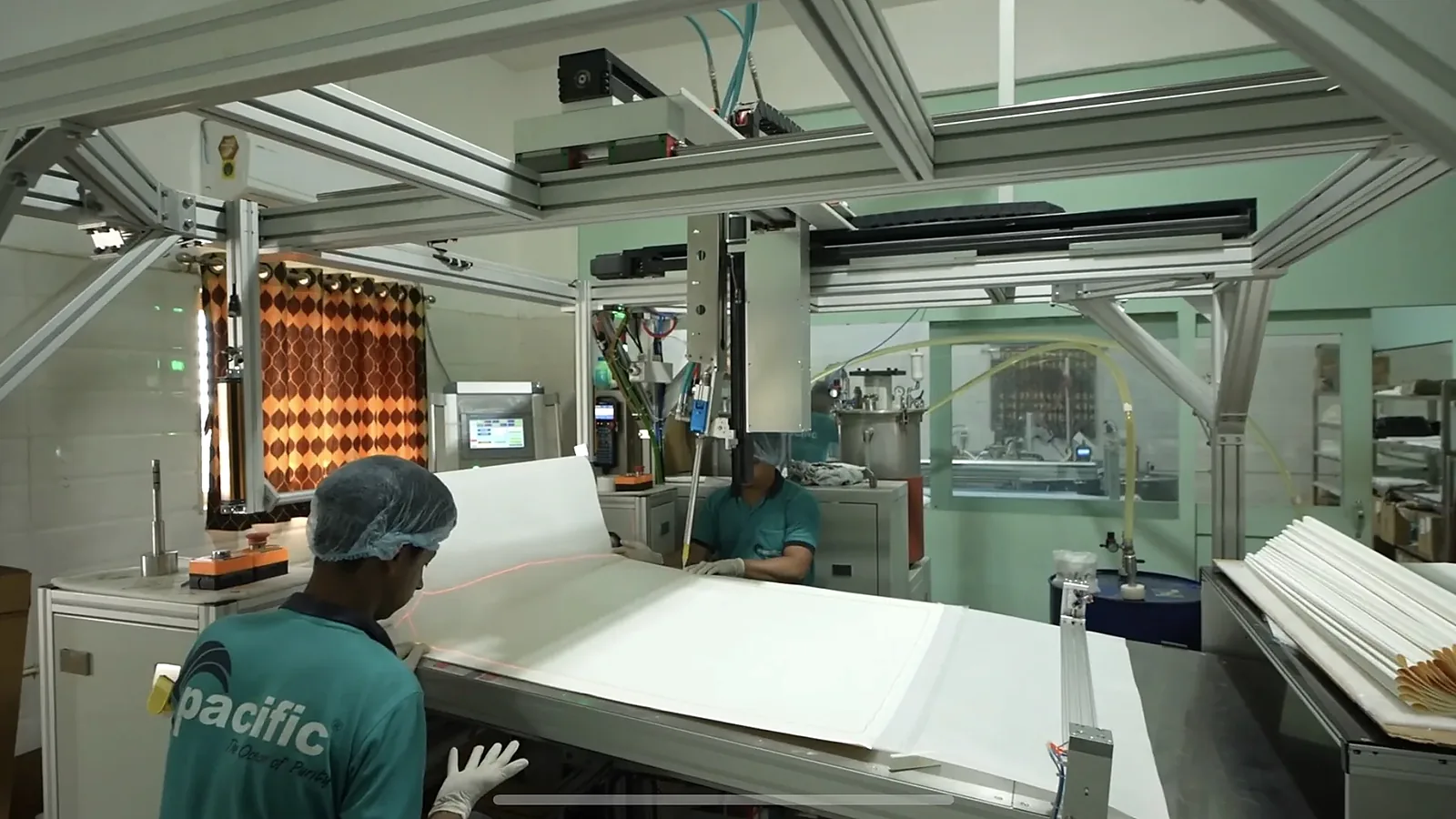
Before rolling, the adhesive system is prepared according to its current technical data sheet. Two-component systems require controlled ratio, mixing quality and usable working time. The operator or dispensing system applies the approved side and closing glue lines without gaps, excessive pooling or contamination of the active membrane area.
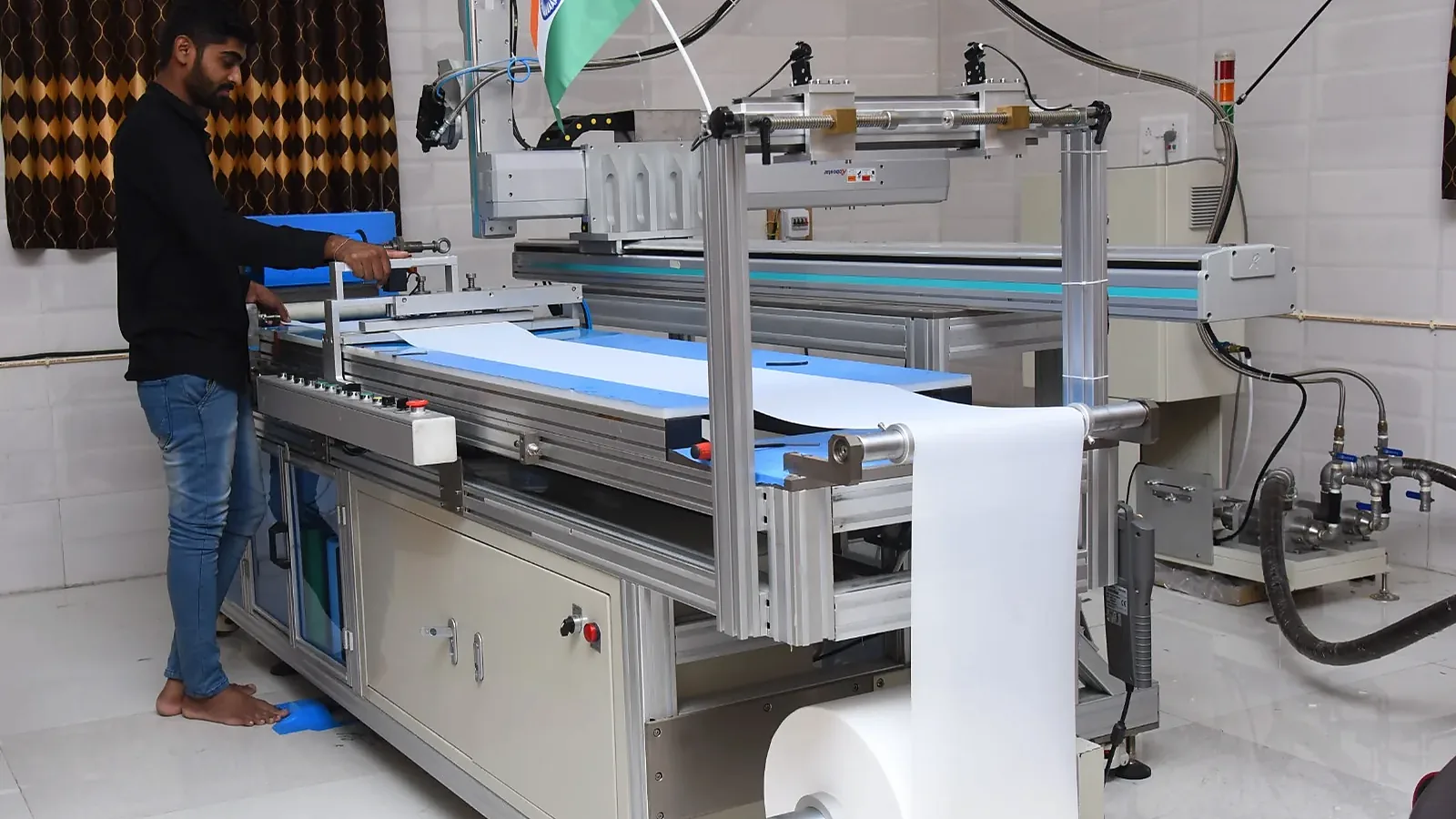
The leaf-and-spacer stack is then wound around the central tube. Rolling tension must be stable enough to create a compact element, but it cannot be treated as a single universal number. Material thickness, leaf count, changing roll diameter, adhesive behavior, machine tooling and the target finished diameter all influence the validated setup.
Four variables should be recorded together
- Leaf placement: position, count and offset according to the approved construction drawing.
- Adhesive delivery: batch, mix condition, dispense continuity and working-time status.
- Rolling control: tooling, tension program, alignment and operator or recipe identification.
- Finished build: diameter, straightness, end condition and visible glue or material defects.
Factories evaluating equipment should compare these controls, not only maximum cycle time. See the RO membrane rolling machine selection guide for a structured equipment review.
Curing, Trimming and Final Assembly Complete the Mechanical Build
A newly rolled element must remain under the approved cure conditions for the adhesive system. Cure time is not an arbitrary waiting period: trimming or handling too early can disturb glue lines, change end geometry or make waste-edge removal unreliable. Temperature, time and material batch should therefore be linked to the production record.
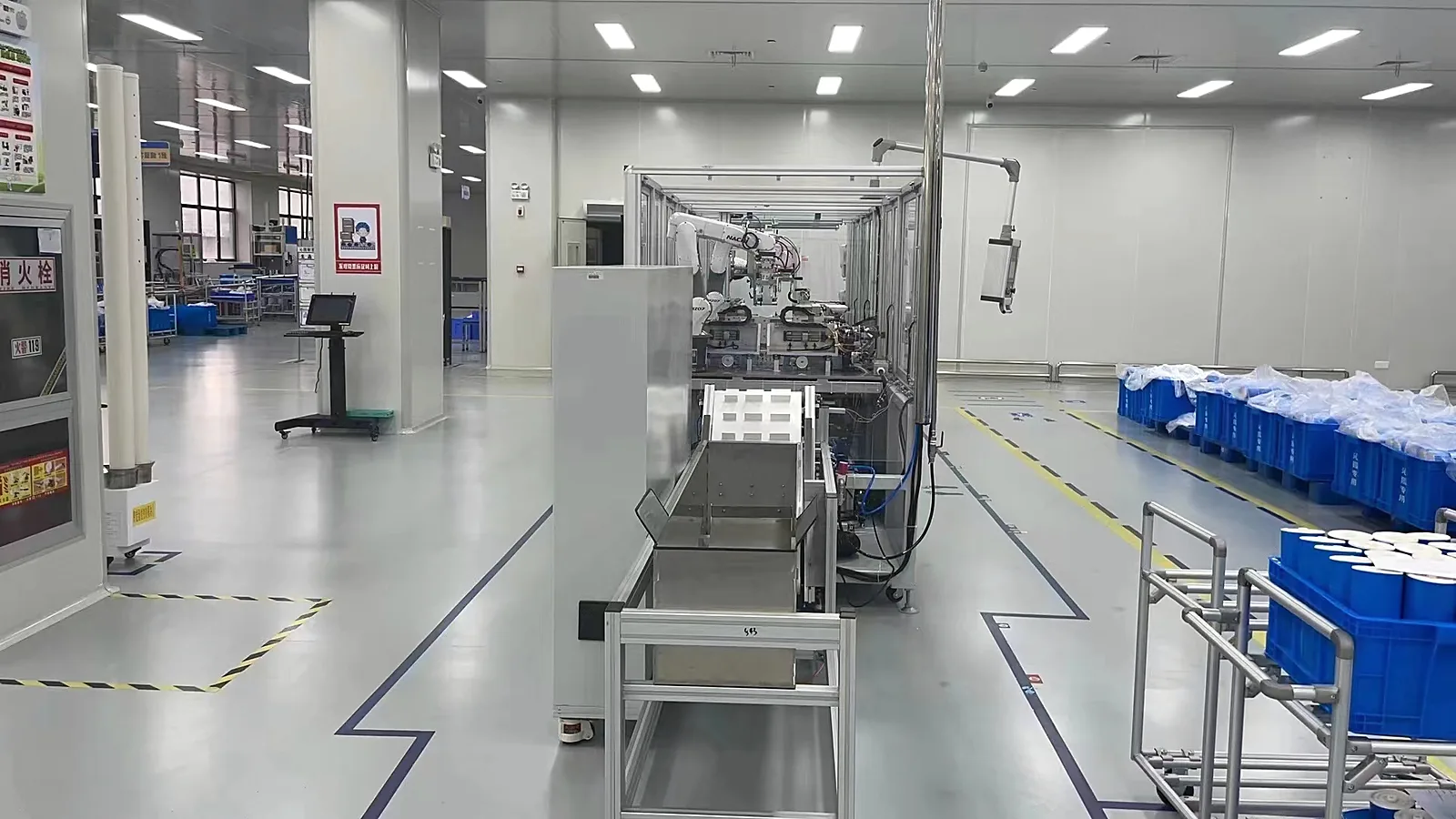
After curing, both ends are trimmed to the specified length and squareness without damaging the central tube or opening an adhesive seal. The element then receives the components required by its design. Household elements may use tape or film outer wraps and compact end parts. Industrial 4040 and 8040 designs commonly require anti-telescoping devices, brine seals and a more robust outer construction such as fiberglass-reinforced wrapping. The exact sequence must follow the released drawing rather than a generic online diagram.
Final QC Separates Integrity Screening from Performance Testing
A strong control plan does not treat every test as interchangeable. Dimensional inspection verifies the build, an air-based or vacuum method screens for defined leakage behavior, and a wet test evaluates water production and salt passage under specified conditions. Passing one category does not automatically prove the others.
| QC stage | What it verifies | What it does not prove | Typical record |
|---|---|---|---|
| Visual and dimensional | Length, diameter, end condition, tube position, seal fit, labeling and visible workmanship. | Internal glue-line integrity, salt rejection or permeate flow. | Inspection checklist and measured dimensions. |
| Dry integrity screening | Air-tightness behavior under a validated vacuum, pressure-decay or bubble-test procedure. | Hydraulic salt rejection and water flux. | Test method, pressure or vacuum, hold time and result. |
| Wet hydraulic test | Permeate flow and salt passage or rejection under defined feed, pressure, temperature and recovery conditions. | Universal field performance under every feedwater condition. | Feed conditions, operating conditions, stabilized result and acceptance limit. |
| Traceability review | Connection between released product, material lots, operators, recipes, cure records and test results. | Performance when records are incomplete or acceptance criteria are undefined. | Serial or lot traveler and final release authorization. |
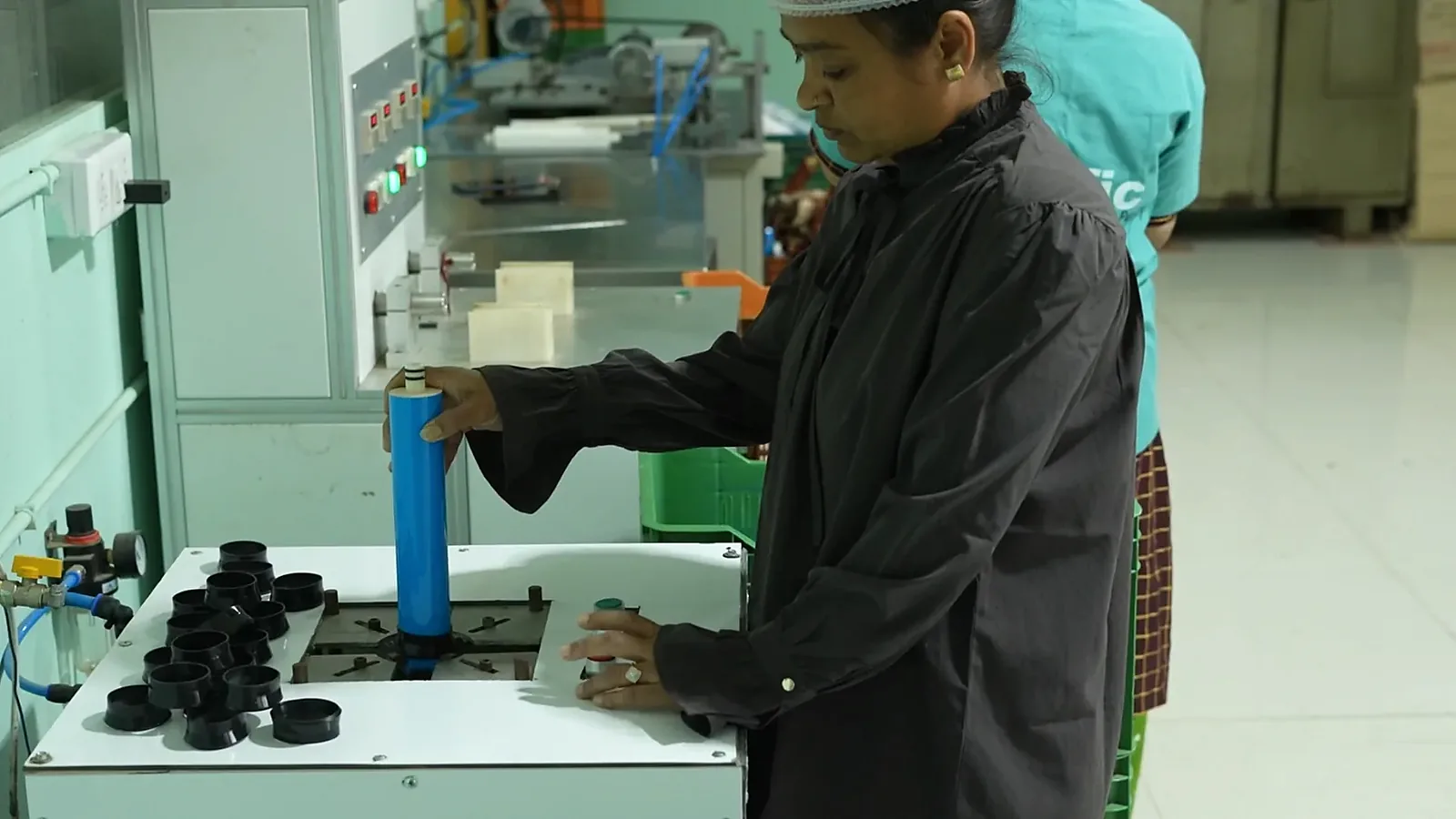
The RO membrane element quality control checklist can be used to organize incoming, in-process and final records. ASTM D4516 addresses standardization of RO performance data because pressure, temperature, conversion and feed concentration affect measured permeate flow and salt passage; it should not be interpreted as a substitute for a product-specific release specification.
Traceability and Packaging Are Part of Manufacturing Quality
Final release should connect the finished element to a complete manufacturing history. At minimum, the lot or serial record needs to identify the approved construction revision, membrane-sheet roll, spacer and carrier lots, adhesive batch, central-tube and component batches, key operators or machine recipes, cure record and final inspection results. This product genealogy allows a factory to contain a suspect lot quickly instead of treating every element in inventory as equally affected.
Labels should be applied only after the element has passed the defined release gates. The label or linked database record normally identifies the model, lot or serial number, manufacturing date and any customer-specific trace code. If a deviation was accepted, the authorization and affected quantity should remain attached to the same record.
Dry-element packaging
Elements released dry should be protected from dust, impact, deformation and uncontrolled moisture according to the product specification. End protection, sealed packaging, carton support and storage limits need to match the element format and expected transport route.
Wet or preserved packaging
When a validated preservation solution is required, its identity, concentration, fill or soak procedure, bag material and sealing method must be controlled. Preservation practice is membrane- and supplier-specific; it should never be copied from an unrelated product.
The Core Architecture Is Shared, but Household and Industrial Lines Are Not Identical
Formats such as 1812, 2012, 3012 and 3013 use shorter materials and compact tooling. Frequent model changeovers, outer tape or film application and efficient handling of small elements are important production concerns.
Formats such as 4040 and 8040 require larger worktables, longer leaves, heavier material handling, industrial adhesive control, robust trimming and often FRP outer wrapping and high-capacity testing equipment.
Element size labels alone do not define every construction detail. Manufacturers should lock the approved drawing, material stack, leaf count, final diameter, tube geometry and test specification before selecting equipment or quoting sustained line capacity.
Evidence a serious buyer should request
- A controlled BOM and construction drawing for each element family.
- Incoming material specifications and lot-acceptance records.
- Leaf preparation, adhesive, rolling, cure and trimming work instructions.
- Defined dimensional, integrity and hydraulic performance acceptance criteria.
- FAT samples and records produced with the buyer’s intended materials.
- A traceability method linking the finished element to material and process history.
RO Membrane Manufacturing Questions
Is RO membrane flat sheet the same as a finished membrane element?
No. Flat sheet is the selective membrane material. A finished spiral-wound element also contains permeate carrier, feed spacer, adhesive, a perforated central tube, seals, end components and an outer construction assembled through a controlled conversion process.
What causes inconsistent finished element diameter?
Common contributors include variation in material thickness, leaf count or placement, adhesive volume, rolling tension, alignment, central-tube geometry and the final outer-wrap build. The root cause should be traced through material and machine records rather than corrected only at trimming.
Does a vacuum or air-tightness test confirm salt rejection?
No. A validated dry integrity test screens for defined leak behavior. Salt rejection and permeate flow require hydraulic testing under documented feed and operating conditions.
Are 1812 and 8040 elements manufactured on the same equipment?
They share the spiral-wound principle, but material dimensions, leaf count, worktable size, handling load, adhesive delivery, outer wrapping, trimming and testing requirements differ substantially. Equipment should be selected for the intended format range.
Must every membrane element receive a wet performance test?
The control plan depends on product risk, customer specification, validated process capability and applicable contract requirements. A factory may use 100 percent testing for one product and statistically justified sampling for another, but the rule must be documented before production.
What should be defined before buying an RO membrane production line?
Define element formats, construction drawings, approved materials, expected shift output, automation level, utilities, QC methods, factory space and expansion plan. Equipment capacity is meaningful only when these assumptions are fixed.
Primary References Used for This Guide
- DuPont Water Solutions: FilmTec Element Construction technical manual excerpt.
- Hydranautics: Reverse Osmosis and Nanofiltration Membrane Element Details and Precautions for Use.
- ASTM D4516: Standard Practice for Standardizing Reverse Osmosis Performance Data.
Scope note: WECOME supplies RO membrane materials, components and production equipment. This guide explains the element-conversion workflow for manufacturers; it does not present WECOME as a seller of finished RO membrane elements.
Planning an RO Membrane Production Line?
Share your target element formats, materials, output and QC requirements. WECOME can help map the stations, equipment scope and validation steps for a practical production plan.
Review Turnkey Line Support →
Bessie has 10+ years of experience in RO membrane materials and water treatment supply chains. At WECOME, she helps manufacturers and system integrators worldwide source the right membrane components — from feed spacers and permeate carriers to NSF-certified adhesives — backed by hands-on technical support.