

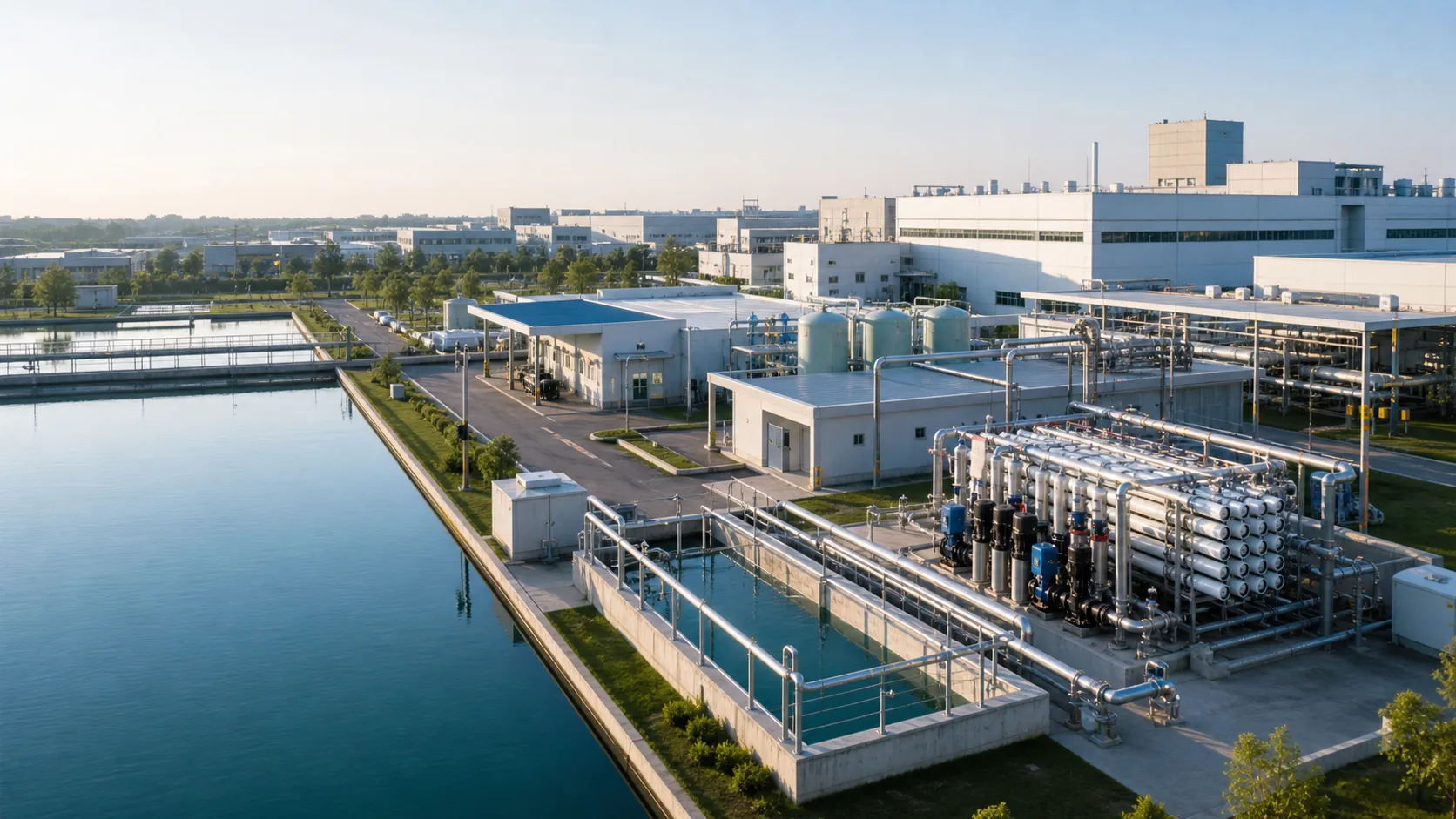
RO Membrane Materials for Industrial Utility Water
Industrial utility water treatment is the everyday workhorse duty — plant make-up and service water that has to be reliable, not exotic. WECOME supplies the membrane materials, components and production equipment that element manufacturers use to build dependable RO elements for general plant utility-water duty.
Utility Water Is the Plant’s Quiet Backbone
Most of a plant’s water is not a specialty stream — it is general make-up and service water feeding equipment, washdown and general process use. Industrial utility water treatment rarely makes headlines, but when a utility RO skid drops out, the whole site feels it. That puts a premium on dependable elements built from the right materials and produced consistently.
Make-up & service water
General plant water from municipal or well sources — moderate TDS, steady targets, high-volume duty.
Varying conductivity
Conductivity and hardness targets shift by use point, so the element has to hold rejection across the range.
Continuous duty
Utility RO runs whenever the plant runs — stable materials and repeatable quality protect uptime.
Scaling & fouling
Hardness, silica and organics in the feed mean the build has to tolerate fouling between cleans.
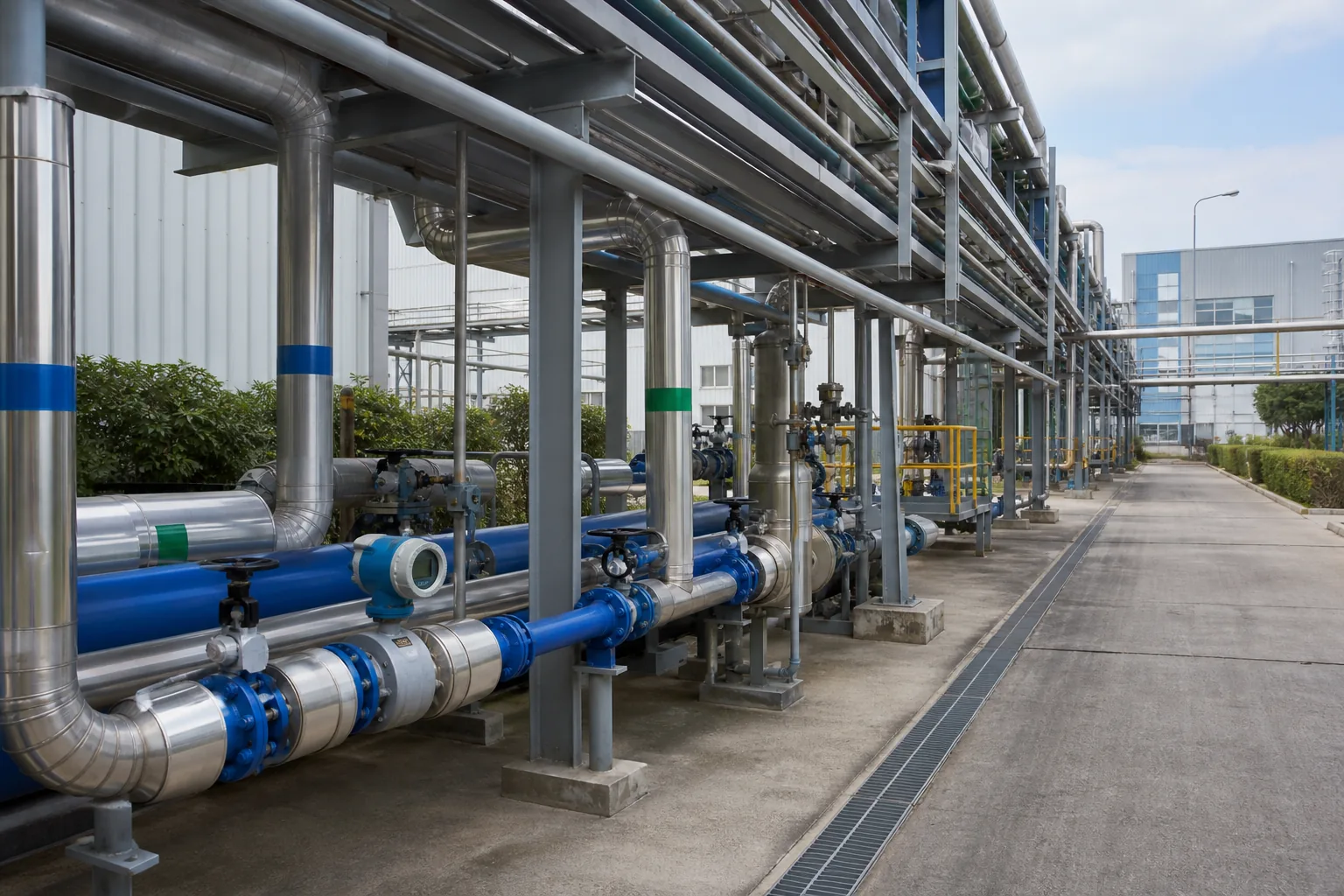
Where RO Sits in Plant Utility Water Treatment
In utility water RO, the membrane stage sits after basic pre-treatment and feeds general plant use — not a single specialty point. Specifying the element starts from the everyday duty and the feed, not from a catalogue number.
- Characterise the feedTDS, hardness, silica and organics define what the utility-water element must reject.
- Set conductivity targetsThe required permeate quality across use points drives membrane grade and array design.
- Place RO in the trainPre-treatment protects the element; downstream use points draw the treated water.
- Specify the elementSize, membrane, spacer, carrier, tube, glue and wrap are chosen for steady utility duty.
- Plan production & QCConsistent rolling and testing keep every element on spec, batch after batch.
Has the plant a dedicated boiler or cooling duty? See boiler feedwater RO and cooling-tower blowdown reuse for those specific streams.
Different Utility Streams, Different Element Builds
“Utility water” covers several everyday plant duties. Each one points to a slightly different element construction — which is exactly where material choice matters.
General Make-up Water
Plant make-up from municipal or well sources — moderate TDS and steady targets, suited to high-flux low-pressure builds.
Service & Wash Water
General service, rinse and washdown water needing dependable rejection and durable components for steady utility RO duty.
Harder / Fouling-Prone Feed
Higher hardness, silica or organics that call for a more open feed spacer and robust materials between cleans.
Six Material Decisions That Act as One Element
Industrial utility water treatment shows up in the element’s parts. Each material below is chosen for steady, continuous plant duty, and they only perform when matched to each other.
Membrane Sheet
Sets the rejection and flux ceiling. Most utility duties use low-pressure or ULP flat sheet membrane for output; harder feed steps up to higher-rejection grades.
Feed Spacer
Feed spacer thickness sets the feed channel — thicker resists fouling on harder utility feed, thinner packs more area for clean water.
Permeate Carrier
The permeate carrier must carry product water with low back-pressure under continuous utility operation.
Central Tube
The central tube takes the pressure and flow of 4040 / 8040 utility elements without distortion.
Adhesive & Tape
The glue lines and outer tape decide leak integrity — the most common cause of failed utility elements.
Seals & Parts
Brine seals, end caps and connectors keep feed flowing through the element and joining cleanly in multi-element vessels.
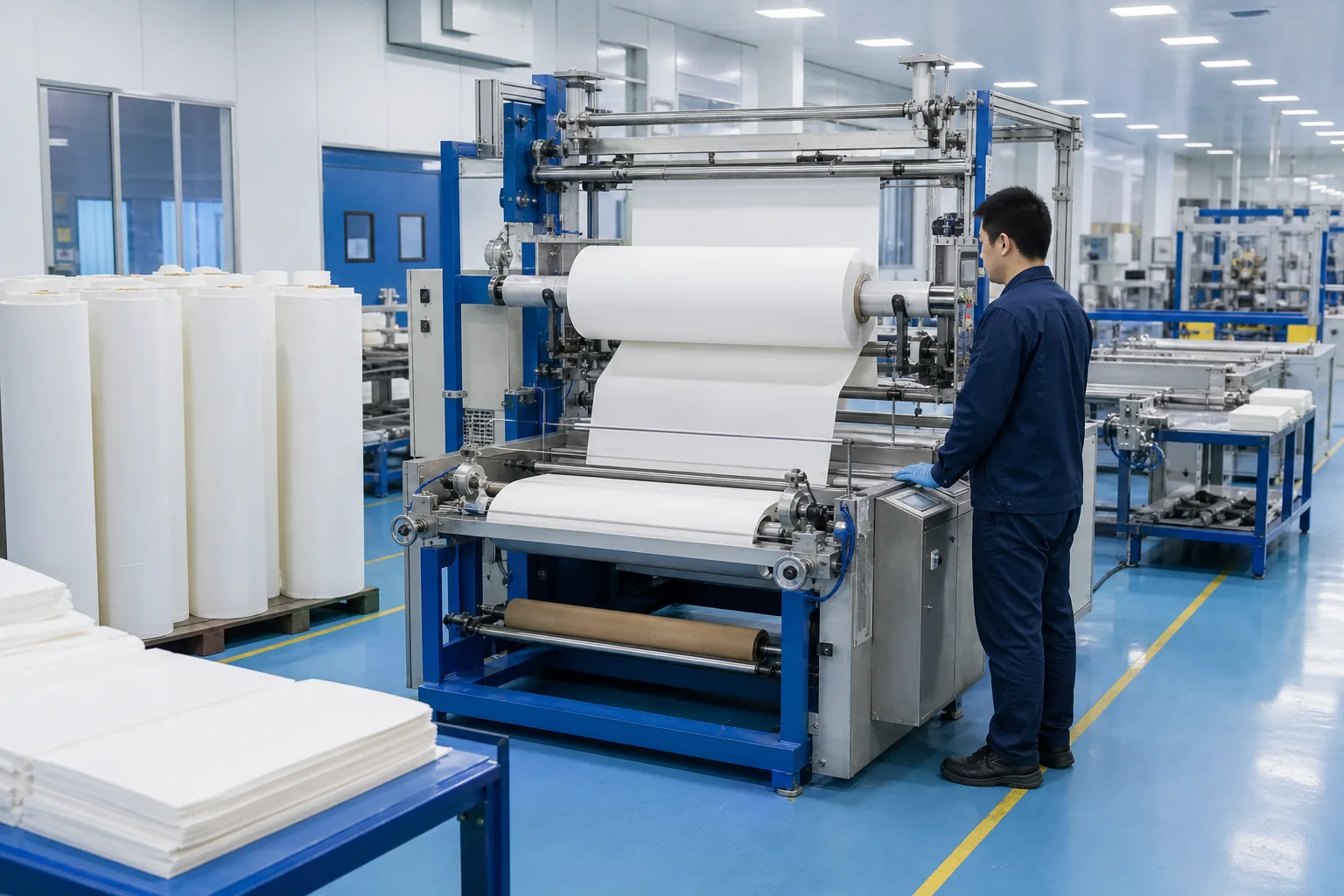
Volume Duty Rewards Repeatable Production
Utility water runs on volume, and every element must match the last. For plant utility water treatment, consistent production is as important as the material spec — and we supply the machines for it.
- Incoming material checks — verify membrane, spacer and components before rolling.
- Controlled rolling — stable winding tension for repeatable roll quality.
- Leaf preparation — accurate cutting, folding and welding for clean leaves.
- Final leak & performance testing — vacuum and flow / rejection checks on every element.
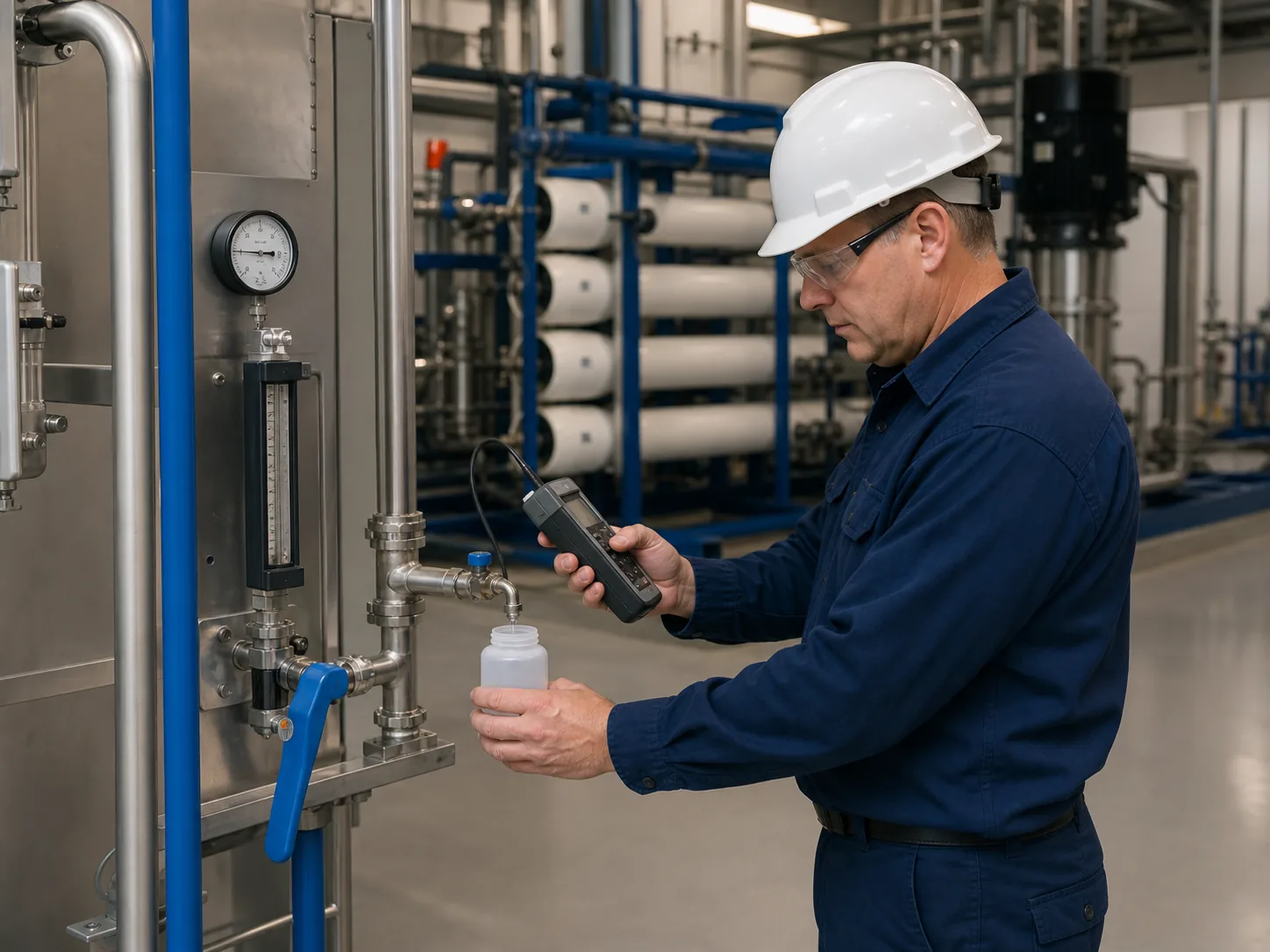
Specify the Element, Then Build It the Same Every Time
The safest utility-water programs start from a documented element specification and clear acceptance criteria — then hold them across every production run.
- Use a documented element specification — membrane, spacer, carrier, tube, glue and size in writing.
- Set acceptance criteria before production — rejection, flow and leak limits agreed up front.
- 4040 & 8040 formats — matched to your array and output target.
- Serviceable, traceable construction — consistent parts that are easy to support in the field.
Match Materials to Format and Feed
| Element / duty | Typical use | Membrane | Build notes |
|---|---|---|---|
| 4040 elements | Smaller utility skids, mixed lines | LP / ULP | Standard spacer & carrier; FRP wrap |
| 8040 elements | High-volume utility arrays | LP / ULP or standard | Robust tube, seals; FRP outer shell |
| Higher-rejection build | Tighter conductivity targets | High-rejection sheet | Tight QC; consistent rejection |
| Fouling-resistant build | Harder / organics-prone feed | Duty-matched sheet | Thicker feed spacer; durable parts |
Indicative only — we confirm the exact build from your feed-water analysis and output target. Size it with the element size reference.
Materials, Components & Production Equipment
Everything an RO element manufacturer needs to serve plant utility-water duties — not finished systems.
 Inside the plant
Materials & Components
- LP / ULP & high-rejection flat sheet membrane
- Feed spacer & permeate carrier
- 4040 / 8040 central tubes & connectors
- Brine seals, end caps & parts
- PU / epoxy glue & tape
- Fiberglass outer wrap
Production Equipment
- 4040 / 8040 rolling machine
- Cutting, folding & welding
- Ultrasonic seam welding
- Trimming & FRP winding
- Vacuum leak testing
- Flow & rejection testing
Planning Questions for Utility-Water RO Elements
What does WECOME supply for industrial utility water treatment?
We supply the RO membrane materials, components and production equipment used to manufacture utility-water RO elements — flat sheet membrane, feed spacer, permeate carrier, central tubes, seals, end caps, glue, tape and fiberglass wrap, plus rolling, trimming, FRP winding and testing machines. We do not sell finished elements or complete RO systems.
Which element sizes are used for plant utility water?
4040 and 8040 are the standard formats, chosen by output and array design. We supply the materials and machines for both, and help size them to your duty.
How do you choose the membrane and feed spacer for utility water RO?
From the feed-water analysis and targets: low-pressure or ULP grades for output, higher-rejection membrane for tighter conductivity targets, and a thicker feed spacer where hardness or fouling is a risk. Share your water data and we will recommend a build.
Do you cover boiler feedwater and cooling-tower water too?
Those are dedicated duties with their own pages — see boiler feedwater RO and cooling-tower blowdown reuse. This page stays on general plant make-up and service water; we supply materials and equipment for all of them.
Do you provide production and QC support?
Yes. We supply the rolling and testing equipment and advise on incoming checks, rolling consistency and leak / performance testing so every element meets spec.
Building RO elements for plant utility water?
Send your feed-water data, target output and element size — we’ll recommend the membrane, components and machines to build dependable utility-water RO elements, and send a quote.