
RO Membrane Materials for Electronics Wastewater Reuse
Electronics wastewater reuse reverse osmosis treats segregated and pretreated fab wastewater for a defined reuse destination. WECOME supplies application-specific membrane sheet, spacers, chemical-compatible adhesives and industrial element-production equipment for electronics water-recycling programs.
Fab Wastewater Reuse Is Not UPW Generation
UPW production begins with source water and drives toward extremely low trace contamination. Electronics wastewater reuse begins with spent process or rinse streams whose chemistry depends on the manufacturing step. These streams must be segregated, characterized and pretreated before RO can recover water reliably.
Acidic rinses
pH and dissolved ions require controlled neutralization and material review.
Alkaline rinses
Alkalinity, silica and cleaning residues can shift scaling and rejection behavior.
Metals / fluoride
Applicable streams need targeted removal before the membrane stage.
Mixed utility water
Lower-risk streams may be combined only after compatibility is confirmed.

Build the RO Feed Before Selecting the Element
A useful RO specification starts after segregation and pretreatment have created a defined feed. The element cannot compensate for uncontrolled pH, metals, fluoride, suspended solids, solvents or oxidants. Recovery is then set from concentrate chemistry and the water quality required at the reuse point.
- Segregate at sourceKeep chemically incompatible and high-strength streams out of the recoverable rinse-water pool.
- Characterize variabilityMeasure pH, conductivity, fluoride, metals, silica, TOC, particles and oxidants as relevant.
- Apply targeted pretreatmentNeutralize and remove species that would scale, foul or damage the RO stage.
- Define the reuse destinationSet permeate quality for cooling, scrubbers, utilities or another approved demand.
- Specify materials and QCMatch sheet, spacer, adhesive and testing to the stabilized feed and cleaning plan.
Three Boundaries Control Electronics Wastewater RO
Which streams belong together?
Segregation protects recovery from shock loads and incompatible chemistry.
What reaches the membrane?
Pretreatment must produce a stable RO feed, not merely an average laboratory result.
Where will permeate go?
The reuse destination determines the required rejection and any downstream polishing.
Six Inputs to Match With Pretreated Fab Wastewater
Wastewater variability makes material matching especially important. Review rejection, hydraulic channel, chemical exposure and structural construction as one element specification.
Membrane Sheet
Select the RO membrane sheet from stabilized feed chemistry, weak-ion targets, pressure and cleaning conditions.
Adhesive System
Review PU adhesive identity, cure and exposure to the planned pH and cleaning range.
Seals & Components
Brine seals, end caps and connectors must match the operating environment and element geometry.
Variable Feed Does Not Excuse Variable Elements
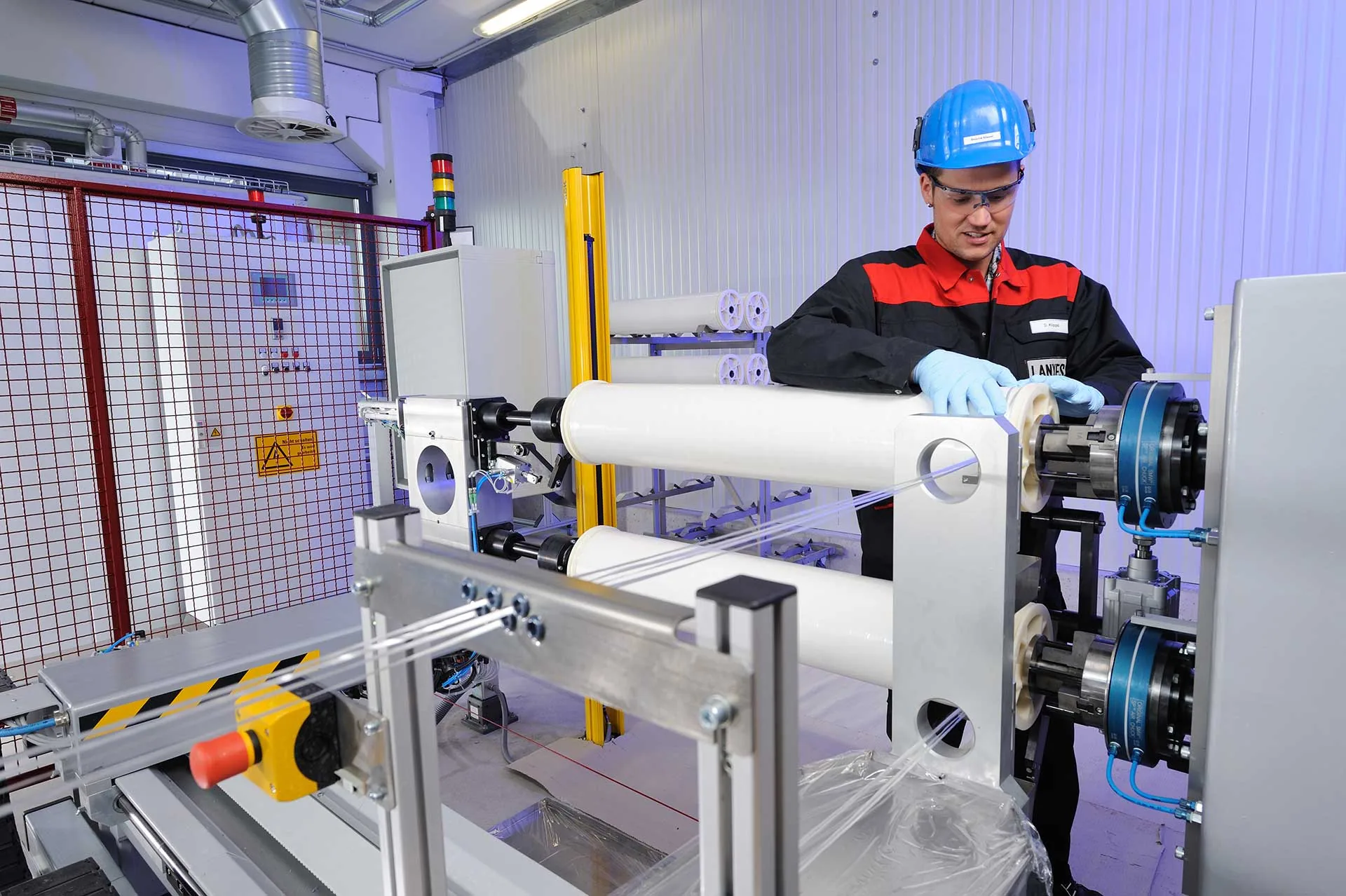
A reuse program needs predictable element construction so operating changes can be traced to the water and system, not hidden manufacturing variation.
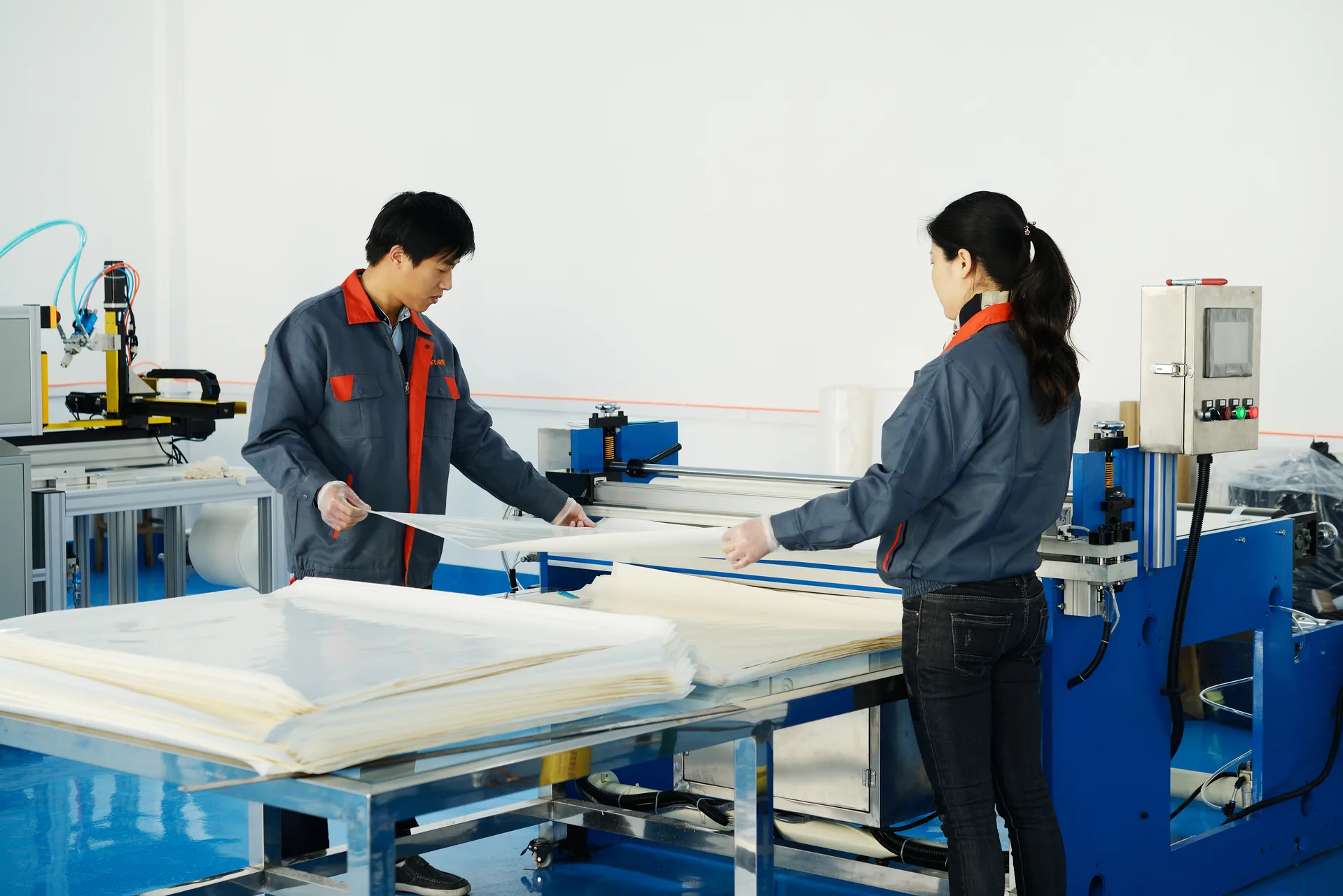
- Incoming inspection — verify membrane, spacer, carrier, tubes and adhesive before release.
- Controlled preparation — maintain leaf dimensions, clean bond zones and spacer alignment.
- Repeatable rolling — control winding tension and element geometry across industrial batches.
- Leak and performance testing — document build integrity before shipment.
Weak-Ion Rejection Depends on Feed Conditions
Some species change ionization with pH, so rejection cannot be treated as a fixed product label. Silica, boron and other weakly ionized compounds must be evaluated under the actual feed pH, temperature, concentration and membrane operating conditions.
- Use speciation, not only total concentration — pH can change what the membrane is asked to reject.
- Check concentrate conditions — recovery raises local concentration and scaling risk.
- Review chemical exposure — neutralization, cleaning and residual oxidants affect compatibility.
- Define acceptance testing — use controlled conditions that relate to the intended duty.
Match Permeate Quality to a Real Plant Demand
| Reuse destination | Primary requirement | RO element implication | Boundary |
|---|---|---|---|
| Cooling-tower make-up | Stable salt and hardness reduction | Scaling-aware sheet and feed channel | Cooling chemistry remains site-specific |
| Wet scrubber / abatement utility | Quality matched to equipment limits | Rejection and fouling control | Confirm compatibility with the tool owner |
| General utility water | Consistent conductivity and cleanliness | Repeatable industrial element build | Destination requirements define polishing |
| Feed to higher-purity treatment | Reduced ionic and organic load | Stable rejection and documented QC | Reuse RO does not itself create UPW |
Application-Matched Materials and Industrial Equipment
Support electronics wastewater-reuse element production with compatible materials, repeatable equipment and practical test references.
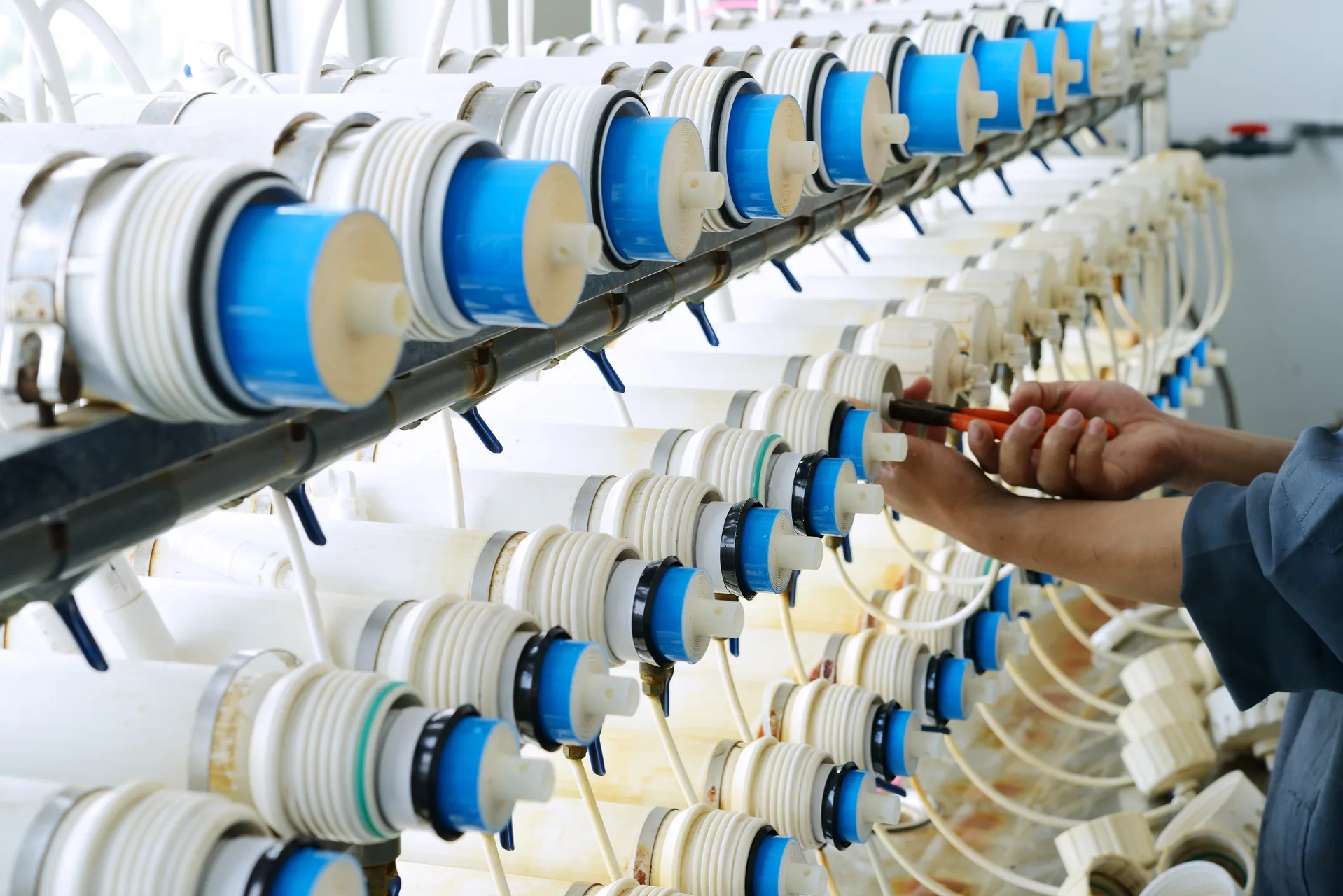 WECOME testing
Materials & Components
- Application-specific membrane sheet
- Feed spacer & carrier
- Central tubes
- Brine seals & connectors
- Chemical-compatible adhesives
- Wrap and tape materials
Industrial Equipment
- Sheet and spacer cutting
- Carrier welding
- Industrial rolling
- Trimming equipment
- FRP outer winding
- Leak and performance testing
Electronics Wastewater-Reuse RO Questions
Can semiconductor wastewater be recycled with reverse osmosis?
Yes, selected fab wastewater can be recovered after appropriate segregation and pretreatment. The suitability, recovery and reuse destination depend on the actual stream chemistry and variability.
Why must electronics wastewater streams be segregated?
Different process streams can contain incompatible pH, fluoride, metals, organics or oxidants. Segregation keeps shock loads and unsuitable streams away from the recoverable RO feed.
How does pH affect weak-ion rejection?
pH changes the ionization of species such as silica or boron, which can change membrane rejection. Selection and testing must use the expected feed and operating conditions.
Where can recovered permeate be reused?
Possible destinations include cooling make-up, scrubber utilities, general utilities or feed to higher-purity treatment. Each destination has its own quality and polishing requirements.
Does WECOME supply complete fab wastewater-reuse systems?
No. WECOME supplies RO membrane materials, components and element-production equipment. Stream segregation, pretreatment, system design and reuse approval remain with qualified engineering and fab teams.
Planning elements for electronics water reuse?
Send the segregated stream analysis, pretreatment, recovery target, reuse destination, cleaning conditions, element size and production volume. We will help match materials and production equipment to the program.