

RO Membrane Materials for Chemical and Petrochemical Process Water
Chemical process water reverse osmosis is defined by difficult chemistry — variable salinity, aggressive constituents and tight cleaning regimes. WECOME supplies the membrane materials, components and production equipment that element manufacturers use to build RO elements matched to a specific chemical or petrochemical stream.
No Two Chemical Streams Are the Same
In petrochemical water treatment, RO can face anything from lightly loaded process water to high-salinity streams headed for industrial wastewater desalting. The chemistry drives everything — so the honest starting point is a feed-water analysis, not a catalogue number. From there the element is built out of materials chosen to survive that specific duty.
Variable chemistry
pH, organics, solvents and dissolved salts swing widely between streams and even between batches.
High salinity
Some streams need high-rejection construction for process water purification and desalting duty.
Aggressive cleaning
Frequent CIP cycles reward materials and adhesives that tolerate the cleaning chemistry.
Compatibility first
No single membrane build fits every chemical stream — each duty is matched from real data.

Where RO Sits in Chemical Process Water
In chemical process water reverse osmosis, the membrane stage follows dedicated pre-treatment sized for the stream’s chemistry, and often feeds further polishing or reuse. Specifying the element starts from the feed analysis and the compatibility limits, not the other way round.
- Analyse the streampH, salinity, organics, solvents and temperature define what the element must reject and survive.
- Confirm compatibilityMembrane, spacer and adhesive are checked against the feed and cleaning chemistry.
- Set rejection & recoveryProcess water purification or desalting targets drive membrane grade and array design.
- Specify the elementSheet, spacer, carrier, tube, glue and wrap are chosen for that specific duty.
- Document & produceTraceable materials and consistent production keep every element on spec.
Different Chemical Duties, Different Element Builds
“Chemical process water” spans very different streams. Each one points to a different element construction — which is exactly why compatibility and material choice come first.
Process & Utility Water
General plant process water with moderate loading — steady rejection targets on a robust, cleaning-tolerant build.
Petrochemical Streams
Refinery and petrochemical water with organics and variable salinity that reward chemistry-matched materials and durable sealing.
High-Salinity / Desalting
Concentrated streams for industrial wastewater desalting needing high-rejection construction and high-pressure-capable parts.
Six Material Decisions That Act as One Element
Chemical process water reverse osmosis lives or dies on the element’s materials. Each one is chosen for the stream’s chemistry, and they only perform when matched to each other and to the cleaning regime.
Membrane Sheet
Sets rejection and chemical tolerance. Desalting duty needs high-rejection flat sheet membrane; the grade is matched to the feed chemistry.
Feed Spacer
Feed spacer thickness balances fouling resistance against packed area — a key choice on organic-loaded chemical streams.
Permeate Carrier
The permeate carrier carries product water with low back-pressure through repeated cleaning cycles.
Central Tube
The central tube takes the pressure and flow of 4040 / 8040 elements on demanding duty without distortion.
Adhesive & Tape
The PU / epoxy glue must hold its bond against the feed and cleaning chemistry — the decisive factor for chemical-duty elements.
Seals & Parts
Brine seals, end caps and connectors have to keep feed flowing and joining cleanly under aggressive service.
Chemistry-Matched Elements Need Traceable Production
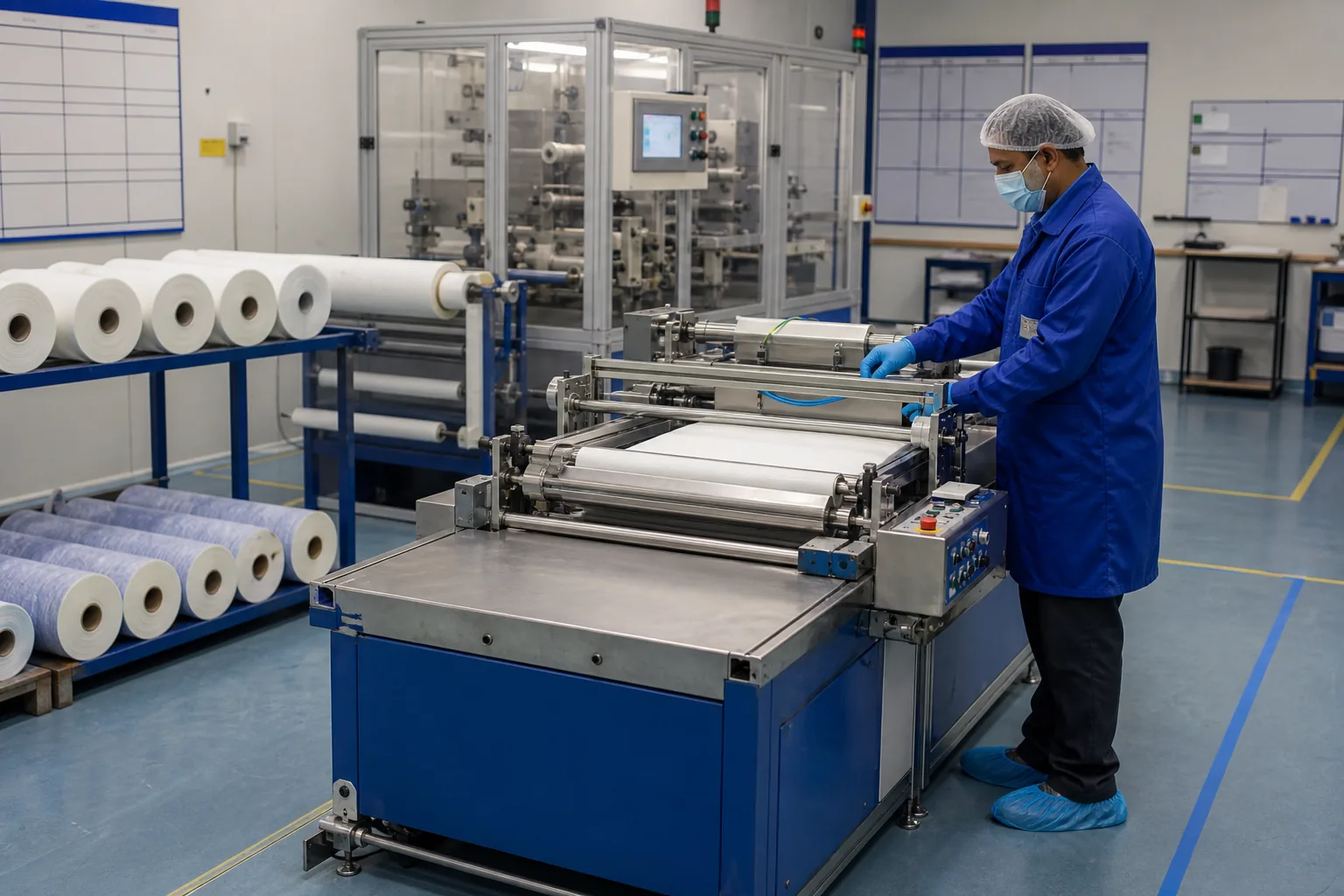
When the duty is aggressive, a marginal glue line or an unverified batch is a failure waiting to happen. Traceable, repeatable production is as important as the material spec — and we supply the machines for it.
- Incoming material checks — verify membrane, spacer, adhesive and components before rolling.
- Controlled rolling — stable winding tension for repeatable, pressure-tight rolls.
- Leaf preparation — accurate cutting, folding and welding for clean, consistent leaves.
- Leak & performance testing — vacuum, flow and rejection checks with records on every element.
Start From the Analysis, Then Build It the Same Every Time
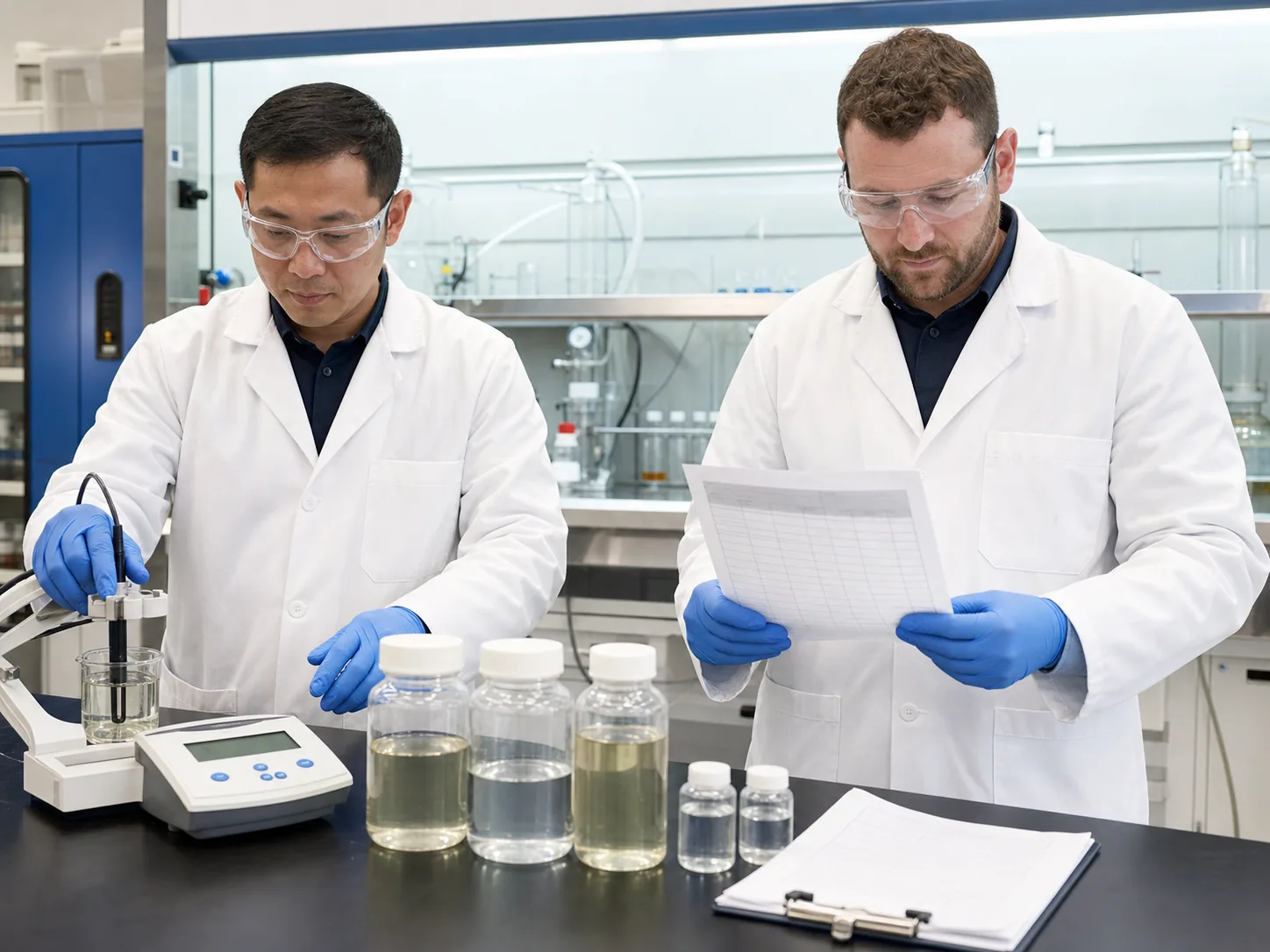
The safest chemical-duty programs start from a documented feed-water analysis and a confirmed compatibility check — then hold the element specification across every production run.
- Require a feed-water analysis — no membrane build is specified without the stream’s chemistry in hand.
- Confirm material compatibility — membrane, spacer and adhesive checked against feed and cleaning chemistry.
- Document the element specification — sheet, spacer, carrier, tube, glue and size in writing.
- Traceable, serviceable construction — consistent parts with records that are easy to support.
Match Materials to Stream and Build
| Stream / duty | Typical challenge | Membrane | Build notes |
|---|---|---|---|
| General process water | Moderate loading, steady targets | High-rejection or LP | Standard spacer & carrier; cleaning-tolerant build |
| Petrochemical water | Organics, variable salinity | Chemistry-matched sheet | Durable sealing; compatible adhesive |
| Desalting / high-salinity | High TDS, high pressure | High-rejection seawater-class | Robust tube & seals; FRP outer wrap |
| Fouling / organic-loaded | Scaling & biofouling risk | Duty-matched sheet | Thicker feed spacer; frequent-CIP build |
Indicative only — the exact build is confirmed from your feed-water analysis and cleaning regime. No single construction is claimed to handle every chemical stream. Size it with the element size reference.
Materials, Components & Production Equipment
Everything an RO element manufacturer needs to serve chemical and petrochemical water duties — not finished systems, and never a one-size-fits-all promise.
 Inside the plant
Materials & Components
- Chemistry-matched & high-rejection flat sheet
- Feed spacer & permeate carrier
- 4040 / 8040 central tubes & connectors
- Brine seals, end caps & parts
- Compatible PU / epoxy glue & tape
- Fiberglass outer wrap
Production Equipment
- 4040 / 8040 rolling machine
- Cutting, folding & welding
- Ultrasonic seam welding
- Trimming & FRP winding
- Vacuum leak testing
- Flow & rejection testing
Planning Questions for Chemical-Duty RO Elements
What does WECOME supply for chemical process water reverse osmosis?
We supply the RO membrane materials, components and production equipment used to manufacture chemical-duty RO elements — flat sheet membrane, feed spacer, permeate carrier, central tubes, seals, end caps, compatible PU / epoxy glue, tape and fiberglass wrap, plus rolling, trimming, FRP winding and testing machines. We do not sell finished elements or complete RO systems.
Can one membrane construction handle any chemical stream?
No — and we will not claim it does. Chemistry varies too much between streams. We start from your feed-water analysis and cleaning regime, confirm material compatibility, then recommend a membrane, spacer and adhesive matched to that specific duty.
How do you choose the adhesive for petrochemical water treatment RO?
The glue is selected for compatibility with the feed and CIP chemistry, since adhesive bond failure is the most common cause of chemical-duty element failure. Share your stream and cleaning data and we will recommend a PU or epoxy grade and a build to match.
Do you support industrial wastewater desalting duty?
Yes. High-salinity desalting streams use high-rejection construction with robust, pressure-capable components. We supply the materials and the 4040 / 8040 production and testing equipment, and help match the build to the stream.
Do you provide traceability and QC support?
Yes. We supply the rolling and testing equipment and advise on incoming material checks, rolling consistency, leak / performance testing and record-keeping so every element is traceable and on spec.
Building RO elements for a chemical or petrochemical stream?
Send your feed-water analysis, cleaning regime and target output — we’ll confirm compatibility and recommend the membrane, components and machines to build elements matched to that duty, then send a quote.