


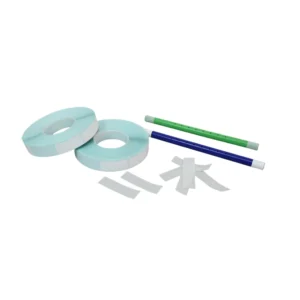


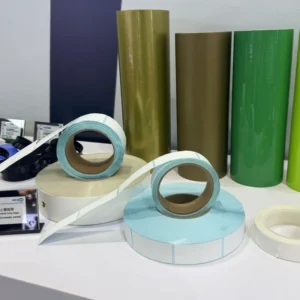
RO membrane central tube tape is a process-protection consumable applied to defined areas at both ends of the central tube before membrane rolling and adhesive application. It prevents element bonding adhesive from attaching to the protected tube-end zones, so cured excess membrane material can be removed more cleanly during trimming.
WECOME supplies PP and PP+PE central tube tape in six standard sizes, with one-line or L-shaped adhesive patterns. The range supports household RO element production and selected 4040 / 8040 industrial element processes after tube diameter, protected width, taping equipment and removal performance are confirmed.
Central tube tape is a temporary masking and protection material used during spiral-wound RO membrane element production. It protects the selected tube-end surface from bonding adhesive, supports cleaner trimming after curing and reduces manual residue removal. It is not the membrane-leaf bonding adhesive, the finished-element outer wrap or a permanent pressure seal.
How Central Tube Tape Fits into RO Membrane Production
Define the tube-end zone
Confirm tape width, adhesive pattern and placement position against the central tube and finished-element drawing.
Wrap the central tube ends
Apply the tape manually or with a central tube taping machine before membrane rolling.
Build and bond the element
Membrane leaves are rolled around the protected RO membrane central tube according to the approved production recipe.
Remove cured excess material
The protected end zone helps operators separate trimmed material with less adhesive residue on the defined tube-end surface.
Why the Tape Specification Matters
The tape must match the central tube diameter, required protected length, winding fixture and trimming allowance. Tape that is too narrow may leave part of the tube exposed to adhesive; tape that is too wide can interfere with membrane-leaf placement, product-water openings or the defined finished-element geometry.
The adhesive layout also matters. WECOME supplies both one-line and L-shaped adhesive patterns. The correct option should be selected through a production trial that evaluates positioning, wrap stability, removal behaviour and residue after the bonding adhesive has cured.
Key Production Advantages
Simpler tube-end preparation
Standard rolls and defined adhesive patterns support repeatable placement before the membrane rolling cycle.
Reduced trimming workload
The protected tube-end zone can reduce time spent separating cured excess membrane material and cleaning unwanted adhesive.
Cleaner finished appearance
Correct tape placement helps keep the specified tube-end surface cleaner after trimming and finishing.
One-line and L-shaped options
Two adhesive layouts allow buyers to match different wrapping methods, machines and central tube preparation recipes.
Household and industrial sizes
Standard widths cover common household processes and larger industrial element programs after application validation.
Standard export packing
All listed models use 40 rolls per box, 20 boxes per pallet and a 460 × 460 × 300 mm outer carton.
RO Membrane Central Tube Tape Specifications
The table below lists the current standard supply range. The original Appearance field is presented as Adhesive Pattern because it describes the functional glue layout rather than the visual appearance of the tape.
| Part Number | Product Size | Material | Adhesive Pattern | Rolls / Box | Boxes / Pallet | Packing Size | G.W. / Box |
|---|---|---|---|---|---|---|---|
| TT-6328 | 63 × 28 mm | PP | One-line glue | 40 | 20 | 460 × 460 × 300 mm | 25 kg |
| TT-6528T | 65 × 28 mm | PP+PE | L-shaped glue | 40 | 20 | 460 × 460 × 300 mm | 28 kg |
| TT-9045 | 90 × 45 mm | PP | One-line glue | 40 | 20 | 460 × 460 × 300 mm | 20 kg |
| TT-13025 | 130 × 25 mm | PP | One-line glue | 40 | 20 | 460 × 460 × 300 mm | 23 kg |
| TT-13045 | 130 × 45 mm | PP | One-line glue | 40 | 20 | 460 × 460 × 300 mm | 24 kg |
| TT-13050 | 130 × 50 mm | PP | One-line glue | 40 | 20 | 460 × 460 × 300 mm | 25 kg |
On tablet and mobile screens, each tape model is displayed as a structured specification card.
Published values are for preliminary purchasing reference. Confirm tape dimensions, adhesive pattern, roll length, core dimensions, removal behaviour, carton gross weight and pallet plan in the approved sample and quotation.
How to Select the Correct Central Tube End Tape
Protected tube-end area
Define the exact length and circumference that must remain free from membrane bonding adhesive.
Tape size
Match the listed width and roll specification to tube diameter, wrapping overlap and machine fixture.
Adhesive pattern
Choose one-line or L-shaped glue according to positioning stability, removal method and validated production recipe.
Material construction
Confirm PP or PP+PE against tape stiffness, wrapping behaviour and downstream trimming conditions.
Application method
State whether the tape is applied manually or through automatic central tube taping equipment.
Removal trial
Approve a sample after actual rolling, adhesive curing and trimming, not from tape appearance alone.
Do not confuse this tape with other RO membrane tapes
Central tube tape protects a temporary tube-end process zone. It is not the adhesive used to bond membrane leaves, the vinyl or bonding tape used around a finished element, brine seal fixing tape or a substitute for a structural seal. Keeping these keyword and product functions separate also prevents search-intent cannibalisation between WECOME material pages.
Quality-Control Points for Bulk Supply
Size consistency
Check the supplied tape specification and roll-to-roll dimensional consistency against the approved sample.
Pattern conformity
Verify one-line or L-shaped glue position, continuity and alignment before production release.
Stable wrapping
Confirm the tape can be positioned and wrapped without unwanted lifting, shifting or interference.
Clean removal
Evaluate the protected tube-end surface after the actual bonding adhesive has cured and the element is trimmed.
Clean supply
Inspect for contamination, deformation, damaged edges and other defects that may affect application.
Equipment compatibility
Validate roll handling, tape path and placement settings on the intended taping equipment.
Lot control
Use agreed lot identification and retain approved samples for repeat OEM purchasing programs.
Transit protection
Confirm rolls, cartons and pallets remain protected from crushing, contamination and moisture during shipment.
Recommended Applications
Household RO element production
Tube-end protection before rolling and trimming common residential and household membrane element formats.
4040 / 8040 production trials
Selected larger tape sizes can be evaluated for industrial element production after central tube and process confirmation.
Automatic central tube taping
Matching consumable for recipe-controlled central tube tape wrapping equipment and multi-machine production lines.
Manual tube-end preparation
Process tape for lower-volume assembly, sampling, rework and validated manual production stations.
OEM membrane factories
Standardised bulk tape supply for repeat RO element manufacturing and purchasing programs.
New element development
Sample comparison for defining tape size, glue pattern, trimming allowance and tube-end finishing method.
Frequently Asked Questions
What is RO membrane central tube tape used for?
It is applied to defined areas at the central tube ends before membrane rolling. The tape protects those areas from element bonding adhesive and helps cured excess membrane material separate more cleanly during trimming.
What is the difference between one-line and L-shaped glue?
They are different adhesive layouts on the tape. The correct pattern depends on the required holding position, wrapping method, tape removal behaviour and central tube preparation process. Approve the choice through an actual production trial.
Which materials are available?
The listed standard range uses PP for five models and PP+PE for model TT-6528T. Material construction should be confirmed together with tape size and adhesive pattern.
Can central tube tape be used for 4040 and 8040 elements?
Selected larger sizes may be suitable, but compatibility is not determined by the 4040 or 8040 model name alone. Confirm the tube diameter, protected width, wrapping method, adhesive process and trimming trial.
Does this tape permanently seal or bond the membrane element?
No. It is a temporary process-protection tape for the tube-end area. It does not replace membrane-leaf adhesive, final element wrapping tape, brine seals or structural sealing materials.
What should be included in an RFQ?
Provide the central tube drawing or sample, tube diameter, target protected width, required tape size, adhesive pattern, manual or automatic application method, annual demand, documentation needs and packing requirements.
Related Central Tube and Production Solutions
Use these WECOME pages to match the tape with the central tube, preparation equipment and complete rolling process:
Validate the Tape on Your Actual Tube and Rolling Process
Send the central tube sample or drawing, required protected width, adhesive pattern and expected quantity. WECOME will help match a standard model for production testing.