

RO Membrane Raw Material Suppliers: 4 Sourcing Routes
Choose suppliers by material role, documented test method and performance of the assembled element.
Direct answer: there is no defensible “best RO membrane raw material supplier” across all components. WECOME (China) offers a coordinated multi-material route; DuPont (United States) publishes flat-sheet data; Shawmut (United States) documents permeate-carrier fabrics; and Tech Inc. (India/Canada presence) lists feed and permeate spacers. They solve different sourcing tasks, not four identical bills of materials. Approve the target element drawing first, then qualify each sample in a controlled conversion and element test before buying repeat lots.
The failure that hurts a membrane-element factory is rarely an obviously unusable raw material. It is a sheet that passes its supplier’s flat-cell test but does not meet the factory’s element target; a spacer that changes the wound diameter; a permeate carrier that behaves differently under the three-side glue path; or a repeat lot whose width, handling or packaging silently changed. The purchase-order unit price looks good until scrap, retesting and delayed shipments are counted. This article helps a buyer search for RO membrane sheet suppliers, feed spacer manufacturers, permeate carrier fabric suppliers and coordinated material partners without treating those search intents as the same product.
The Material Stack Is a System, Not a Shopping List
A spiral-wound RO element includes an active membrane sheet, a feed-channel spacer between leaves, a permeate carrier inside each sealed leaf, a central permeate tube, adhesive, outer reinforcement/tape and format-specific end or seal components. Feed spacer and permeate carrier sound similar in a catalogue, but they occupy different flow paths. Substitution by name alone is unsafe. The supplier of one layer may have excellent data for that layer without taking responsibility for the finished element.
This original qualification diagram matters more than a generic picture of finished cartridges. For component definitions, use WECOME’s RO membrane raw materials and components category. The section below focuses on supplier choice and procurement risk, rather than duplicating a product catalogue.
Compare the Supply Route, Not Just the Brand
We selected one Chinese supplier and three overseas specialist examples with public first-party information. WECOME writes and publishes this article and is included below; this is disclosed so the comparison does not masquerade as independent testing. We have not bought and tested competitor lots, audited their plants, or obtained live price and availability quotations. “Specialist” means a narrow publicly documented material role here, not a measured superiority claim.
| Supplier | Publicly documented scope | When to shortlist | What remains to verify |
|---|---|---|---|
| WECOME, China | Membrane sheet, spacer, carrier, tubes, adhesives, tapes and end parts within a broader material range | Coordinated multi-item RFQ or element build with equipment support | Each item’s exact maker/grade, drawing, lot record and test data |
| DuPont, United States | TapTec XMF PLUS RO flat sheet with a published data sheet and defined flat-cell test conditions | Specific flat-sheet grade qualification | Application/format fit, current sale region, element-level results |
| Shawmut, United States | RO-Flow permeate-carrier tricot fabrics with model and thickness information | Permeate-carrier fabric evaluation | Chosen construction, width, glue compatibility, element flow |
| Tech Inc., India/Canada presence | Feed and permeate spacer materials for spiral-wound modules | Spacer sampling, especially research or development programs | Production roll size, tolerance, 4040/8040 suitability and repeat supply |
WECOME: one conversation across several material interfaces
WECOME publishes RO membrane sheet, feed spacer, permeate carrier, central-tube and assembly-component pages and also supplies production equipment. The practical advantage for a buyer is that the compatibility discussion can start with one element drawing and cover several interfaces. The limitation is equally important: a coordinated offer is not a blanket approval of every component, and “one supplier” does not tell you who manufactured each item. Ask for the exact grade and supplier of record for every line of the BOM, plus a sample lot and incoming inspection plan. If a factory already has an approved membrane sheet, it can ask WECOME only for the complementary parts rather than restart the whole recipe.
Best question: can the quote identify every material by grade, width/tolerance and lot, and can the combined stack be trialed on the customer’s intended machine? View the WECOME material category.
DuPont: useful test data, but a flat-cell number is not an element guarantee
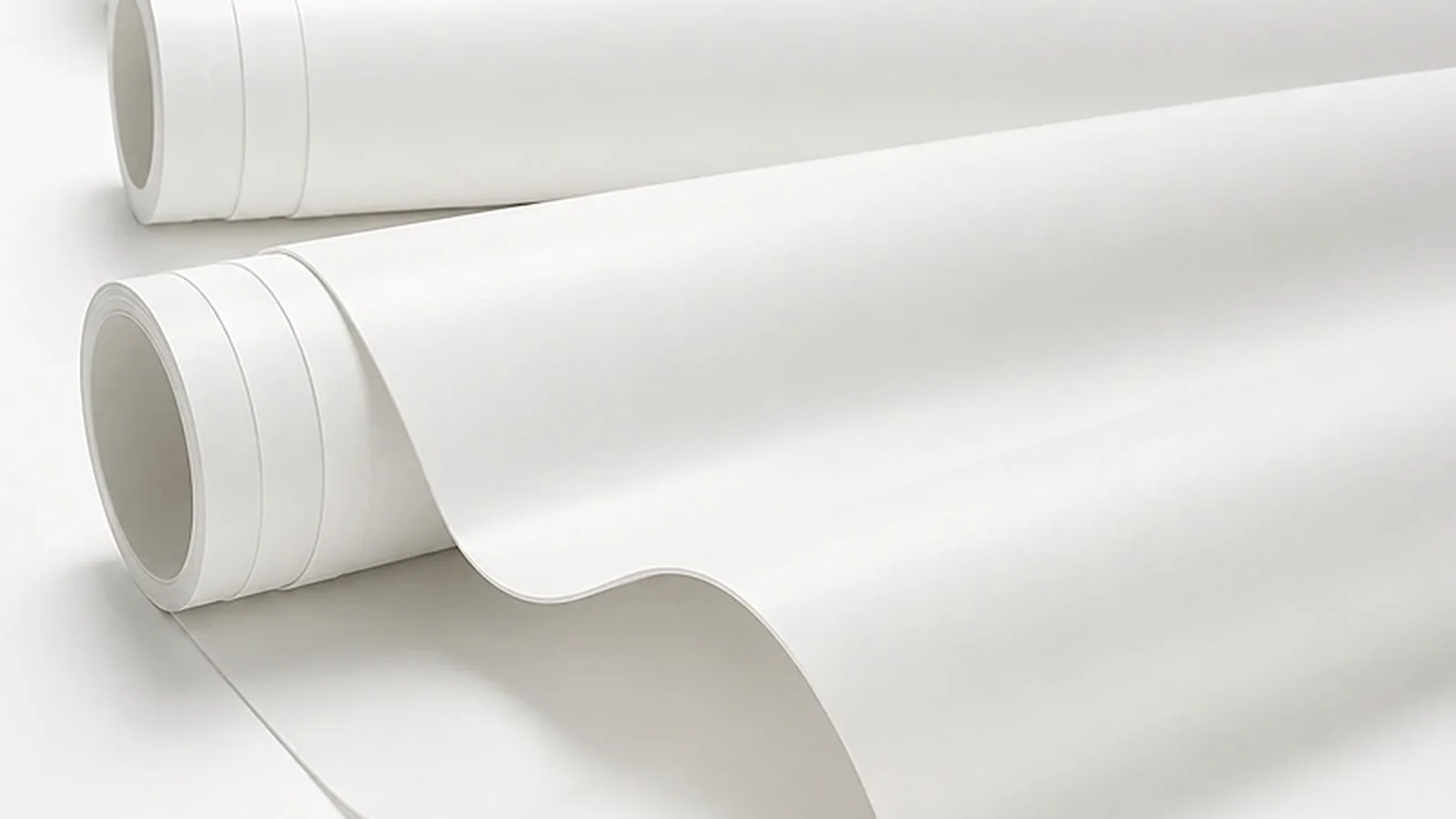
DuPont’s January 2026 product data sheet for TapTec XMF PLUS RO flat sheet specifies a particular product and its test conditions: a 500 ppm NaCl feed, 4.83 bar pressure, 25°C, pH 7 and a 30-minute flat-cell test. Those conditions are essential context. A buyer should not compare its published rejection or flux with another supplier’s number recorded at a different salinity, temperature, pressure or test duration. Nor should a flat-cell result be presented as a guaranteed 4040 or 8040 element result after cutting, gluing and rolling.
The data sheet describes roll dimensions and protective packaging; that is valuable for checking slitting width, roll-handling equipment and storage. It also warns that a product may not be available in every geography and that application restrictions can apply. Before requesting a price, ask whether the specific grade is currently supplied to your country, what roll format is available, how lot results are provided and whether the proposed application matches the published product. Read DuPont’s product data sheet.
Shawmut: select a fabric construction, not “any white carrier roll”
Shawmut’s RO-Flow literature documents permeate-carrier tricot fabrics and lists different models with thickness and application categories. That makes it a relevant specialist when the buyer is investigating carrier construction, channel integrity and flow. The document is supplier literature, not a head-to-head independent trial. Do not turn Shawmut’s performance descriptions into a claim that a particular fabric will outperform the current carrier in your element.
The useful procurement question is whether the selected model keeps the required leaf thickness, glue-line behavior and finished diameter under your own membrane, adhesive, cure and winding conditions. Ask for the chosen construction, roll width, core, edge/defect criteria and how a production lot will be identified. Build a small controlled set of elements before approving a fabric switch. Read Shawmut’s RO-Flow literature.
Tech Inc.: verify which spacer and which supply format
Tech Inc.’s public spacer page lists both feed and permeate spacer materials for spiral-wound module fabrication. That makes it a relevant enquiry point for development and sampling, but the public page does not by itself establish a production-size roll, a tolerance for your approved 4040/8040 recipe, or uninterrupted repeat-lot supply. An R&D-grade sample can be technically useful and still need a different commercial supply plan.
Ask whether the quote is for feed spacer or permeate spacer, request polymer/mesh geometry, nominal and measured thickness, usable width, roll length/core, lot certificate and packaging. Run the same cutting and rolling trial as the incumbent material. A spacer that affects pressure drop or handling cannot be qualified solely by a photograph or a nominal thickness. Read Tech Inc.’s spacer page.
Feed Spacer and Permeate Carrier Are Not Substitutes
A buyer may receive “spacer fabric” in a quote without a clear location in the element. The open feed spacer forms a channel for feed water between leaves. The permeate carrier supports water movement inside a glued membrane leaf toward the central tube. Their geometry, compressibility and interfaces differ. Put their separate part numbers in the BOM, then record which supplier provided each. This avoids a surprisingly common failure: a trial changes two layers at once, fails, and no one can identify which change caused it.
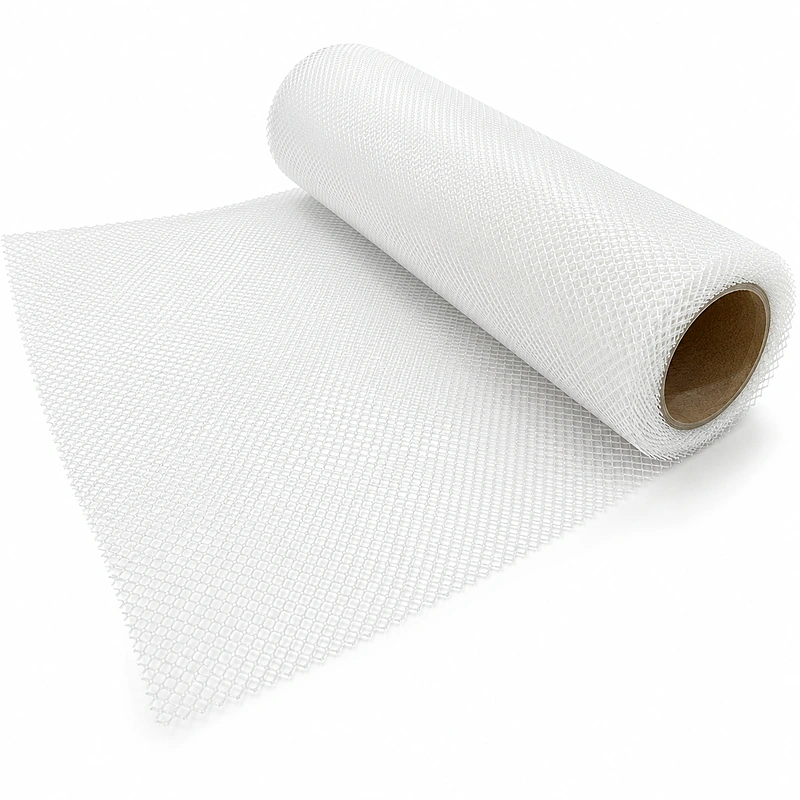
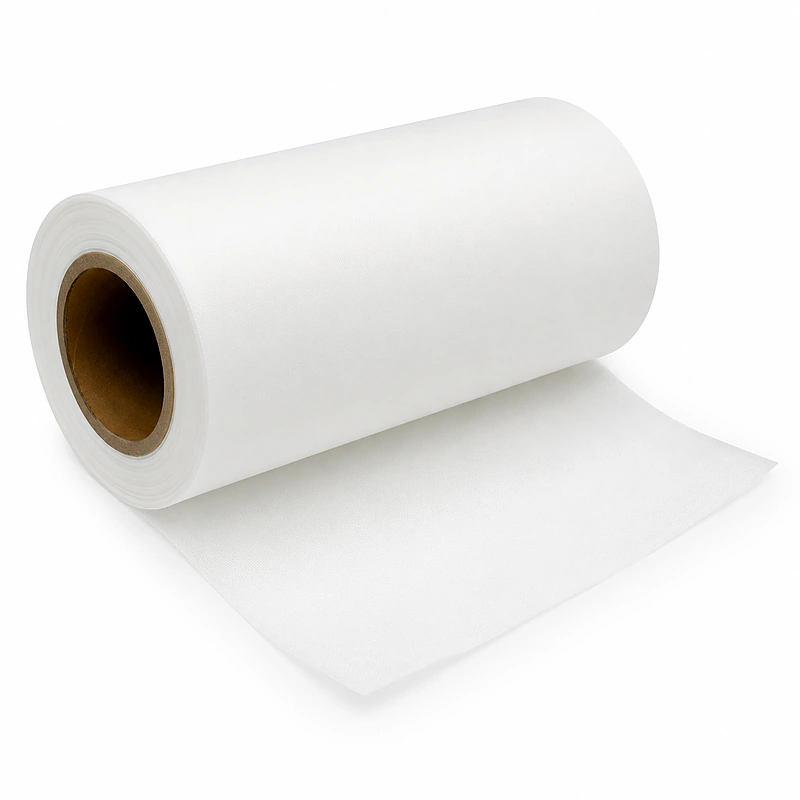
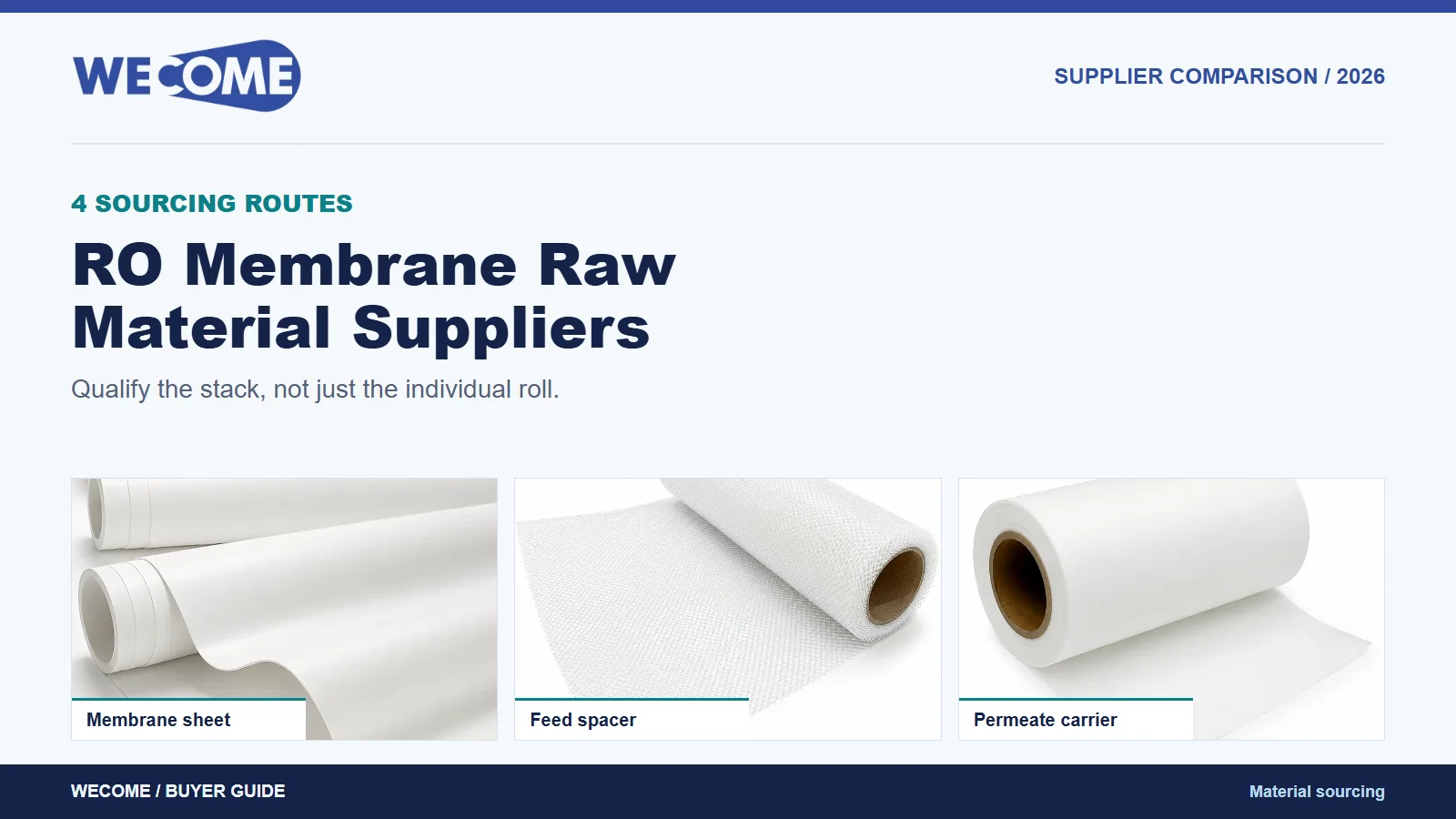
These are WECOME-owned material images used to explain physical roles; they are not images of Shawmut or Tech Inc. products. For the dimensional issue behind many substitutions, see the feed-spacer thickness guide and the permeate-carrier fabric guide.
Four Ways a “Good” Sample Becomes a Bad Purchase
Different test conditions make a false winner
Flux and salt rejection are not context-free numbers. Flat-cell results, finished-element tests and customer field results use different specimens and may use different salinity, pressure, temperature, pH and run time. Normalize the test method before comparing two RO sheet offers. If one supplier provides only a headline rejection number, ask for its complete test conditions and acceptance distribution by lot. The right answer may be “not comparable yet,” which is far cheaper than an unqualified purchase.
The first roll works; the second batch does not
Prototype conversion may use a carefully selected sample roll. Repeat supply depends on documented tolerance, packaging, storage, shelf life where relevant, change notification and incoming inspection. Ask the supplier to identify each roll and lot, and preserve a retained sample. Agree what happens if the incoming lot differs from the approved sample. For a bonded element, even an unchanged supplier name is insufficient if the fabric construction or adhesive chemistry changes.
One material change quietly alters several process settings
A carrier thickness change can alter rolled diameter or glue uptake. A spacer geometry change can affect feed-channel behavior and operator handling. A membrane-sheet width or stiffness change can disturb cutting, folding and rolling. These are engineering questions, not reasons to reject alternative suppliers automatically. Change one controlled variable at a time and log machine recipe, adhesive lot, cure conditions and element test result so the factory can attribute the outcome.
Cost per roll hides cost per accepted element
Price per square meter or per roll is only the input cost. Calculate usable area after width trim and defects; include conversion scrap, operator time, test failures, retesting, freight, duties and inventory exposure. Do not invent a universal scrap percentage. Use your own recent production baseline and run a short side-by-side trial. The candidate with the lower purchase price may still be the more expensive source if accepted output falls.
How to Compare Two Material Sources Without Confusing the Result
- Freeze the baseline. Record the current approved element drawing, BOM revision, machine recipe, test conditions and accepted output. Identify which one material is being challenged.
- Obtain traceable samples. Record manufacturer, grade, lot, roll width and position, packing date, storage condition and any supplier data sheet or certificate of analysis. A plain unlabeled roll is not a controlled sample.
- Check incoming characteristics. Measure the properties that actually matter to your process: sheet dimensions and visual defects; spacer geometry; carrier thickness/construction; tube interfaces; adhesive mix and working conditions. Use the agreed method, not a quick visual guess.
- Convert on intended equipment. Cut, position/weld where required, apply the approved three-side glue path, wind, cure and finish using a recorded recipe. If a setting changes to make the candidate work, record it explicitly.
- Test finished elements. Apply the same dimensional, integrity and performance test to baseline and candidate elements. Preserve sample IDs and raw results, including failures; do not compare one passing candidate with only the best baseline unit.
- Approve repeat supply separately. Write the incoming tolerance, lot documentation, packaging, change-notice period, replacement or credit route and retest trigger into the commercial agreement.
For a factory making several element families, repeat this on the formats most sensitive to the material change. An approval for one compact household element is not automatically an approval for a long industrial element. The same logic applies when switching between brackish-water and seawater membrane-sheet grades: the chemistry and test basis must be specific to the intended application.
The Material RFQ Fields Suppliers Need to Answer
Send one consolidated request rather than a message reading “please quote RO membrane raw materials.” Include the element size and drawing, intended water/application, annual and trial volumes, current material grade, exact material role, usable width and roll limits, required certificate and acceptance test. Where an existing material is confidential, provide a performance and dimensional specification under the appropriate agreement.
| Material | Ask for on the quotation | Trial evidence |
|---|---|---|
| RO flat sheet | Exact grade, roll width/core, test method, flux/rejection conditions, handling and geography | Flat-cell baseline plus finished-element test |
| Feed spacer | Polymer, geometry, nominal/actual thickness, usable width, roll length and lot | Cutting/rolling behavior, diameter and hydraulic test |
| Permeate carrier | Fabric construction, thickness, width, roll format, edge/defect criteria | Leaf/glue process and finished-element flow |
| Tube, adhesive and end parts | Drawings, interface tolerances, grade/chemistry, storage and change control | Assembly fit, cure, integrity and traceability |
Example, not a claimed customer case: a factory keeps its approved RO sheet but looks for a second feed-spacer source. It should not simultaneously switch carrier and adhesive. Ask both spacer suppliers for the same width and geometry data, make controlled elements on the same machine recipe, record winding behavior and test results, then approve a second source only if both material and finished-element criteria pass. This approach protects continuity without hiding a failed substitution inside a multi-item change.
For the broader component list, read the RO membrane raw-material selection guide. For a broader 4040/8040 comparison, see the industrial manufacturing solution.
Questions Buyers Also Ask
Who supplies the complete RO membrane material stack?
Some coordinated suppliers offer multiple components; specialists may offer one sheet, fabric or spacer family. A “complete stack” claim should be checked item by item against your drawing and supplier-of-record list. No public catalogue eliminates the need for trials.
Can I substitute feed spacer based on thickness alone?
No. Geometry, material, usable width, stiffness and how the spacer behaves during winding and under operating flow matter. Hold other variables constant and evaluate finished elements, not just the loose roll.
Does a membrane-sheet data sheet predict 4040 or 8040 performance?
It provides a controlled material reference, often under flat-cell conditions. Finished-element performance also depends on leaf design, carrier, spacer, adhesive, assembly, curing and test conditions. Ask the supplier for the exact material test method and run your own element validation.
Is buying every material from one company safer?
It can simplify coordination, but it does not automatically make a stack compatible or traceable. The safer process is a signed BOM, item-level source identification, controlled samples and repeat-lot change management, whether you choose one vendor or several.
Request a Material Review Against Your Element Drawing
Send WECOME the target element format, BOM or current sample, material roles to source, application and trial volume. We can map candidate materials to the interfaces that need validation and prepare a line-item quotation. Do not change an approved recipe solely because a catalogue promises a lower unit price.
Request a Material ReviewSources and editorial disclosure
Descriptions are based on first-party product information reviewed September 2026. Supplier claims are not independent comparative tests. WECOME publishes this guide and is one of the suppliers discussed. Current model availability, regional sale and exact quotation terms require direct confirmation.

Bessie has 10+ years of experience in RO membrane materials and water treatment supply chains. At WECOME, she helps manufacturers and system integrators worldwide source the right membrane components — from feed spacers and permeate carriers to NSF-certified adhesives — backed by hands-on technical support.