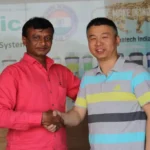

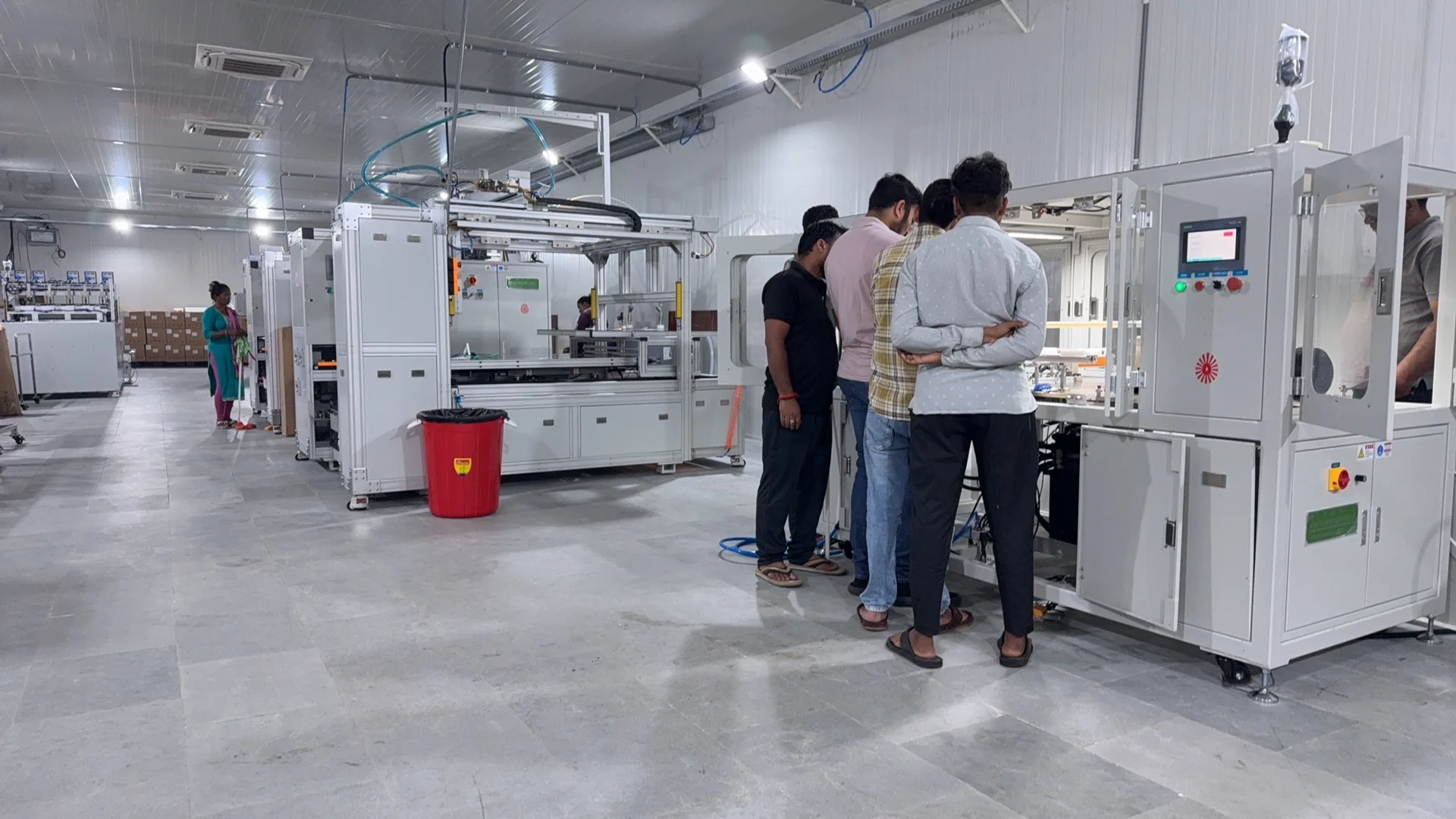
Payas, an Indian water-treatment equipment company, set out to make its own 4040 and 8040 spiral-wound reverse osmosis membrane elements. WECOME’s Engineer Zhang and an equipment engineer supported the customer on site with equipment placement, commissioning, process setup and operator training.
This is Payas’s factory project. WECOME’s documented role was equipment and manufacturing-process support, not the design or construction of the entire plant.
The starting point
From Water-Treatment Equipment to Membrane Production
Payas already worked in water-treatment equipment, but RO membrane element manufacturing was new to its production team. According to Engineer Zhang’s first-hand project notes, the workshop had basic space and electrical supply when the team arrived. Machine positions, cable routing and the production sequence still needed to be organized around the 4040/8040 program.
The project record lists membrane-sheet cutting and folding, permeate-carrier welding, industrial membrane rolling, end trimming, air-leak testing and fiberglass winding among the processes requiring setup or training. These stations had to work as a sequence: material dimensions, tooling and the handoff between stages all affect the finished element.
On-site work
Equipment Commissioning and Practical Process Training
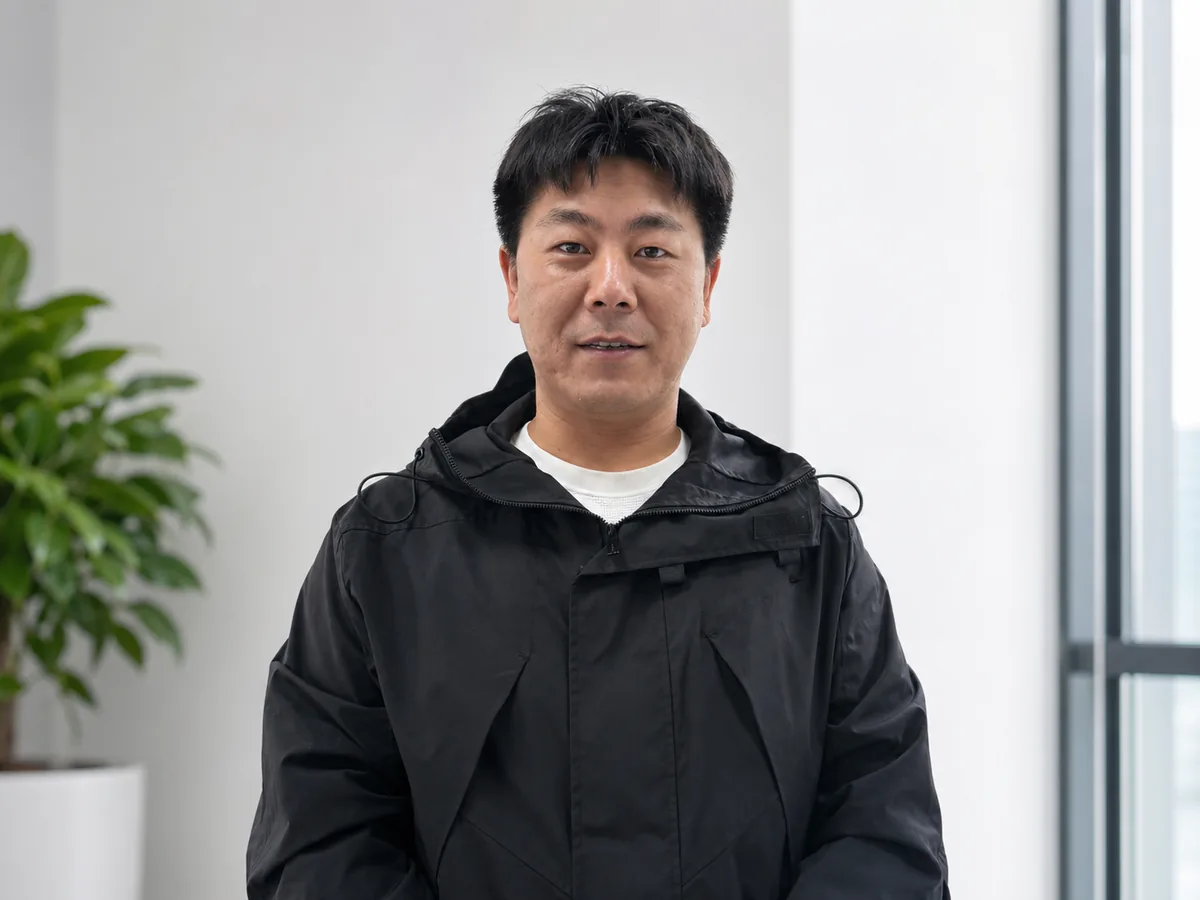
The engineer behind the case
Engineer Zhang | Technical Operations Manager
Zhang’s project notes describe approximately two months of on-site support at Payas, including production-process training and troubleshooting alongside an equipment engineer.
Office portrait also shown on WECOME’s About page; it was not taken at Payas.
Engineer Zhang and a WECOME equipment engineer worked with Payas on the station layout and electrical-routing plan. Once the machines were placed, the team commissioned the equipment and checked its operation.
Support then moved from machine setup to the material recipe. Based on Payas’s intended membrane elements, Zhang calculated cutting dimensions and helped define preparation and rolling procedures. Operators learned how to determine cut sizes, membrane area and target roll diameter, and how to recognize problems during early production.
As Payas’s team began using the line, WECOME continued to answer equipment and process questions on site.
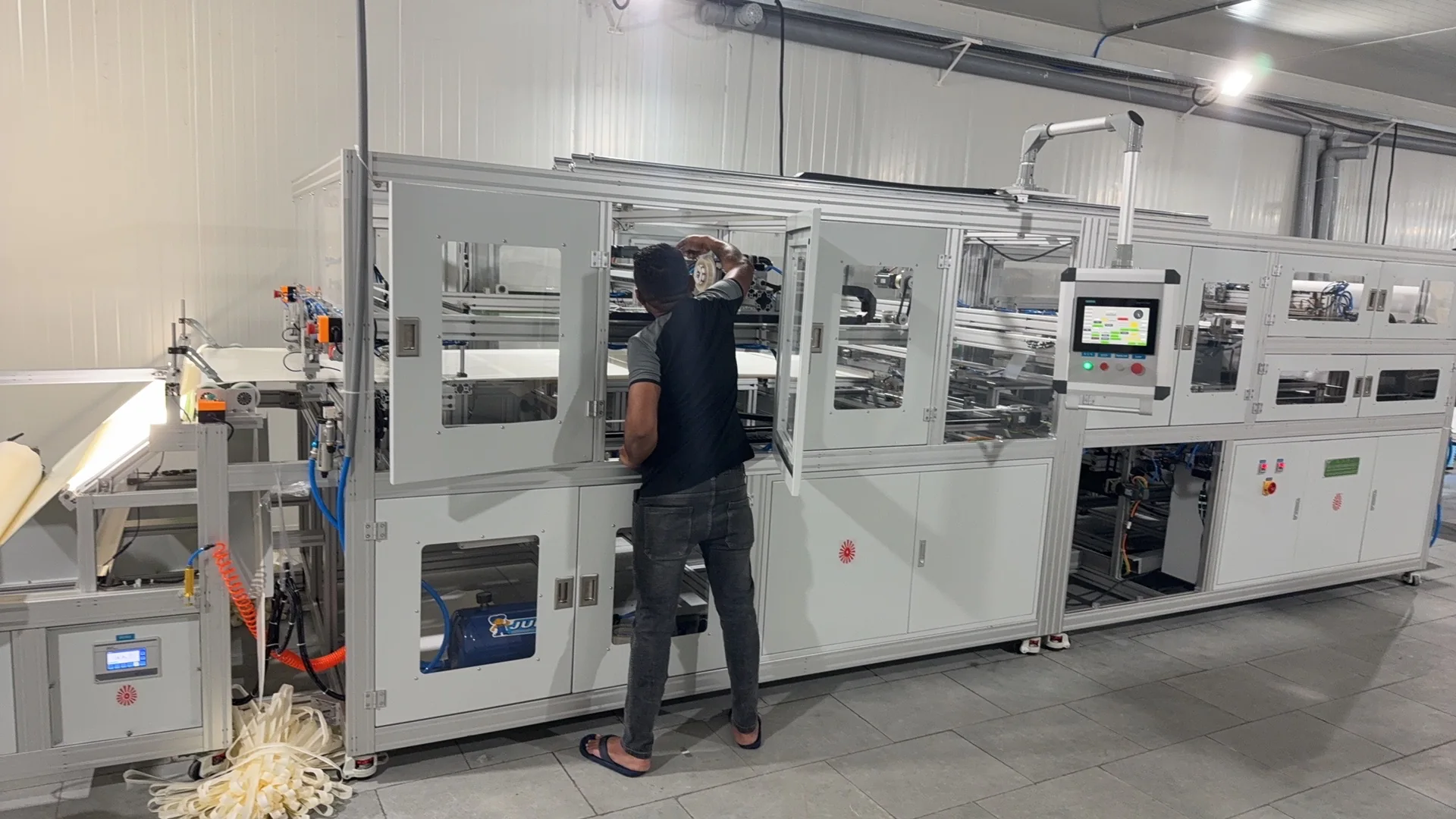
Arrange the production flow
Plan equipment positions and electrical routes around the customer’s element program.
Check the equipment
Set up the stations, verify normal operation and resolve issues found during startup.
Transfer the process
Work through material dimensions, rolling parameters and production checks with operators.
A real production problem
Finding the Cause of an Air-Leak Test Failure
During early production, some rolled elements failed the air-leak check. The negative-pressure test could show that an element was not airtight, but it did not identify the exact leak location.
A second diagnostic method
Using locally available components, Engineer Zhang assembled a positive-pressure setup to help locate the leak. Once the area was found, the team explained the likely cause, reviewed how to prevent a repeat and demonstrated a local adhesive repair where appropriate.
Zhang’s project notes describe the troubleshooting and training. They do not provide a verified before-and-after yield, scrap-rate or output figure, so none is claimed here.
Project takeaway
Supporting Payas Beyond Machine Installation
WECOME’s contribution was to help Payas connect the equipment with a usable 4040/8040 manufacturing process. That meant planning the line, checking the machines, matching material dimensions to the intended elements and helping operators diagnose defects, not merely delivering a list of production stations.
According to Engineer Zhang, Payas continued production after the on-site support period, while WECOME remained available for later technical and equipment questions. The case illustrates why a production line needs coordinated material choices, process settings and inspection methods alongside the machines themselves.
For a broader view of the workflow, see WECOME’s 4040/8040 RO membrane manufacturing solution, industrial production equipment and technical support and engineering.
Plan Your 4040 / 8040 Production Program
Share your element drawings, target process and workshop requirements with WECOME for a project-specific discussion.

Bessie has 10+ years of experience in RO membrane materials and water treatment supply chains. At WECOME, she helps manufacturers and system integrators worldwide source the right membrane components — from feed spacers and permeate carriers to NSF-certified adhesives — backed by hands-on technical support.