



RO membrane PU glue is a two-component polyurethane adhesive used to form controlled glue lines during spiral-wound membrane-leaf assembly. Correct metering, mixing, dispensing and curing help keep the feed and permeate paths separated and reduce internal bypass caused by incomplete or defective bonds.
Adhesive selection should be based on line speed, dispensing equipment, membrane material, curing conditions, cleaning chemistry and the current technical and safety documentation. HUITIAN 6322AB and 6321G are epoxy grades and are covered on the RO membrane epoxy glue page.
RO membrane PU adhesive seals the edges of the membrane-leaf envelope during element rolling. Component A and Component B must be metered at the specified ratio, mixed uniformly, dispensed within the validated working time and cured under controlled conditions. Adhesive integrity can prevent internal bypass, but finished-element salt rejection and flux still depend on the complete material stack and manufacturing process.
How Two-Component PU Glue Enters the RO Element Process
Measure A and B
Meter both components by the specified weight or volume ratio using calibrated equipment and the approved production recipe.
Create a uniform mixture
Mix thoroughly without introducing avoidable air, moisture or contamination; use the specified static mixer or dispensing system.
Apply controlled glue lines
Maintain line width, continuity and position on the membrane leaf before the usable working window expires.
Release only after validation
Control time and temperature, then verify the bond and finished-element integrity before trimming or hydraulic testing.
Choose the Adhesive Grade Around the Production Process
The correct adhesive is not selected from tensile strength alone. Weight ratio, volume ratio, component viscosity, mixed viscosity, pot life, dispense rate, bead geometry and cure conditions all influence production stability. A formula that works on a manual household line may not be the best match for a high-output automated 8040 rolling line.
Temperature changes viscosity and usable working time. The 8642 technical data shown below are typical values, not universal release limits. Buyers should approve the selected adhesive through a dispensing trial, membrane-leaf bonding trial, cure verification and finished-element integrity test.
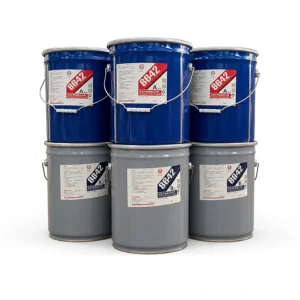
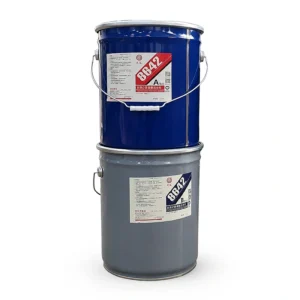
HUITIAN 8642AB Commercial Listing
| Part Number | Mix Ratio (By Weight) | Working Time | Packaging | Drums / Pallet | CBM / Pallet |
|---|---|---|---|---|---|
| HUITIAN 8642AB | 9:10 | 30 minutes | A: 180 kg/drum B: 200 kg/drum | 2 | 0.9 |
On tablet and mobile screens, the adhesive information is displayed as a structured specification card.
Working time depends on formulation, test method and temperature. Use the current manufacturer TDS, batch documentation and an on-line trial to set the production stop time.
HUITIAN 8642AB Typical Data Before Curing
| Property | 8642 A | 8642 B |
|---|---|---|
| Appearance | Light amber | Deep amber |
| Chemical Type | Polyol | Isocyanate prepolymer |
| Packing | 5 or 55 gallon | 5 or 55 gallon |
| Viscosity, GB/T 10247-2008 | 24,000 ± 6,000 mPa·s | 20,000 ± 5,000 mPa·s |
| Mixture Viscosity | 23,000 ± 5,000 mPa·s | |
| Density, GB/T 13354-1992 | 1.0 g/cm³ | 1.1 g/cm³ |
| Mix Ratio | 9:10 by weight / 1:1 by volume | |
| Working Time at 23°C | 40 minutes, typical supplied technical value | |
HUITIAN 8642AB Typical Properties After Curing
| Property | Typical Data |
|---|---|
| Hardness, Shore A GB/T 531-1999 | 75 |
| Tensile Strength GB/T 528-1998 | 17 MPa |
| Elongation at Break GB/T 528-1998 | 150% |
| Cured Service Temperature | -40°C to 90°C |
Working-time discrepancy: the supplied commercial comparison lists 30 minutes for 8642AB, while the supplied technical table lists 40 minutes at 23°C. Confirm the current manufacturer TDS, test conditions and approved production recipe before setting the usable application window.
Performance Advantages That Matter in Element Manufacturing
Controlled component viscosity
Stable A/B viscosity and mixed viscosity support repeatable metering, static mixing and glue-line delivery.
Defined operating window
Grade-specific working time allows manufacturers to match dispensing, leaf positioning and rolling to the production takt.
Tough cured adhesive layer
Typical Shore A hardness, tensile strength and elongation indicate a cured bond designed to retain strength without becoming unnecessarily brittle.
Broad listed temperature range
The supplied 8642 data list -40°C to 90°C for the cured adhesive; the finished element still requires application validation.
Water and hydrolysis resistance
PU grades for membrane assembly are designed for long-term water contact, subject to cure quality and formulation-specific qualification.
Manual and automated dispensing
Matched ratios and bulk drums support manual, semi-automatic and robotic glue application after equipment trials.
How to Select and Qualify RO Membrane Adhesive
Element and leaf design
Confirm household, 4040, 8040 or custom format, membrane-leaf dimensions and the controlled glue-line drawing.
Mixing ratio
Match weight and volume ratios to the pump, metering accuracy, static mixer and operator control method.
Working time
Choose a usable window that covers mixing, dispensing, positioning and rolling under actual workshop temperature.
Viscosity and dispense rate
Review component temperature, hose size, pump capacity and bead profile to avoid incomplete or unstable glue lines.
Cure conditions
Define time, temperature, handling point and release criteria before trimming, integrity testing or packaging.
Water and cleaning chemistry
Validate exposure to feed water, pH, cleaners, temperature and contact duration rather than assuming universal resistance.
Meter accurately
Off-ratio mixing can change viscosity, cure, strength and chemical resistance even when the glue line looks acceptable.
Protect the mixture
Control entrained air, wet tools and environmental contamination; Component B contains an isocyanate prepolymer.
Record every batch
Link A/B lot numbers, ratio checks, dispense time, cure conditions and element test results to the production record.
PU leaf adhesive is not automatically an end-cap potting compound
This page positions the adhesive primarily for membrane-leaf sealing and specified assembly joints. Do not extend the claim to end-cap potting or another structural joint unless the controlled drawing, current TDS and validation test approve that exact use.
Compliance, Handling and Documentation
Certification scope
Supplier literature describes certification or regulatory documentation for selected water-treatment adhesive grades. Before using an NSF claim in a customer submittal, confirm the exact grade, certificate number, standard, manufacturing site, listing status and application limitations. Do not apply one grade’s certificate to the entire range.
SDS-controlled handling
Component B is an isocyanate prepolymer. Review the current Safety Data Sheet for ventilation, personal protective equipment, storage, spill response, transport classification and disposal. Keep containers sealed and prevent cross-contamination between A and B.
Quality-Control Points for Production Use
Grade and lot
Confirm part number, A/B pairing, lot numbers, shelf life and container condition before release.
Appearance and viscosity
Inspect colour, separation, contamination and viscosity against the current acceptance plan.
Ratio verification
Calibrate pumps or scales and record ratio checks before production and after any equipment adjustment.
Uniform A/B blending
Inspect the mixed adhesive for streaking, unmixed material, bubbles and unstable delivery.
Glue-line continuity
Control bead position, width, height and start/stop condition across the membrane leaf.
Working-window control
Record mixture start time and stop use before the validated working window expires.
Release criteria
Confirm the specified cure schedule and handling strength before trimming or testing.
Integrity validation
Verify the complete element for internal bypass and hydraulic performance; adhesive data alone are insufficient.
Applications
Household RO elements
Membrane-leaf sealing adhesive for common residential and household spiral-wound element production.
4040 and 8040 RO elements
Bulk two-component PU adhesive for validated industrial element rolling and assembly processes.
Pure and ultrapure water
Controlled adhesive identity, cure and traceability for process-water and high-purity element programs.
Brackish and seawater RO
Application-specific adhesive qualification for membrane elements operating under different pressure and salinity conditions.
Wastewater reuse elements
Adhesive selection reviewed against feed contaminants, cleaning frequency and chemical exposure.
OEM membrane factories
Drum and pallet supply for repeat production, automated dispensing and documented batch control.
Frequently Asked Questions
What is RO membrane PU glue used for?
It is a two-component polyurethane adhesive used to form and seal membrane-leaf glue lines during spiral-wound RO element production, helping prevent internal feed-to-permeate bypass.
What is the mixing ratio for HUITIAN 8642AB?
The supplied 8642 data specify 9:10 by weight or 1:1 by volume. The dispensing system must be calibrated for the selected control method and verified before production.
Is the 8642AB working time 30 or 40 minutes?
The supplied commercial comparison lists 30 minutes, while the supplied technical table lists 40 minutes at 23°C. Confirm the current manufacturer TDS and test conditions before setting a production limit.
Can PU glue improve RO membrane salt rejection?
A sound adhesive seal helps prevent internal bypass that could reduce finished-element rejection. It does not determine membrane selectivity, and the complete element must still pass integrity, flux and rejection testing.
Can one adhesive grade be used for every RO element?
Not automatically. Household, 4040, 8040, seawater and wastewater elements can require different working times, glue-line geometries, cure conditions and chemical-resistance validation.
Is this RO membrane glue NSF certified?
Certification claims must be tied to the exact adhesive grade and current certificate scope. Request the certificate number, standard, listing status and application limitations for the quoted formulation before project approval.
What information should be included in an adhesive RFQ?
Provide the element format, membrane materials, line speed, glue-line drawing, required working time, weight or volume ratio, dispensing equipment, curing conditions, cleaning chemistry, annual consumption and required compliance documents.
Related Materials, Equipment and Technical References
Use these WECOME pages to match PU adhesive with mixing hardware, membrane materials and the rolling process:
Match PU Glue to Your Dispensing and Rolling Process
Send the element format, glue-line drawing, dispensing method, required working time, cure conditions and annual consumption for grade review.