
RO Membrane Rolling Machines
Source single-operator, semi-automatic rolling equipment for household and industrial RO elements. Compare format coverage, adhesive systems and sample acceptance before requesting your machine quote.
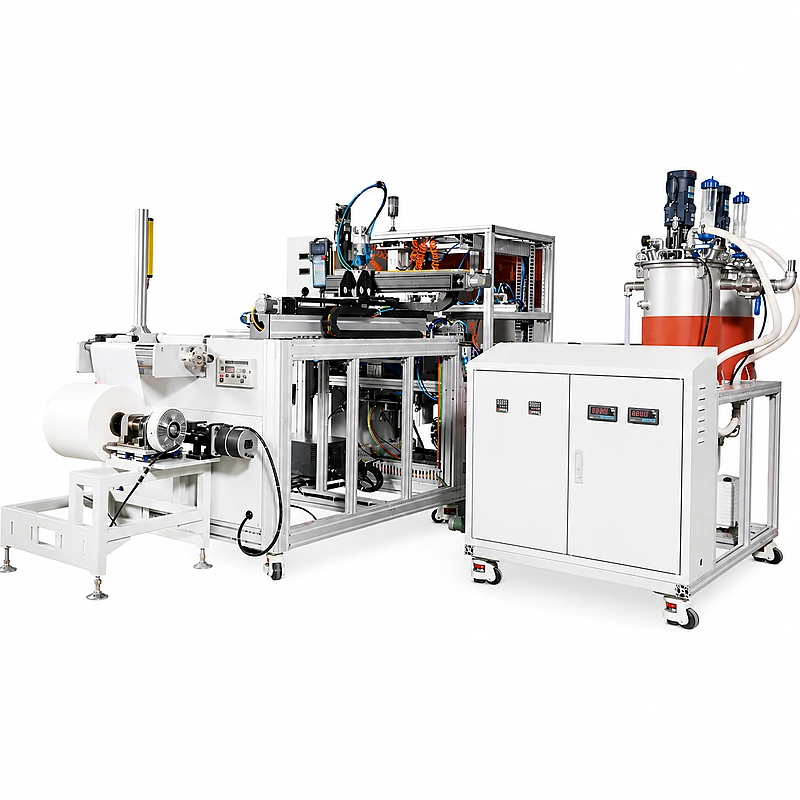
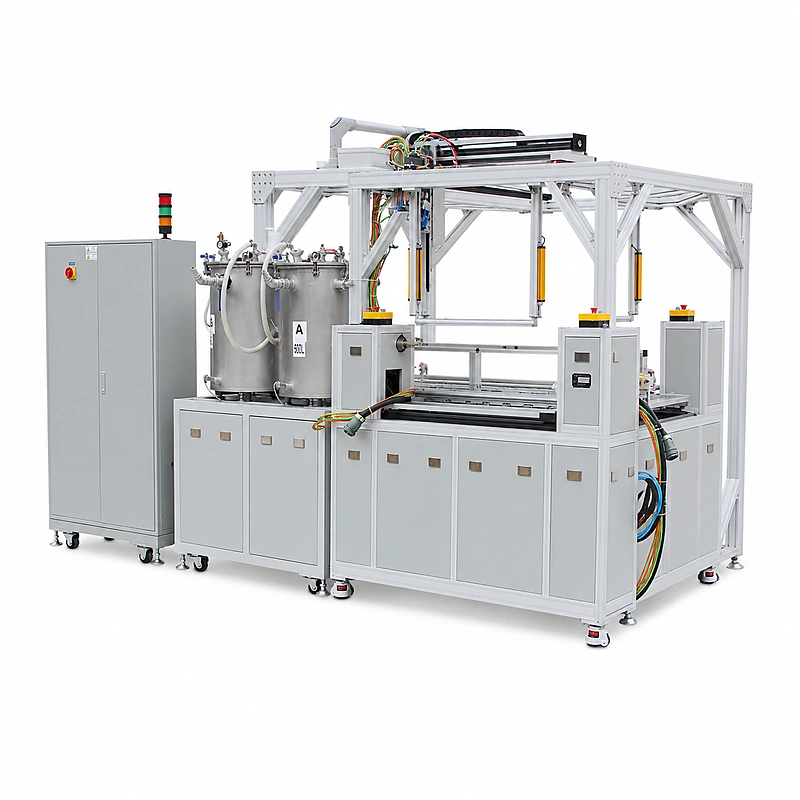
Choose by Element Format
Two rolling-machine configurations for assembling spiral-wound RO elements from prepared membrane leaves.
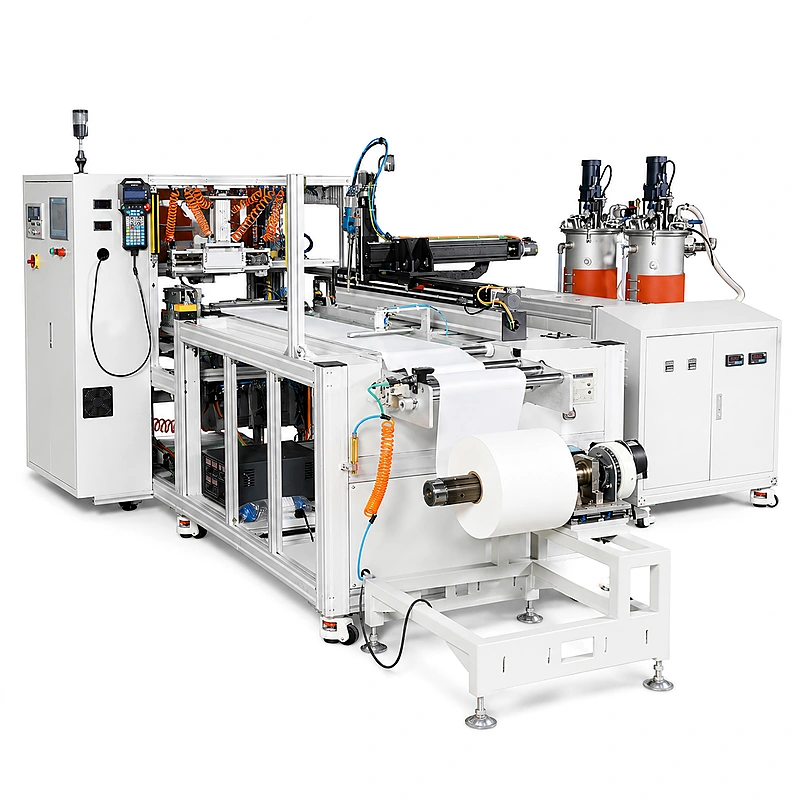
Household RO Membrane Rolling Machine
1812 two-layer to 3013 six-layer element programs, with single-operator semi-automatic operation.
- Element fit: layer count and finished diameter.
- Configuration: dispensing setup and winding settings.
- Trial: your tube, prepared leaves and adhesive.
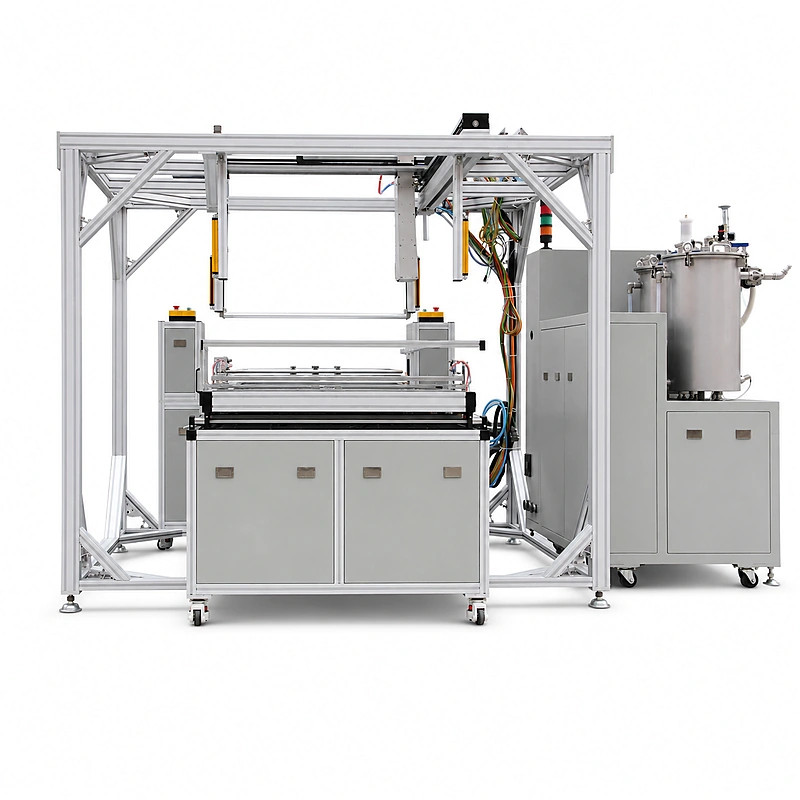
Industrial Semi-Automatic Rolling Machine
2540, 4021, 4040 and 8040 element programs, with single-operator semi-automatic operation.
- Element fit: tube geometry, leaf stack and dimensions.
- Configuration: gluing, tension and material handling.
- Trial: the tooling and recipe for each format.
Household or Industrial: What Changes?
Choose the format range first, then compare the material stack, tooling and trial conditions.
| Decision point | Household configuration | Industrial configuration |
|---|---|---|
| Listed element range | 1812 two-layer to 3013 six-layer; match the element recipe | 2540 / 4021 / 4040 / 8040; match tooling to the recipe |
| Operator arrangement | Single-operator semi-automatic operation | Single-operator semi-automatic operation |
| Material review | Leaf stack, layer count, tube and finished diameter | Leaf dimensions, stack, tube and finished-element geometry |
| Adhesive application | Dispensing setup matched to the leaf construction | Dispensing and working time matched to the leaf construction |
| Capacity validation | Trial the household recipe, including loading and unloading | Trial each industrial format, including loading and unloading |
| Order checklist | Sample materials, fixtures, utilities and acceptance criteria | Sample materials, fixtures, utilities and line interfaces |
Adhesive Supply, Rolling Area & Controls
Industrial configuration shown. Match these functional areas to your material and operating requirements.
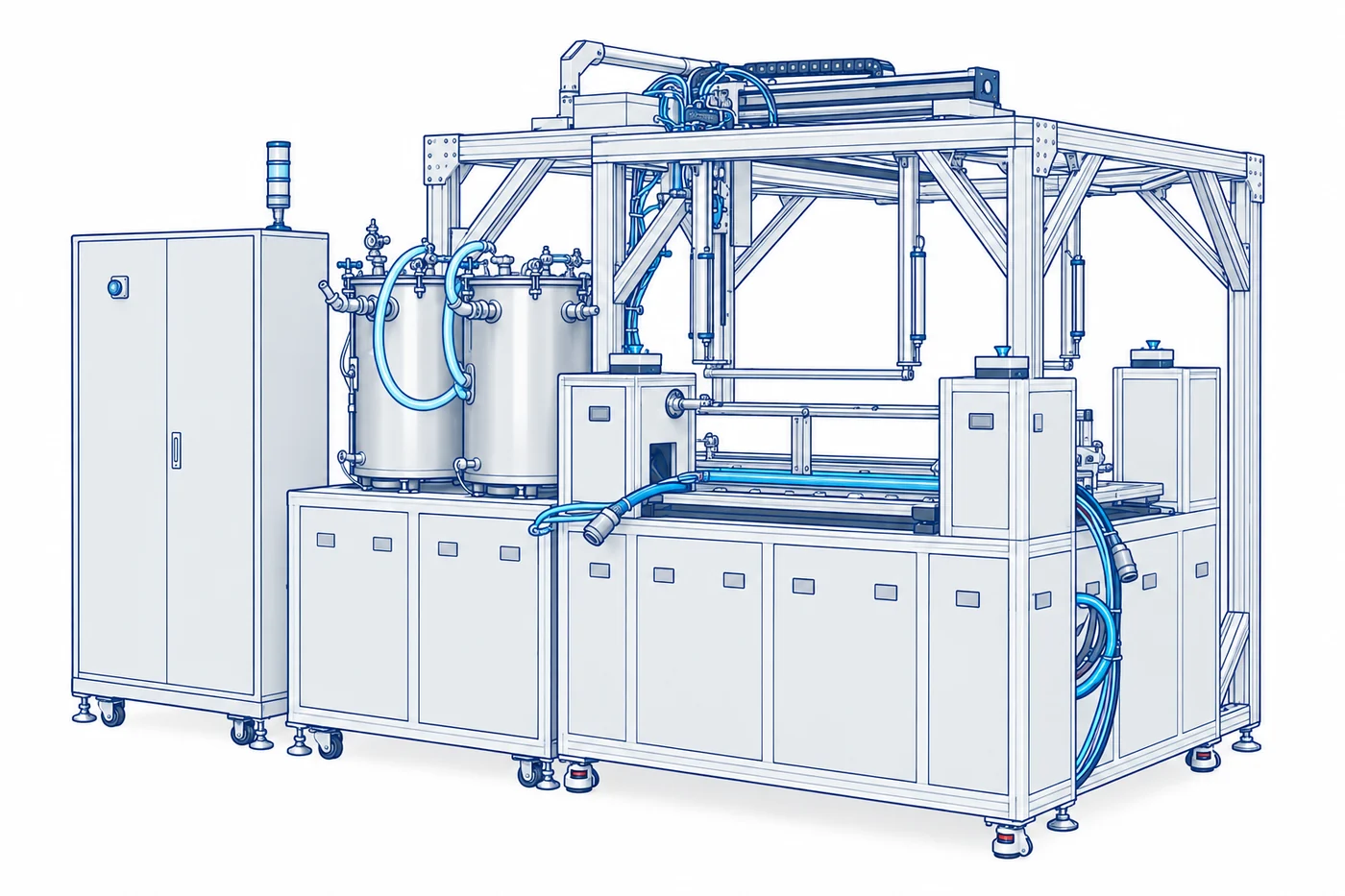 010203010203
Match the Glue System
Provide the adhesive technical data, mixing requirements, working time and cleaning procedure. These affect the dispensing configuration.
Check the Material Path
Review leaf width, tube engagement, alignment and tension using your actual materials. Include loading and unloading in the trial.
Define the Operator Sequence
List the settings and fixture changes for each format. Separate automatic machine actions from operator loading and changeover tasks.
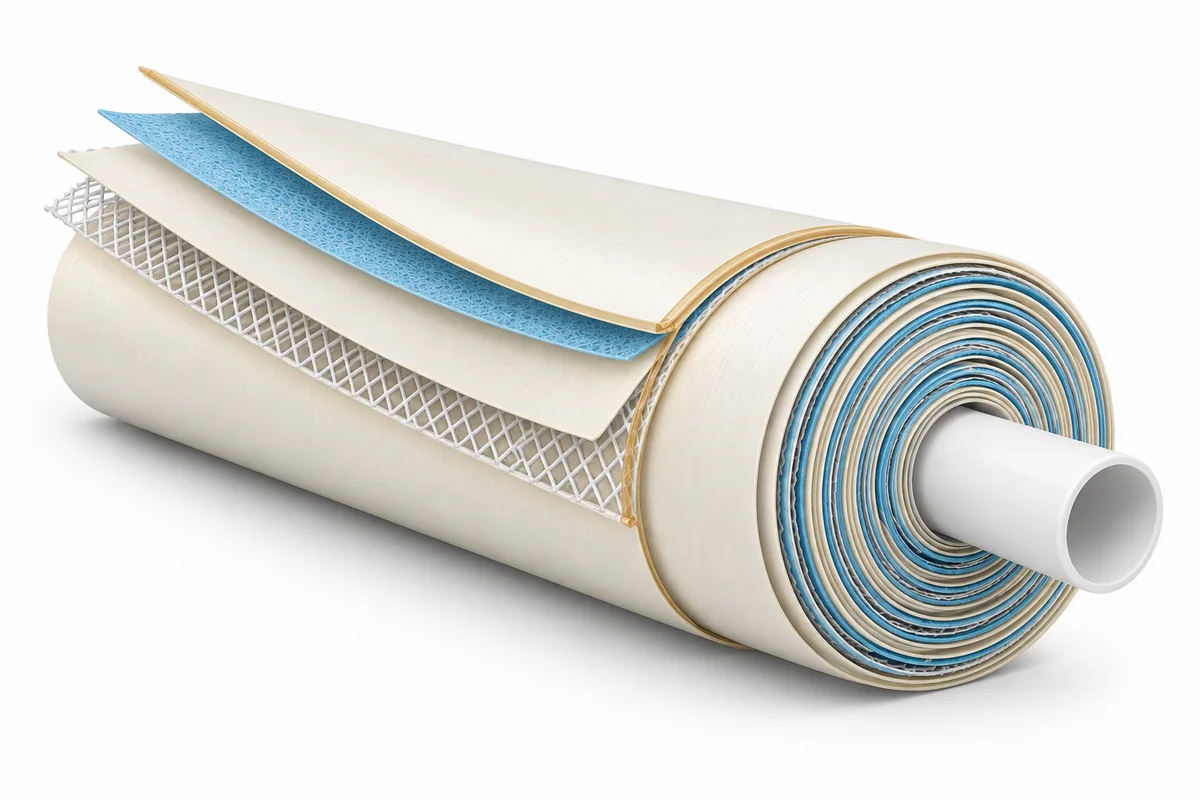
The Material Stack Sets the Rolling Requirement
Membrane films: form the selective barrier.
Permeate carrier: creates the collection path inside a membrane leaf.
Feed spacer: maintains feed channels between adjacent leaves.
Center tube: collects permeate and defines the core interface.
For machine selection, send the actual layer thicknesses, leaf dimensions, tube drawing and adhesive data.
Carrier Spot Welding
The confirmed process uses 4-6 weld points on the permeate carrier. Point locations follow the approved process; this is separate from adhesive sealing.
Three-Side Glue Application
Adhesive is applied along three specified edges in the membrane / spacer assembly process. It is not replaced by carrier spot welding.
Simplified process sketches; weld positions and seal geometry are not to scale.
Prepare
Cut and prepare the approved sheet, spacer and carrier.
Load & align
Position the prepared leaves and tube for the selected construction.
Glue & roll
Apply the specified seal pattern and control the winding operation.
Cure & finish
Follow the adhesive process; trim and reinforce where specified.
Inspect
Complete agreed dimensional, integrity and performance checks.
Process relationship only. Station boundaries and inspection sequence depend on your approved manufacturing route.
Four Checks Before You Approve the Machine
Run the agreed element construction and record the result against written acceptance criteria.
Dimensional Fit
Check the tube, leaf stack and finished dimensions against the approved construction.
Glue Application
Review the seal pattern and repeatability using the agreed adhesive and process.
Operating Sequence
Record loading, rolling, unloading and changeover tasks with the agreed staffing.
Acceptance Records
Document the sample results, agreed checks, supplied scope and any open actions.
Have an Element Drawing or a Material List?
Start with your target formats and sample availability. Define the trial before finalizing the order.
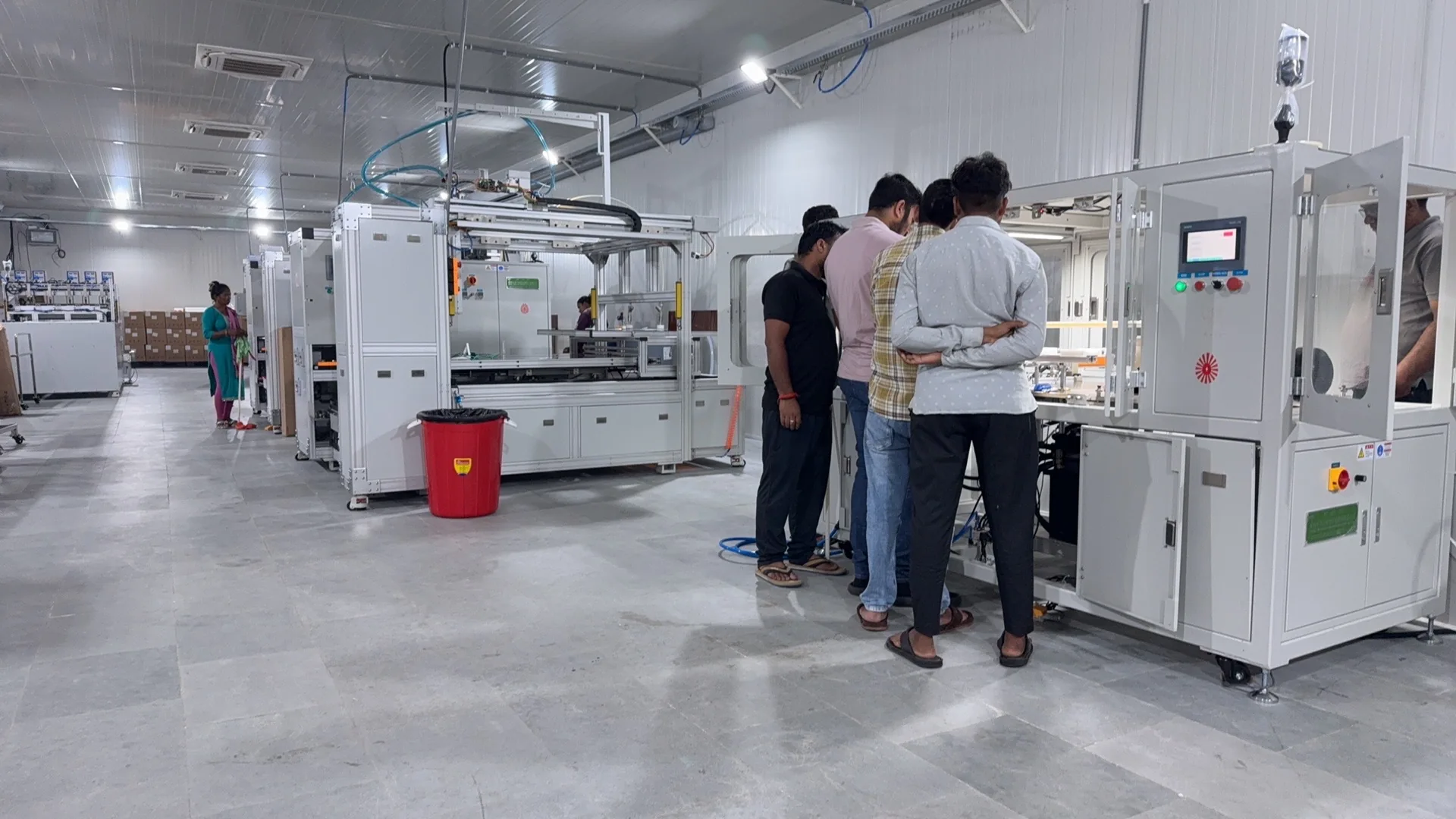
On-Site Commissioning & Operator Training
Engineer Zhang and the WECOME team supported Payas's 4040 / 8040 project with equipment placement, commissioning, process setup and operator training.
Documented scope: equipment and process support, not construction of the customer's entire plant. Support for a new order is agreed in its quotation.
Compare What Is Included in the Quote
A rolling-machine price is only comparable when the equipment, tooling and support scope are the same.
Machine & Tooling
Listed formats, fixtures, adhesive equipment and controls. Identify optional configurations.
Sample Trial
Materials supplied, tested formats, operator tasks and acceptance records.
Delivery
Packing, destination, freight responsibilities and agreed delivery terms.
Support
Installation, commissioning, training and spare parts: included or separately quoted.
Starting a complete line? Review the 4040 / 8040 manufacturing scope
Request an RO Membrane Rolling Machine Quote
- Element sizes: drawing, layer count and material stack.
- Production target: accepted elements per shift and shift length.
- Site utilities: power and compressed air.
- Purchase scope: existing equipment, samples and destination.
RO Membrane Rolling Machine FAQs
Can one configuration cover household and 8040 elements?
The listed household and industrial machines are different configurations. Send your complete format list and leaf constructions; tooling, finished diameter and handling requirements determine whether separate machines are needed.
How many operators does the rolling station need?
Both configurations shown here use single-operator semi-automatic operation. This describes the rolling station, not total production-line staffing. Material preparation, finishing, testing and packing must be staffed separately.
What determines the RO membrane rolling machine price?
The configured size range, tooling, adhesive system, controls and acceptance trial affect the quotation. Ask for commissioning, training, spare parts, freight and delivery terms to be itemized so that you compare the same purchase scope.
Is membrane rolling the same as FRP winding?
No. Membrane rolling assembles the sheet, spacers and carrier around the center tube. FRP winding applies glass fiber and resin to the outside of the element. The two operations require different equipment.
Does a rolling machine produce the membrane sheet?
No. It assembles spiral-wound elements from prepared membrane sheet and components. Casting or coating RO membrane sheet is a different manufacturing process.
Which sample materials should we provide?
Provide the membrane sheet, feed spacer, permeate carrier, center tube and adhesive technical data for the construction to be tested. Agree sample quantities and trial criteria before dispatch.
How do we compare supplier capacity claims?
Use the same element, material stack, operator count and cycle boundaries. Include loading, unloading and changeovers. Rolling-cycle time alone does not establish accepted output per shift or complete-line capacity.
What should an overseas order include?
Specify the machine and tooling, power and air requirements, acceptance records, packing, delivery terms and destination. Confirm installation, training, spare parts and service responsibilities in the quotation.
Find the Right Rolling Configuration
Share your element sizes, material stack and production target. Start with a machine scope that fits your project.