
RO Membrane Materials for Decentralized Community Water Treatment
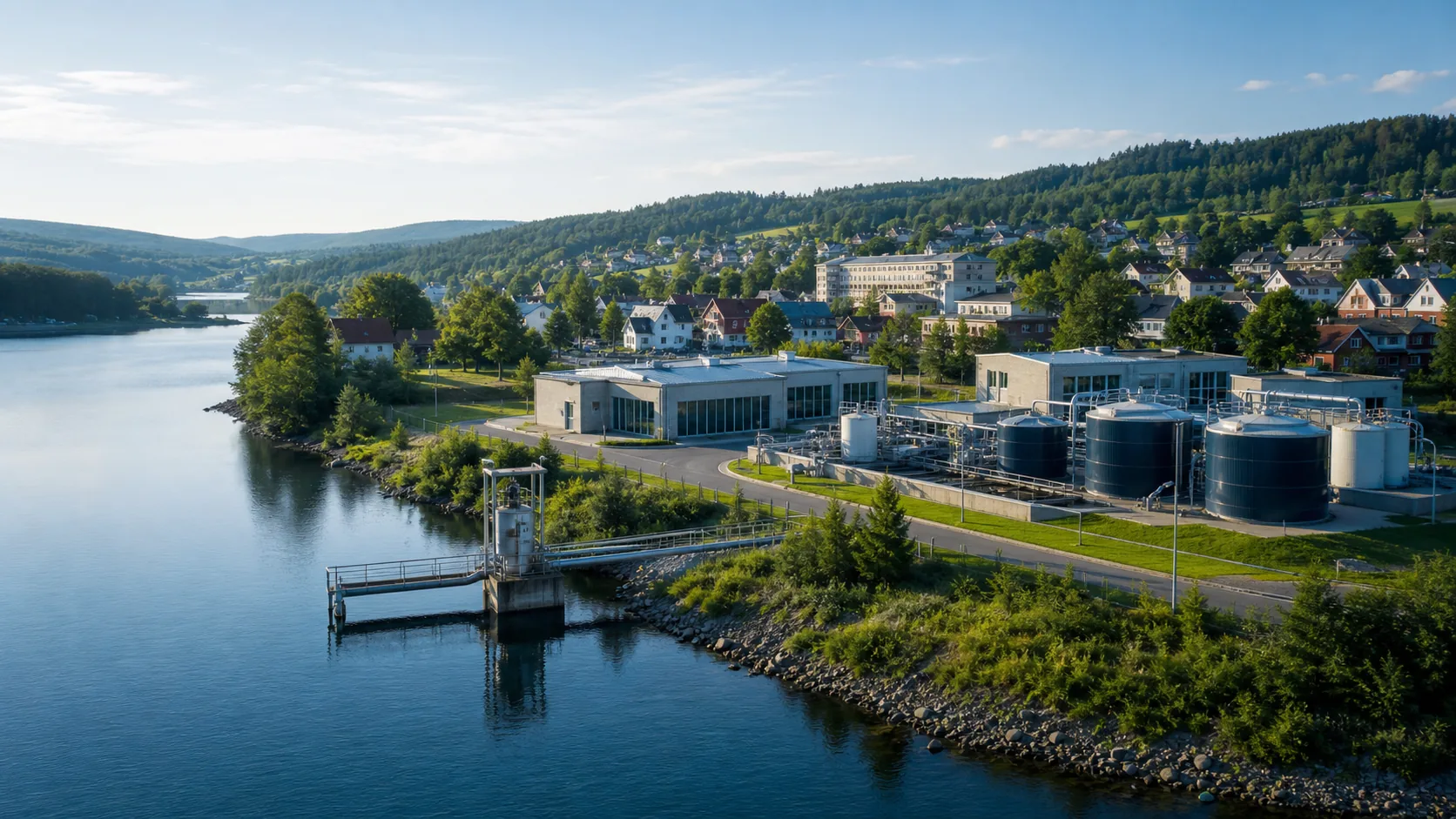
Small community water systems need more than compact equipment. Their RO elements must support variable source water, practical maintenance, limited operating resources and dependable local supply.
Decentralized does not mean technically simple
Smaller supplies often face operational, technical and resource constraints at the same time. Material and element-production decisions should reflect the way the system will actually be operated.
Water quality can shift
Seasonal rainfall, well conditions, salinity and local treatment changes can move the feed outside its expected range.
Operators may be limited
The design should support clear inspection, predictable replacement and straightforward maintenance planning.
Parts may travel farther
Stable component specifications and consistent element builds reduce avoidable replacement uncertainty.
Energy and downtime matter
Low-pressure performance, clean flow channels and repeatable assembly help protect the operating window.
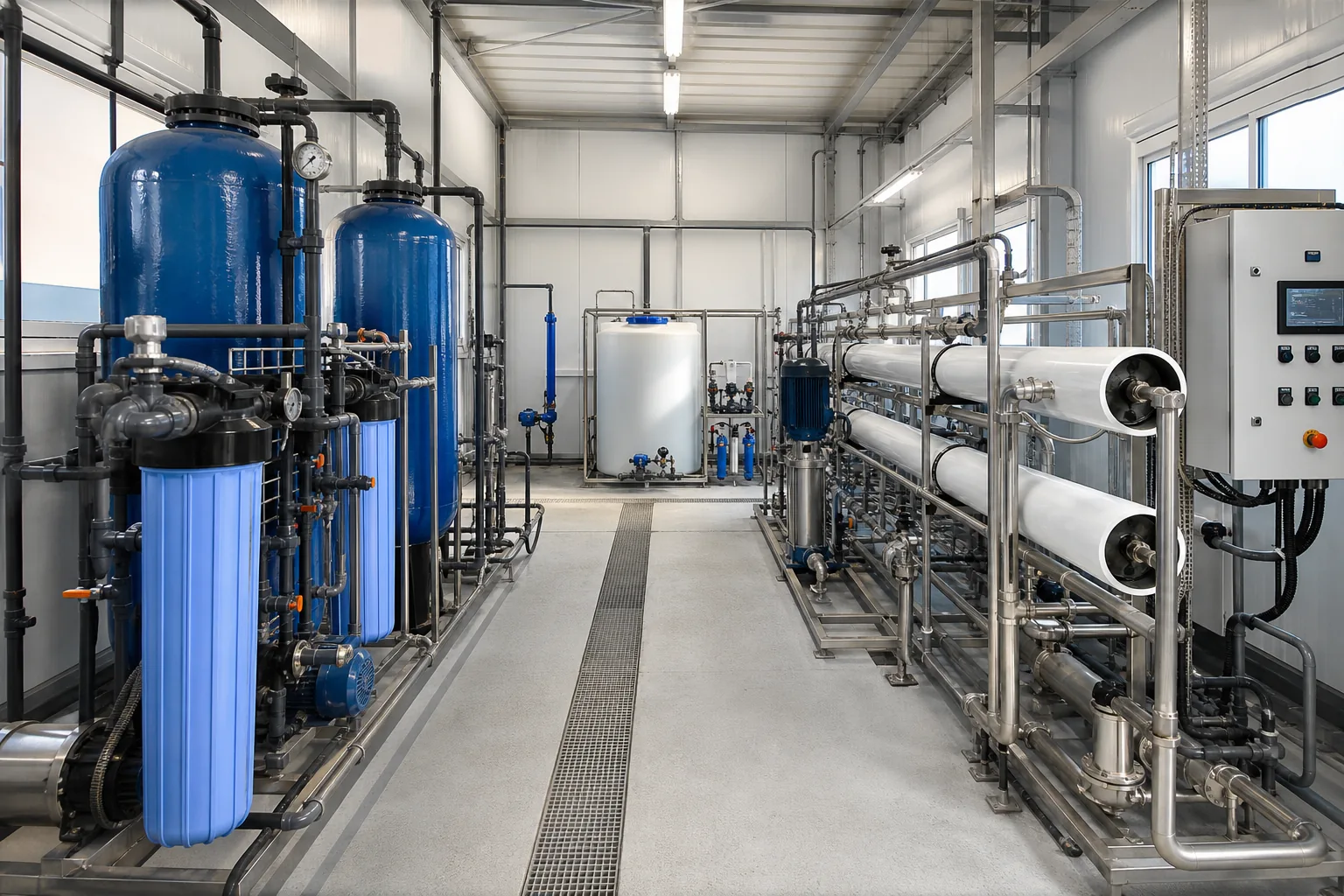 A compact plant still depends on pretreatment, pressure vessels, pumps, controls, post-treatment and a maintainable operating layout.
Build the element around the community system
RO may be selected when the source contains dissolved salts or other target constituents that conventional filtration alone does not adequately address. It must still be designed as one stage in a complete drinking-water treatment train.
One community category, several source-water realities
These scenarios belong on one authoritative application page until search data shows a genuinely separate demand cluster.
Groundwater Communities
Wells may provide low turbidity but present hardness, salinity, nitrate, silica, iron or other site-specific concerns requiring careful pretreatment and RO selection.
Primary concern: dissolved constituentsSurface-Water Communities
Rivers, lakes and reservoirs can introduce seasonal turbidity, organics and biological loading. Pretreatment performance becomes central to RO stability.
Primary concern: variability and foulingCoastal & Island Supplies
Local sources may be brackish or affected by saltwater intrusion. Higher salinity changes pressure, rejection and material requirements.
Primary concern: salinity and energyModular Expansion Projects
Communities may add capacity in stages. Consistent element specifications and repeatable manufacturing simplify future expansion and replacement.
Primary concern: standardizationSix material decisions that operate as one structure
Changing one material can affect rolling diameter, flow behavior, bonding, permeate collection and the final inspection method.
Membrane Sheet
Balance rejection, permeability, pressure and source-water conditions.
Feed Spacer
Match channel geometry to pressure drop, fouling risk and cleaning.
Permeate Carrier
Support internal permeate flow and stable leaf construction.
Central Tube
Control dimensions, collection holes, alignment and mechanical support.
Adhesive & Tape
Coordinate viscosity, working time, cure and production speed.
Seals & Parts
Match interfaces to the housing, flow direction and service method.
Flexible output without losing repeatability
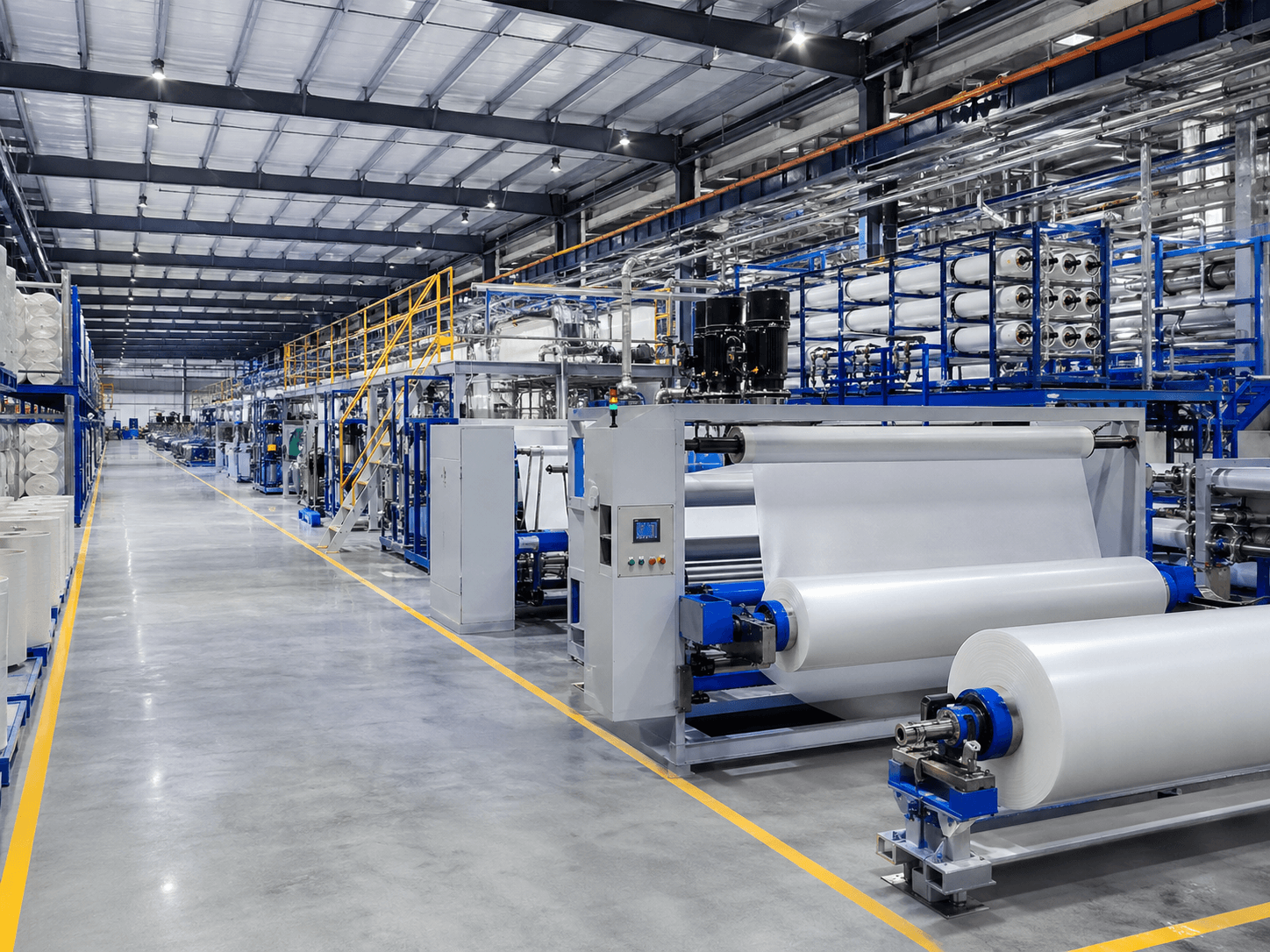
Community water programs may require several element formats or lower production volumes. A flexible manufacturing setup should still control every critical step.
Design for the people who will operate the system
A technically strong element is only useful when the project can monitor, maintain and replace it consistently. Community systems benefit from clear specifications and practical service planning.
Start with capacity, maintenance and production reality
The following comparison is a planning aid, not a fixed sizing rule. Final selection requires system design and feed-water data.
Planning questions for decentralized community RO
RO should be selected only after the source water, required treatment and operational capacity are understood.
When is RO appropriate for a small community water system?
RO may be considered when dissolved salts or specific inorganic constituents must be reduced and other treatment methods are not sufficient or practical. It should be evaluated alongside pretreatment, concentrate management, post-treatment, energy and operator capacity.
Does a smaller plant always need a residential/household membrane format?
No. Small community projects may use residential/household, 4040 or 8040 elements depending on capacity, vessel arrangement, maintenance access and the OEM program. Plant scale alone does not determine element format.
Which material feature matters most for limited-maintenance sites?
No single material controls the result. Membrane sheet, feed spacer, carrier, central tube, adhesive, seals and manufacturing quality must work together. Pretreatment and operating discipline remain equally important.
Can WECOME provide the complete community treatment plant?
WECOME focuses on RO membrane materials, components and element-production equipment. We support element manufacturers and OEM partners rather than presenting this page as a complete treatment-plant offer.
What should an OEM provide for a material recommendation?
Share the source-water analysis, treatment objective, intended element size, expected production volume, current material structure, available equipment, storage conditions and required quality documentation.
Building RO elements for a decentralized community project?
Send the source-water data, element format, planned output and operating context. WECOME can help organize the membrane sheet, components and production equipment into a practical manufacturing plan.