

1812, 3013, 4040 and 8040 Production Setup Guide
Setting up to produce RO membrane elements? This guide compares the four key sizes — 1812, 3013, 4040 and 8040 — and the materials and equipment each one needs, side by side.
Each size sets the materials, tooling and overwrap you need.
Key Takeaways
- The model number sets the diameter and length (4040 = 4.0″ × 40″).
- Small sizes (1812–3013) are household; 4040 and 8040 are industrial.
- Overwrap, end caps and brine seal change with size.
- Match materials and equipment to the size before you buy.
Start From the Size You Will Produce
Every production decision flows from element size. 1812, 2521 and 3013 are small household elements; 4040 and 8040 are the workhorse industrial sizes. As the diameter grows, so does the membrane area, the central tube, the overwrap method and the tooling on the line.
The table below sets out what each size needs. Confirm the exact dimensions with the size reference, and if you are choosing between segments, see household vs industrial lines.
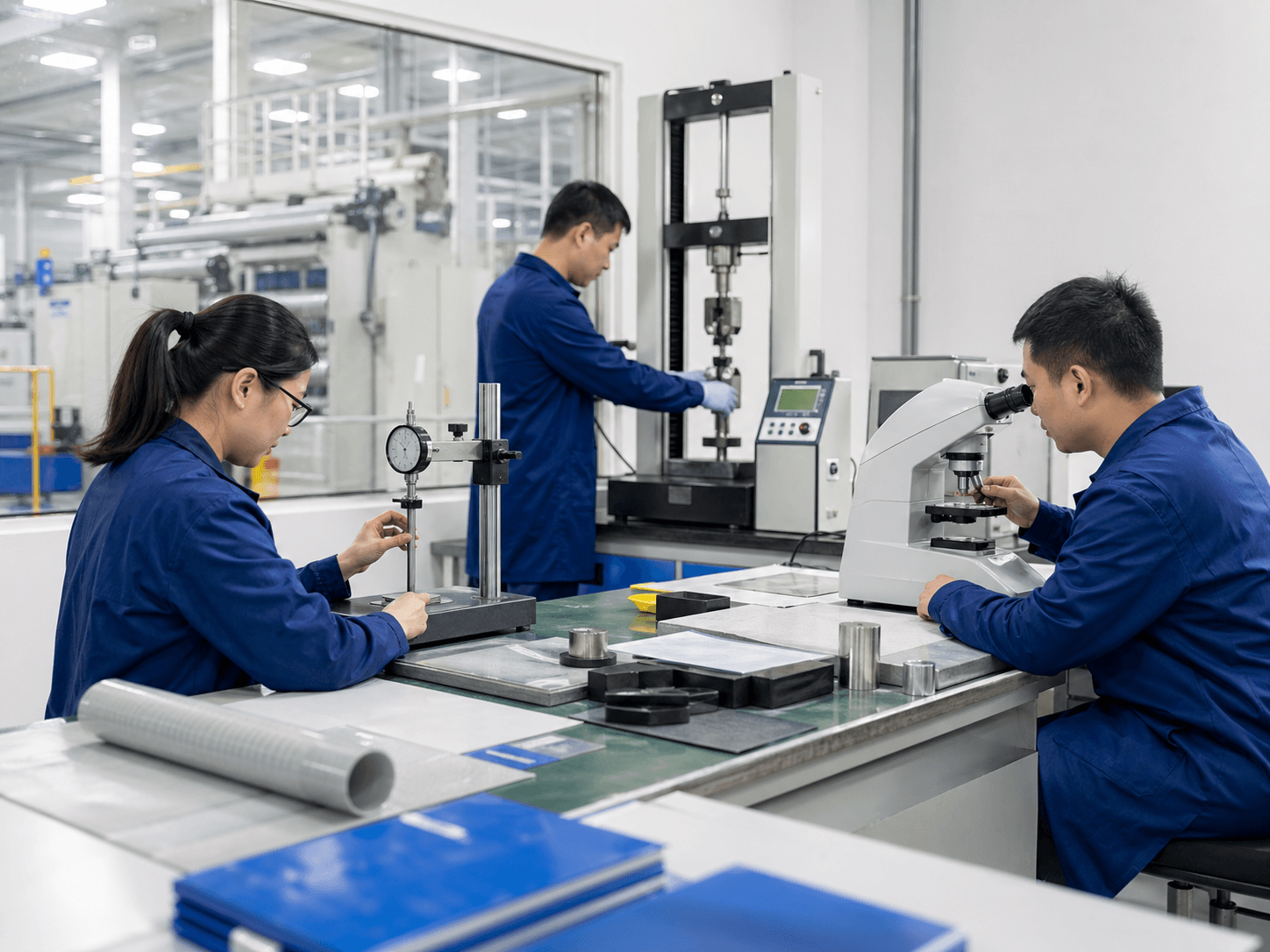
Production Setup, Size by Size
Nominal dimensions and what each size needs. Sizes are nominal — confirm exact values for your build.
| Size | Nominal Ø | Length | Class | Overwrap | End caps | Brine seal |
|---|---|---|---|---|---|---|
| 1812 | ~46 mm (1.8″) | ~305 mm (12″) | Household | Tape | None | No |
| 2521 | ~64 mm (2.5″) | ~533 mm (21″) | Household / light comm. | Tape | None | Usually no |
| 3013 | ~76 mm (3.0″) | ~330 mm (13″) | Household / small comm. | Tape | None | No |
| 4040 | ~100 mm (4.0″) | ~1016 mm (40″) | Industrial | Fibreglass + epoxy | Two | Yes |
| 8040 | ~200 mm (8.0″) | ~1016 mm (40″) | Industrial | Fibreglass + epoxy | Two | Yes |
What Changes From 1812 to 8040
Bigger is not just bigger. Moving from 1812 up to 8040, the membrane area multiplies, the central tube grows in bore and strength, the outer wrap shifts from tape to a fibreglass-and-epoxy shell, and the element gains ATD end caps and a brine seal for pressure-vessel service.
Match the rolling machine to the largest size you plan to run — see how to choose a rolling machine — and confirm component specs in the central tube and brine seal data sheets.
Scales with size
- Membrane area & material widths
- Central tube bore & strength
- Overwrap: tape → fibreglass
- End caps & brine seal (industrial)
- Machine tooling & tension range
One Source for Every Size
Sourcing each size from different vendors creates gaps. A single matched supplier removes them.
| What you need | WECOME | A typical supplier |
|---|---|---|
| Full size range 1812–8040 | Every size, one source | Often a limited range |
| Materials matched to each size | Yes — full stack per size | Mixed sources, compatibility gaps |
| Equipment for each size | Machines + tooling included | Usually a separate vendor |
| Free sizing tools | Size reference + BOM + calculators | Rarely offered |
| Engineering support | Free spec & setup advice | Limited or paid |
Size-Matching Is Where Setups Go Wrong
Most setup mistakes are a size mismatch — a tube, seal or machine that does not fit the element you are building.
Mismatched Components
An 8040 tube or seal will not fit a 4040 — size every component to the element.
Machine Limits
A machine set for small sizes can’t reach 8040 — buy for your largest size.
Wrong Overwrap
Tape suits household sizes; industrial needs a fibreglass shell.
Setting up production for specific sizes?
Tell us which sizes you plan to run — our engineers will match the materials, components and equipment to each one, free of charge.
Production Setup FAQ
What do the numbers 1812, 4040 and 8040 mean?
The four-digit model number gives the nominal size: the first two digits are the diameter in inches and the last two are the length in inches. So 4040 is about 4.0″ in diameter and 40″ long, and 8040 is about 8.0″ by 40″.
Which sizes are household and which are industrial?
1812, 2521 and 3013 are small household sizes built with a tape outer wrap and no ATD end caps. 4040 and 8040 are industrial sizes that add a fibreglass-and-epoxy shell, two ATD end caps and a brine seal.
What changes in setup as the element gets bigger?
Membrane area, central tube size, overwrap method, end caps, brine seal and machine tooling all change. Bigger sizes need more material, a stronger tube and a fibreglass overwrap rather than tape.
Can I run several sizes on one line?
You can run a band of sizes on suitable equipment with changeover tooling, but household and industrial sizes generally need different setups. Match the machine to your largest planned size and confirm the changeover range.