

RO Membrane Production Line Checklist
This RO membrane production line checklist covers everything you need before you start making spiral-wound elements — equipment, raw materials, facility, and process & quality control.
- Equipment & machines
- Raw materials in spec
- Facility & utilities
- Process, QC & people
Key Takeaways
- A production line is four systems: equipment, materials, facility, process.
- Confirm every item is matched to your element sizes.
- Set up QC and traceability from day one, not later.
- Use this list to plan, quote and commission a new line.
Plan the Whole Line Before You Start
Setting up RO membrane element production is more than buying a rolling machine. A working line is four connected systems — equipment, raw materials, facility and process — that all have to match your element sizes and output target.
Work through the checklist below stage by stage. It pairs with the semi-automatic vs fully automatic guide for equipment decisions and the production capacity calculator for sizing output.
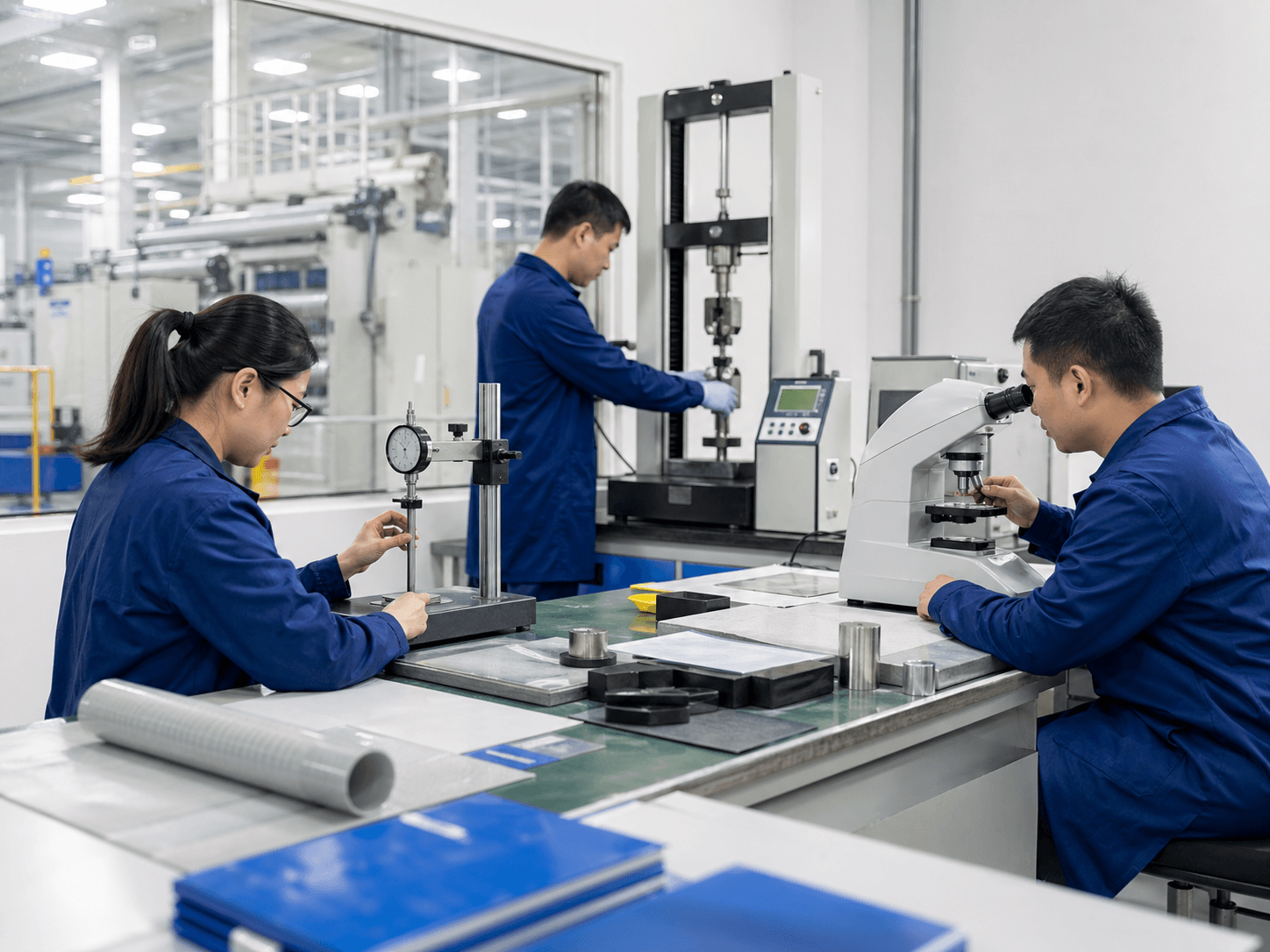
RO Membrane Production Line Checklist (4 Systems)
Tick items as you confirm them. Download the PDF below to use it for line planning or supplier discussions.
A planning PDF for setting up or auditing your RO membrane line.
From Checklist to Running Line
Once the four systems are in place, confirm sizing and quality before first production. Estimate output with the production capacity calculator, lock the build sequence with the production workflow template, and set acceptance criteria with the QC checklist.
Not sure which element sizes or materials to start with? Review the element size reference and the raw material selection guide first.
Before first production
- Estimate output & takt time
- Lock the build sequence (SOP)
- Set QC pass/fail criteria
- Run a pilot batch & test
- Record results & adjust
Gaps in the Line Surface as Delays and Scrap
Most start-up problems trace back to a missing item on this list — not the rolling machine itself.
Mismatched Sizing
Equipment or materials that don’t fit your element size stall production on day one.
Utility Gaps
Missing air, power or test water leaves machines idle after delivery.
No QC System
Without checkpoints, defects ship and rework costs climb.
Untrained Operators
Inconsistent technique causes variable quality and high scrap early on.
Planning a new RO membrane production line?
Tell us your target element sizes and output — we’ll help you spec the full line, from machines to raw materials and testing.
Production Line Setup FAQ
What equipment is needed for an RO membrane production line?
A typical line needs a rolling machine, material cutting equipment, a gluing station, central tube taping, trimming and end-cap tooling, and testing equipment for vacuum leak and performance checks. The exact set depends on your element sizes and automation level.
What do I need before starting RO membrane element production?
Beyond machines, you need all raw materials in spec, a suitable facility with power, compressed air and test water, documented SOPs and a BOM per element, QC checkpoints, and trained operators. This checklist groups these into four systems: equipment, materials, facility and process.
How much space does an RO membrane production line need?
Floor area depends on element sizes, automation level and output. Plan the layout around material flow from cutting through rolling, gluing, trimming and testing. Share your target output with your equipment supplier to size the footprint.
Should I choose a semi-automatic or fully automatic line?
Semi-automatic lines suit start-ups and mixed, lower volumes; fully automatic lines suit stable, high-volume production. See the semi-automatic vs fully automatic guide for a detailed comparison.