
RO Membrane Materials for Municipal Drinking Water Treatment
For RO element manufacturers and OEMs serving municipal drinking-water projects, reliable performance begins before an element enters the plant. It starts with a material structure designed around the source water, treatment goal, element format and production process.
Municipal feed water is never just “water”
Surface water can change with seasons, rainfall and upstream activity. Groundwater may be clearer but contain higher dissolved salts, hardness, silica or specific ions. Blended supplies can shift the operating window again.
These differences influence pretreatment, recovery, cleaning strategy and the membrane element itself. The correct sheet, feed spacer, permeate carrier, central tube, adhesive and assembly method must work as one structure rather than as separate purchased parts.
WECOME supplies RO membrane materials, components and element-production equipment. We support the manufacturers that build membrane elements for municipal projects; we are not presenting this page as a complete municipal RO plant offer.
 Source-water conditions guide the element build
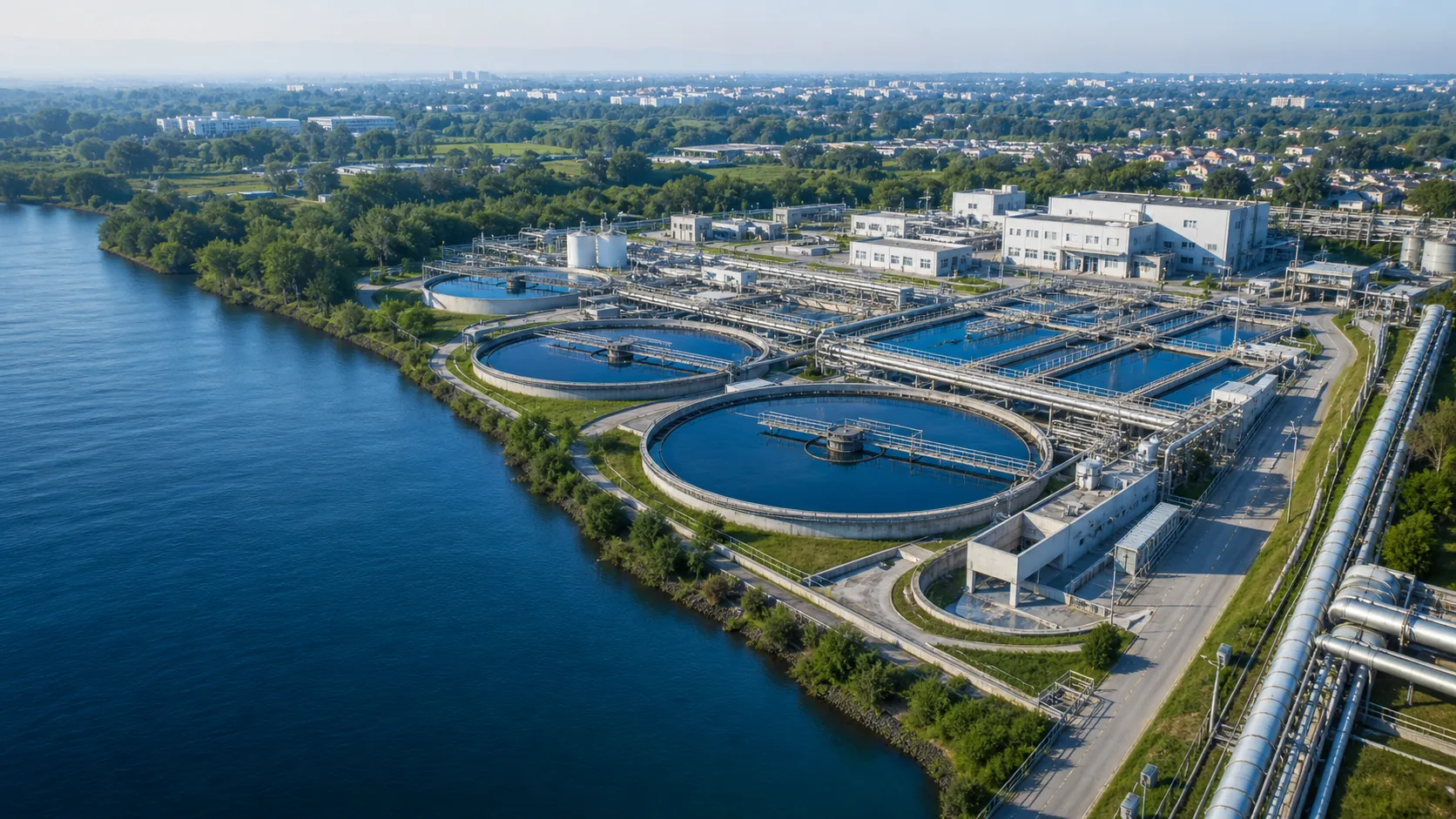
Where RO fits in municipal drinking-water treatment
RO is normally one stage within a broader treatment train. The exact arrangement depends on feed-water analysis, local requirements and the intended product-water quality.
Source Water
Surface water, groundwater or a blended municipal supply.
Pretreatment
Clarification, media filtration, UF/MF, cartridge filtration or chemical conditioning as required.
Reverse Osmosis
Pressure-driven separation reduces dissolved salts and other target constituents.
Post-treatment
Remineralization, pH adjustment, disinfection or polishing according to the project.
Distribution
Finished water enters storage and the municipal distribution network.
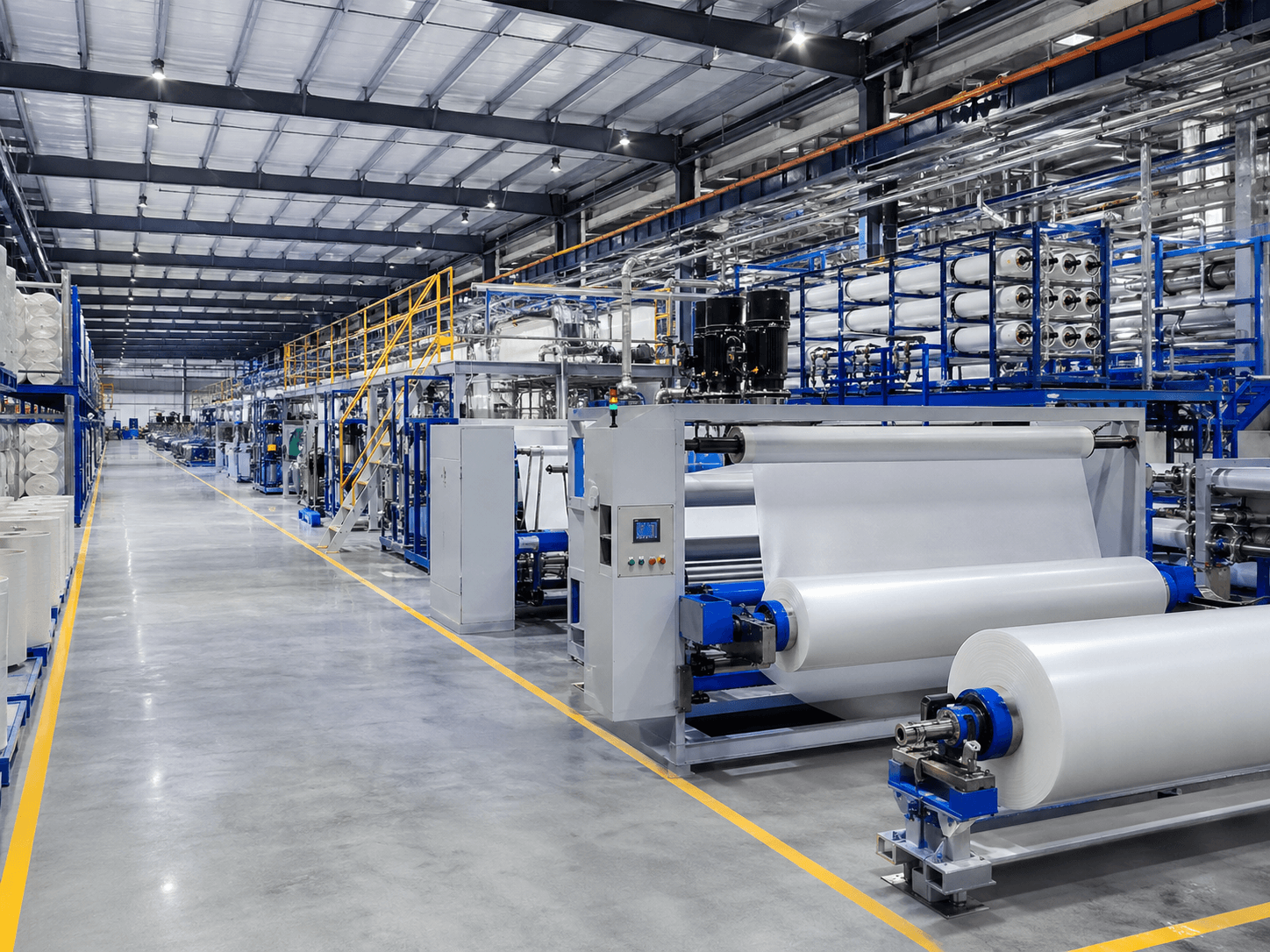
Every material affects the finished element
A membrane sheet cannot deliver dependable municipal performance if flow channels, permeate collection, bonding or rolling geometry are inconsistent.
RO Membrane Sheet
Rejection, permeability, operating pressure and cleaning tolerance must suit the feed water and product-water target.
Feed Spacer
Thickness and geometry influence feed-channel flow, pressure drop, mass transfer and fouling behavior.
Permeate Carrier
The carrier supports permeate flow inside the leaf and must remain stable during bonding, rolling and operation.
Central Tube
Hole pattern, dimensions and mechanical strength affect permeate collection and alignment during element assembly.
Adhesive & Tape
Viscosity, cure behavior, working time and dimensional compatibility influence leaf sealing and final integrity.
Seals & Connectors
Correct sizing and material compatibility help control bypass and support reliable vessel installation.
Translate the application into manufacturing decisions
The same municipal label can cover very different source waters and operating goals. Before choosing materials, define the project conditions that will control the element design.
Municipal projects depend on repeatability, not one good element
Automated or controlled production reduces element-to-element variation, but equipment alone is not enough. Incoming materials, bonding conditions, rolling geometry and final testing need documented control.

Match the format to the project and OEM program
Municipal projects are often associated with industrial spiral-wound elements, but the correct format still depends on plant scale, rack design, maintenance strategy and the manufacturer’s product program.
Often relevant to smaller municipal installations, pilot systems, staged expansion and OEM programs requiring easier handling.
Commonly considered for higher-flow municipal trains where active area, vessel loading and repeatable large-element production matter.
Questions municipal RO element manufacturers ask
Final material selection should follow feed-water data, target performance and validated production trials.
Which RO membrane sheet is suitable for municipal drinking water?
There is no universal sheet for every municipal source. Selection normally considers feed-water salinity, target rejection, operating pressure, temperature, fouling risk and cleaning conditions. Surface water, groundwater and brackish sources can require different priorities.
Should municipal elements use 4040 or 8040 construction?
Both formats can serve municipal applications. 8040 elements are commonly associated with larger treatment trains, while 4040 elements may suit lower-flow installations, pilots or modular systems. Vessel design, flow target and OEM production strategy should decide the format.
How does the feed spacer affect municipal RO performance?
Feed-spacer geometry and thickness influence channel flow, pressure drop, mass transfer and fouling behavior. It must also match membrane-leaf dimensions, rolling diameter and the intended element construction.
Can WECOME supply a complete municipal reverse osmosis plant?
WECOME focuses on the upstream manufacturing side: RO membrane sheets, spacers, carriers, tubes, adhesives, components and production equipment. We support element manufacturers and OEM partners rather than positioning this page as a complete treatment-plant offer.
What information is needed before requesting a material proposal?
Please provide the intended element size, source-water analysis, target application, expected production volume, current material structure, available equipment and any required testing or documentation.
Planning RO elements for a municipal drinking-water project?
Share the source-water profile, target element size, planned capacity and current production setup. WECOME can help organize the membrane sheet, components and manufacturing equipment into one practical supply plan.